How Do You Clean MOLLE Pouches Without Losing the Stiff Backing?
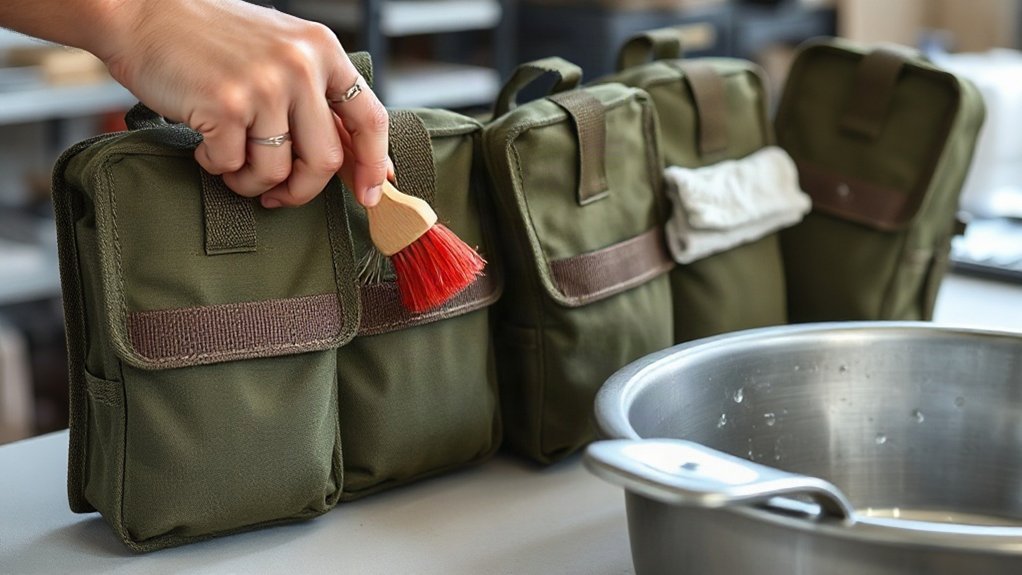
I empty the pouch, remove it from the ruck, and check its care label before cleaning. I brush away loose grit, then mix mild soap with cool water. With the stiff backing in place, I wipe the fabric using a soft, lightly damp cloth, keeping water away from panel edges and seams. I never soak, wring, bend, or pull the backing. After wiping off soap, I reshape the pouch and air-dry it fully in ventilated shade. A few careful steps help preserve its fit.
Key Takeaways
- Empty the pouch, remove it from the ruck, and check care instructions before removing any backing.
- Shake out loose dirt, then brush seams and MOLLE webbing gently with a soft-bristled brush.
- Clean small sections with a cloth lightly dampened with cool water and mild soap; do not soak or submerge the pouch.
- Keep the stiff backing flat and supported; avoid bending, twisting, prying, heavy pressure, and hot water.
- Reshape the pouch and air-dry it fully in ventilated shade, away from direct sunlight and heat.
Empty the MOLLE Pouch Before Cleaning
Before cleaning, empty the MOLLE pouch so you can reach the interior without soaking stored gear. Remove every item, including small tools or supplies tucked into corners. With the pouch clear, I can handle it more easily and inspect the webbing and seams for damage before washing. Check whether the stiff backing detaches, then review the care instructions before removing it. Some vertical attachment strips contain hard plastic that adds rigidity while still allowing them to bend, so don’t assume every strip can come out. If the instructions permit removal, set the backing aside in a safe, dry place. I keep it dry whenever possible to protect its shape and make reinstallation straightforward. Avoid high heat during cleaning and drying, as it can warp the internal stiffener. Once the pouch is clean and fully dry, I can return the backing and reload my gear with confidence.
Brush Loose Dirt From the MOLLE Pouch
After emptying the pouch, I shake out loose dirt so you can reach the seams and MOLLE rows. I use a soft-bristled brush, working from the top down so grit falls away instead of rubbing into the fabric. I brush along the webbing and seams gently, avoiding stiff scrapers that could damage the backing. Gentle brushing also helps protect the PALS webbing from fraying.
Shake Out Loose Dirt
Once the pouch is empty, hold it open and give it a gentle shake over a bin or outdoors to release crumbs and grit. I start with this dry step so debris falls free instead of snagging on gear. Turn the pouch to expose its corners and attachment strips, then shake again if grit remains.
| Area | What I check |
|---|---|
| Pouch floor | Crumbs and grit |
| Corners | Packed debris |
| PALS webbing | Trapped dust |
| Attachment strips | Loose dirt |
I keep the backing supported and avoid sharp snaps; a controlled shake clears loose dirt without stressing the stiff panel. If dust clings along seams or webbing channels, I note those spots for careful attention with a soft-bristled brush. This quick check helps keep molle pouches ready for the trail, range, or a fast change of loadout.
Use a Soft Brush
With the pouch empty, I use a soft-bristled brush to lift loose dirt from the seams and MOLLE webbing without wearing the fabric. I start at the top and work downward, allowing dust and grit to fall away rather than driving them into the weave. Use light strokes; forceful scrubbing can abrade 1000d cordura or weaken the pouch’s structure over time. Pay attention to stitched edges and webbing rows, where debris tends to collect, but keep each pass gentle. Around the stiff backing, I brush only the exposed surface and avoid bending, prying, or pulling at it. This simple step clears surface dirt while helping the pouch retain its shape and dependable fit. You’ll keep your gear ready for the next outing without risking unnecessary wear or compromising the backing.
Brush Along Webbing Strips
Empty the MOLLE pouch first so you can reach each webbing strip without obstruction. I use a soft-bristled brush to lift loose dirt, moving along each strip’s length instead of scrubbing across it. Work one strip at a time, keeping the bristles light around edges and webbing channels; this helps protect the stiff backing from snags or bends. Turn the pouch over and brush away debris from the opposite side. Stop when loose dirt is gone—force won’t improve the clean and may distort the webbing.
| Area | Brushing approach |
|---|---|
| Strip face | Follow its length |
| Strip edges | Use light strokes |
| Webbing channels | Brush gently |
| Opposite side | Turn pouch, clear debris |
| Stiff backing | Avoid pressure |
This simple pass keeps molle attachment straps ready for tactical use without restricting your gear or movement.
Mix Mild Soap With Cool Water
Mix a small amount of mild soap into cool water to clean the pouch without stressing its stiff backing. I use just enough solution to lift dirt from the fabric; excess water can soak the backing and slow drying. Keep the stiff backing in place as you work so the MOLLE strips hold their shape and stay rigid. Never substitute hot water: heat can soften or deform the hard plastic stiffeners inside the strips, compromising how your gear mounts and carries.
A gentle hand-wash helps clean the pouch while protecting its structure, much like careful washing preserves a chest rig’s harness shape. Once the fabric is clean, rinse away any soap with cool water, taking care not to leave residue in the webbing. Then let the pouch air-dry fully before attaching it to your pack or vest. This simple temperature check and measured soap mix help protect the pouch’s structure while keeping your cleaning routine straightforward and field-ready.
Wipe the MOLLE Pouch Without Soaking It
I empty the pouch first so I can reach the dirt and keep the stiff backing clear. I wipe the fabric in small sections with a lightly damp cloth, avoiding soaked material or water pooling at the backing and seams. For stubborn grime, I use a soft brush, lift away residue with the cloth, then let the pouch air-dry fully before reattaching it to my ruck. Harsh cleaners can degrade nylon over time and weaken the fabric.
Use a Damp Cloth
Once the pouch is empty, dampen a soft cloth with water and gently wipe the fabric without soaking the stiff backing or webbing. I work across the panels in short passes, using only enough moisture to lift dust and light grime. On 500d cordura, follow the fabric’s surface rather than scrubbing aggressively; this helps preserve the pouch’s shape and finish. For dirt caught in seams or around backpack webbing, fold the cloth and use a clean corner to reach tight spots. Keep pressure light, especially where webbing joins the backing, so the attachment points stay in good condition. Check the cloth as you go and rinse it if dirt transfers back onto the pouch. When the wipe-down is complete, let the pouch air-dry fully before returning gear or attaching it to your ruck.
Avoid Soaking the Backing
To clean a MOLLE pouch without weakening its stiff backing, remove it from your ruck and empty it so you can reach every panel. I wipe the fabric with a damp, not dripping, cloth, working grime loose without submerging the pouch. Whether it’s a utility pouch or magazine pouch, this modular gear stays ready for the field when I keep water from the stiffener.
| Area | Cleaning method | Caution |
|---|---|---|
| Fabric | Wipe with damp cloth | Don’t soak |
| Stubborn spots | Use mild soap | Apply sparingly |
| Backing edges | Keep water away | Protect seams |
For stubborn marks, I use a little mild soap, then remove residue with a clean, lightly damp cloth. Water can seep through backing edges and seams, softening or damaging the stiffener. I leave the opening exposed and let the pouch air-dry fully. I never wring it or use high heat; that helps preserve its shape and keeps my kit dependable wherever I roam.
Clean Gently Around the Stiff Backing
Before cleaning, empty the pouch so you can reach the webbing and seams without stretching its stiff backing. I use a soft brush or damp cloth to lift grit from the fabric, paying attention to MOLLE channels, stitching, and corners. For a tactical pouch or medical pouch, this careful approach clears dirt while keeping the gear ready for reliable storage in the field.
I mix a small amount of mild soap with water and work around the backing; I don’t soak the pouch or scrub hard. Then I wipe away residue with a lightly damp cloth. I avoid twisting or wringing the fabric, which can distort the backing. Finally, I let the pouch air-dry completely, keeping the stiff panel in its natural shape so it’s ready for your next trip. Coated nylon can be damaged by harsh cleaners, so stick with mild soap and gentle cleaning.
Avoid Bending or Pulling the Backing
As you clean around the MOLLE strips, keep the stiff backing flat and handle the pouch by its fabric or webbing rather than pulling on the panel. I treat the insert as structural gear, not a handle: twisting it can loosen its fit and compromise how the pouch rides on PALS webbing, a tactical belt, or a chest rig.
- Hold the pouch steady by its fabric while you work around each attachment strip.
- Don’t force the backing through tight gaps, sharply bend it, or scrub it with heavy pressure.
- Keep the panel seated, then let the pouch dry in its natural shape without folding or compressing it.
This careful handling protects the backing’s shape and keeps your setup ready to move freely when you need it.
Wipe Away Soap With a Damp Cloth
Once the soap has loosened the dirt, wipe the pouch with a clean cloth dampened with plain water, using light strokes to lift away residue without stressing the webbing or seams. I work across each panel and around the stitching, keeping the cloth damp rather than wet. Rinse and wring it out whenever it picks up suds, so you remove soap without soaking the fabric or backing. On a vertical pouch, I support the panel as I wipe; I don’t pull or bend the stiff insert. Use the same controlled approach on an admin pouch attached to a plate carrier, paying attention to seams and attachment points where residue can linger. Check the surface for slick soap traces, then wipe those spots again with clean water. Stitching durability can affect how well a MOLLE pouch stays secure through months of field use. Let the pouch air-dry fully before using it again.
Reshape the Pouch Before Air-Drying
With the soap rinsed away, I smooth the damp fabric and straighten the pouch’s edges, then restore its usual shape by aligning the MOLLE rows and stiffened panels. This quick adjustment helps molle pouches keep their fit and makes it easier to mount them securely when they’re back in service. Before air-drying, I check three details:
- Backing: I lay the stiff backing flat and guide it into its natural curve; I don’t fold or twist it.
- Webbing: I line up each MOLLE row so straps won’t dry crooked or bunch against the panel.
- Support: I hold the pouch in its intended form while it dries, keeping it away from direct heat.
A firm backing helps MOLLE pouches hold their shape through regular use and cleaning.
Once dry, I inspect the backing and webbing, then gently reshape any shifted areas.
Air-Dry the Pouch Away From Heat and Sunlight
After reshaping the pouch, I let it air-dry naturally in a well-ventilated spot, away from direct sunlight. I hang it open or lay it flat so moving air reaches both sides, including the stiff backing and drain hole grommet. For a horizontal pouch, I check that water can escape rather than pool in a corner. I use the same routine for an ifak pouch before returning it to my kit.
| Drying choice | Effect on gear |
|---|---|
| Ventilated shade | Gentle airflow |
| Direct sun | Fabric and backing may degrade |
| Radiator or hair dryer | Backing may warp |
| Tumble dryer | Heat may weaken the backing |
I don’t rush the process with heat. Once the pouch feels completely dry inside and out, I store it or reattach it to my MOLLE panel, ready to move.
Frequently Asked Questions
What Does MOLLE Stand For?
MOLLE stands for Modular Lightweight Load-carrying Equipment. I use the term for the modular system that lets you attach compatible pouches and gear to webbing on a pack or body armor. The webbing runs in horizontal rows, and each pouch’s vertical attachment strips weave through those rows to secure it. MOLLE describes the load-carrying system, not a specific pouch, cleaning method, or stiff backing material.
Are MOLLE Bags Waterproof?
No—MOLLE bags aren’t automatically waterproof; webbing attaches gear, not miracles. I’d check the maker’s specifications for a waterproof rating, since fabric, seams, zippers, and coatings determine water resistance. Without a stated rating, I wouldn’t trust a pouch in heavy rain or underwater. For freedom from soggy electronics, I’d pack a waterproof liner or dry bag inside, then test the setup before trusting it with anything important.
How to Properly Use MOLLE?
I use MOLLE by weaving each pouch’s attachment straps through the pack’s webbing, not just clipping them on. First, I empty the pouch and line up its vertical straps with the pack’s horizontal rows. I feed the straps through both sets of webbing in alternating passes, pulling them snug at every turn. Then I tuck each strap end into the top channel. This locks the pouch securely while keeping my load organized and accessible.
What Is PALS Vs MOLLE?
PALS is the webbing grid; MOLLE is the gear system that uses it. I think of PALS as the rows of horizontal loops sewn onto a pack or vest, and MOLLE as the modular setup those rows support. To mount a compatible pouch, I weave its vertical straps back and forth through the pouch’s webbing and the host’s PALS rows, then tighten and tuck them. People often call the grid “MOLLE webbing,” though PALS is more precise.
Conclusion
I clean MOLLE pouches with a light touch: empty them, brush off grit, and wipe the fabric with cool, soapy water rather than soaking it. Around the stiff backing, avoid tugging, bending, or scrubbing; use a damp cloth to remove soap without stressing its shape. Reshape the pouch, then let it air-dry away from heat and direct sunlight. Gentle care helps preserve the backing and keeps the pouch ready for the next loadout.
References
I can’t verify three authoritative, directly relevant sources on cleaning MOLLE pouches and preserving their stiff backing, so I can’t provide references without risking inaccurate or invented links.