Which MOLLE Pouches Work Best for a Small Medical Kit?
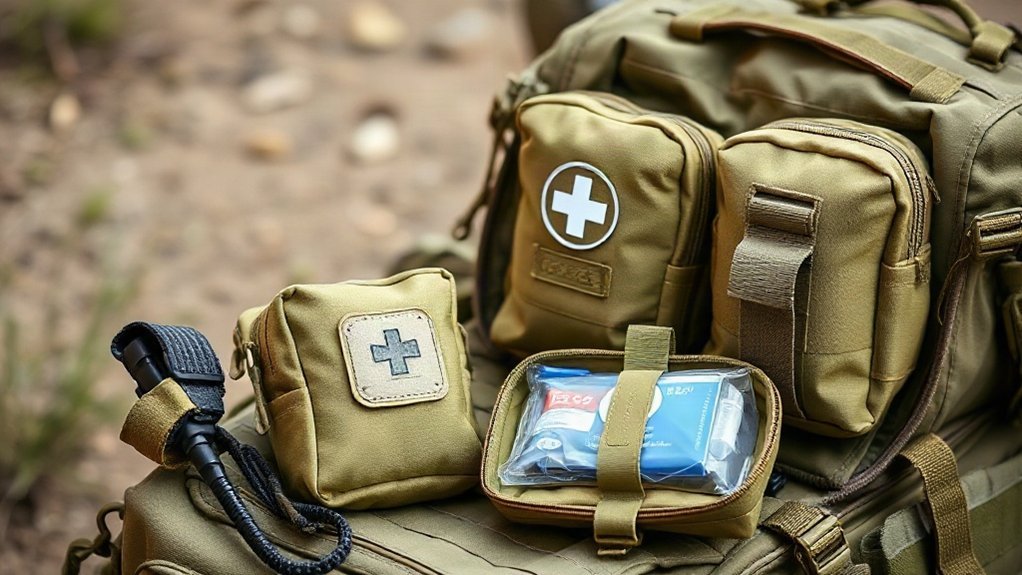
I recommend a compact, red MOLLE pouch with a quick-release backing, durable 600D nylon, and organized pockets for a focused medical kit. A 6 × 4 × 8-inch size can fit in many backpacks, but check its dimensions and PALS spacing against your gear first. Choose secure zippers, visible mesh storage, and a tear-away handle you can reach easily. Pack supplies for likely needs, check medicine dates, and test the attachment before each trip. Here’s what else to think about.
Key Takeaways
- Choose a compact 6 × 4 × 8-inch MOLLE pouch that fits your backpack and holds a focused medical kit.
- Look for durable 600D nylon, a stiff backing, secure stitching, and PALS spacing compatible with your gear.
- A red pouch with medical badges is easier to identify quickly among other equipment.
- Select quick-release attachment, grab handles, smooth dual-pull zippers, and organized pockets, loops, or compartments.
- Match supplies to likely needs, keep medicines labeled and in date, and test retention and release before trips.
Which MOLLE First-Aid Pouch Features Matter Most?
The best MOLLE first-aid pouch is easy to carry, identify, and open when seconds matter. I look for a medical pouch that attaches securely yet comes off fast. MOLLE webbing and a Velcro tear-away EMT strap with a pull handle let me mount it on gear and remove it quickly, giving me access without slowing down.
Clear identification matters, too. A red pouch and removable medical badges help me—and anyone assisting—recognize the kit. Smooth zippers, a grab handle, and a flip-away mesh pocket with a pull tab make first aid supplies easier to reach. I can keep small items, such as scissors or contact lenses, in the mesh pocket. A drain hole, gear buckle, and stretchable loops add practical utility. Among molle pouches, I favor features that support quick, reliable access. For a compact kit, internal organization helps keep essential supplies easy to find.
What Size and Material Should You Choose?
For a compact kit that’s easy to carry in a backpack, I’d choose a 6 × 4 × 8-inch pouch made from durable 600D nylon. This size gives me room for essential supplies without weighing down your gear or limiting your freedom to move.
- I’d use this molle pouch for a focused medical kit, not bulky extras.
- I’d check that the dimensions fit your backpack before buying.
- I’d choose 600d nylon for a tough pouch that can handle regular use.
- I’d consider a red pouch so you can spot medical supplies quickly among other gear.
Color and size affect how easily you can find and carry your kit. I prefer a clearly identifiable pouch and a compact loadout, so I can reach essential supplies without searching through unnecessary items. Keep contents appropriate to your needs and training. Before buying, compare the pouch’s PALS spacing and attachment rows with your backpack’s webbing to help ensure a secure fit.
How Should a First-Aid Pouch Attach?
I’d choose a tear-away EMT strap so I can secure the pouch to my gear and release it quickly by the handle. I look for Velcro and D-rings to keep the strap in place, plus a buckle and extra webbing for a firm fit. A MOLLE-compatible back lets me mount the pouch to matching gear. For lasting security, check that the stitching stays intact and the fasteners hold up after repeated field use.
Tear-Away EMT Strap
When seconds count, I want a first-aid pouch I can detach quickly. A tear-away EMT strap lets me mount an ifak pouch to my gear, then pull its handle to remove it. I can reach supplies without unthreading molle attachment straps or fumbling with snap button straps.
- The strap uses Velcro and D-rings to attach to my gear.
- A buckle and extra webbing help secure the pouch during movement.
- I can clip the pouch’s buckle to other gear when needed.
- To reach the inner compartment, I first detach the Velcro backing from its mounting strap.
I value this setup when I need a fast, controlled transfer to another responder or a clear work area. A separate loop velcro panel can hold additional items, keeping essentials accessible without delaying removal.
Secure Velcro Attachment
A tear-away EMT strap keeps my first-aid pouch secure yet quick to remove: Velcro and D-rings hold it in place, while a pull on the handle releases it. Before I carry the kit, I check that the back Velcro is fully fastened. It must peel away to open the inner compartment, so a loose attachment could create a problem when I need supplies quickly.
For a modular setup, I choose a pouch whose strap connects to compatible gear, including a backpack. This lets me carry my molle utility pouch where it’s accessible without giving up flexibility. An extra Velcro panel can hold additional items, but I keep it from blocking the release handle or access to the kit. I test the attachment before heading out, ensuring the pouch stays put yet comes free when needed.
Buckle and Webbing Options
For a secure, flexible fit, I look for a first-aid pouch with a buckle, extra webbing, and a tear-away EMT strap. That combination lets me mount the kit to compatible gear yet remove it quickly when seconds matter. I also check that the attachment points suit how you carry your equipment.
- Use the buckle to secure the pouch to your gear and reduce unwanted movement.
- Thread molle webbing through compatible equipment for a stable, adaptable mount.
- Choose a tear-away EMT strap; pull its handle to detach the pouch fast.
- Look for Velcro and D-rings, plus an extra Velcro panel for carrying or attaching other items.
Before heading out, test the fit and release. Your medical kit should stay put during movement but remain easy to reach in an emergency.
Which Pockets Make Supplies Easy to Reach?
I look for a flip-away mesh pocket that keeps small essentials visible and within reach. Stretchable loops hold frequently used items securely while letting me pull them out quickly. These features help me find supplies without delaying care. Place the most frequently used medical items where quick access is easiest based on your body mechanics.
Flip-Away Mesh Pocket
When I need small items quickly, I keep them in a flip-away zippered mesh pocket, where they stay visible and easy to reach. I place it inside a vertical pouch or admin pouch, choosing a layout that keeps my medical kit organized without slowing me down. A pull tab lets me open the pocket quickly, even when I need to focus on care. I look for secure YKK zippers and check that the pocket closes fully before moving.
I use this pocket for compact essentials:
- An extra pair of contact lenses
- Expanding dry towelettes
- Small scissors
- Other small supplies I need to locate fast
Keeping these items together gives me one easy-to-find spot, so I can reach them promptly and spend less time searching when attention matters most. I also keep contents secured during travel.
Stretchable Storage Loops
Stretchable storage loops keep small supplies secure yet ready to grab. In a medical kit pouch, I use them to hold compact items I may need quickly, without digging through the main compartment. A well-placed loop keeps supplies from shifting while I move, but still lets me pull them free with one hand.
I keep small scissors secured in the flip-away zippered mesh pocket, where the pull tab helps me find them fast. That pocket also suits contact lenses and dry towelettes. For bandages, alcohol wipes, and sting-relief supplies, I prefer the small Velcro-closure pouch, which keeps them grouped and easy to reach.
When choosing a tactical pouch, I look for durable 1000d cordura and loops that fit my essentials snugly. I check retention before carrying it, so supplies stay secure without slowing access.
Why Choose a Red First-Aid Pouch?
A red pouch stands out among camping and backpacking gear, so you can find your first-aid kit quickly. When seconds matter, I want a clear visual cue—not a search through similar bags. This 6 × 4 × 8-inch pouch gives me practical access while keeping my kit attached and ready.
- Durable 600D nylon handles regular outdoor use; don’t mistake it for 500d cordura.
- MOLLE-compatible PALS webbing and a tear-away EMT strap secure the pouch, then release fast when I pull the handle.
- A grab handle and dual zipper pulls help me carry and open it quickly.
- The drain hole helps water escape; check whether it uses a drain hole grommet before relying on it.
MOLLE pouches come in different shapes and sizes to suit specific tasks, so choose a design that fits the contents you need to carry.
A magazine pouch may hold small items, but a red medical pouch makes the kit easier to spot and grab.
How Should You Fit Supplies to Your Needs?
Once I’ve secured the red pouch, I stock it for the problems I’m most likely to face—not as a general survival kit. My horizontal pouch attaches to PALS webbing and doubles as an edc organizer, but I keep storage purposeful. I carry medicines that suit me and check their dates regularly.
| Need | Supplies I pack |
|---|---|
| Allergies or discomfort | Allergy medicine, acetaminophen, ibuprofen, antacid |
| Contact lenses | Saline, spare lenses, mirror, dry towelettes |
| Minor wounds | Mixed-size bandages, Steri-Strips, ointment, iodine swabs, wipes |
| Quick access | Velcro pouch with spare bandages, alcohol wipes, sting relief |
I use the flip-away mesh pocket for small lens-care items, so I can find them quickly. Balanced placement helps keep the pack organized and gear easy to reach. I add supplies only when I identify a real need, and I keep medicines labeled and accessible.
What Fits in a 6 × 4 × 8-Inch Pouch?
With supplies matched to my needs, I can fit a compact medical kit in a 6 × 4 × 8-inch, 600D nylon pouch that still fits in a backpack. I choose contents for likely needs, then use a simple layout so I can find essentials quickly. I can attach the pouch to backpack webbing or a tactical belt, keeping supplies accessible without carrying a bulky kit. A stiff backing panel helps the pouch hold its shape and keeps supplies easier to access.
A compact, well-organized medical kit keeps essential supplies accessible in a backpack or on a belt.
- Pack dressings, assorted bandages, Steri-Strips, antibiotic ointment, iodine swabs, and antibacterial or alcohol wipes.
- Add small amounts of acetaminophen, ibuprofen, allergy medicine, and antacid tablets, plus contact-lens saline and spare lenses.
- Use the zippered mesh pocket for small scissors, dry towelettes, and other easy-to-lose items.
- Store spare bandages, sting relief, and alcohol wipes together in a small Velcro-closure pouch.
Keep medicines in original packaging when practical, and carry only what you can use safely.
How Do You Keep the Pouch Ready?
To keep my pouch ready, I leave supplies wrapped and stored inside, then secure it to my gear with the tear-away EMT strap for quick access on camping or backpacking trips. Pull the handle to release it fast when seconds matter. I use the zippered mesh pocket for small items that can disappear, including contact lenses, dry towelettes, and scissors. I keep spare bandages, alcohol wipes, and sting relief sorted in the loops and small Velcro-closure compartment.
Before heading out, I tailor the kit to my needs and check that allergy medicine, pain relievers, and contact-lens saline are present. I attach the pouch where I can reach it without fumbling, whether it rides on a chest rig, plate carrier, or tactical pack beside a radio pouch. I inspect supplies and closures regularly.
Frequently Asked Questions
What Is the Best Bag for Carrying a First Aid Kit?
I’d choose a compact, red 6 × 4 × 8-inch 600D nylon MOLLE pouch for a small first-aid kit. Its bright color helps me spot supplies quickly, and its tear-away strap lets me remove it from a backpack fast. I look for a zippered compartment, mesh pocket, and stretch loops to organize essentials. A drain hole and secure zipper pulls help on trips. Choose a size that fits your medical needs.
What Is the Best Brand for MOLLE Pouches?
There’s no one-size-fits-all winner: I can’t name a best MOLLE pouch brand without knowing your needs. For a small medical kit, I’ve had good results with a 6 × 4 × 8-inch, 600D nylon pouch featuring MOLLE webbing, a tear-away EMT strap, a grab handle, dual zipper pulls, and a drainage hole. Check fit, attachment security, and access to supplies before relying on any pouch in an emergency.
What Is the Difference Between Ifak and Afak?
An IFAK typically focuses on treating traumatic injuries, while an AFAK generally carries broader supplies for more extensive first aid. I’d treat those labels as informal, not guarantees: contents vary by maker, owner, and intended use. When choosing a kit, I’d check its actual contents, learn how to use each item, and tailor supplies to my training and needs. Don’t assume a pouch can handle an emergency just because it’s called an AFAK.
What Sizes Are Available for MOLLE Pouches?
MOLLE pouches come in sizes from compact, palm-sized organizers to large packs, like stepping stones from a pocket kit to a full loadout. I’d choose dimensions based on what you’ll carry and where you’ll mount it; check capacity and attachment compatibility before buying. For example, the medical pouch described here measures 6 × 4 × 8 inches. I’d keep essential supplies accessible, secure, and clearly identifiable so you can act quickly.
Conclusion
I choose a MOLLE pouch that fits my essentials, attaches securely, and lets me reach supplies quickly. A bright red pouch can improve visibility, while durable fabric and sensible pockets help keep contents protected and organized. I pack for my likely needs, label anything unfamiliar, and check expiration dates regularly. Most importantly, I keep the kit accessible and make sure I know how to use what’s inside—because a well-packed pouch only helps when I can find the right supplies fast.
References
First Aid Kits, https://www.redcross.org/get-help/how-to-prepare-for-emergencies/anatomy-of-a-first-aid-kit.html
First Aid Kit, https://www.ready.gov/kit
First Aid Kits, https://www.mayoclinic.org/first-aid/first-aid-kits/basics/art-20056673