Can You Carry MOLLE Pouches Onto a Plane Without Questions?
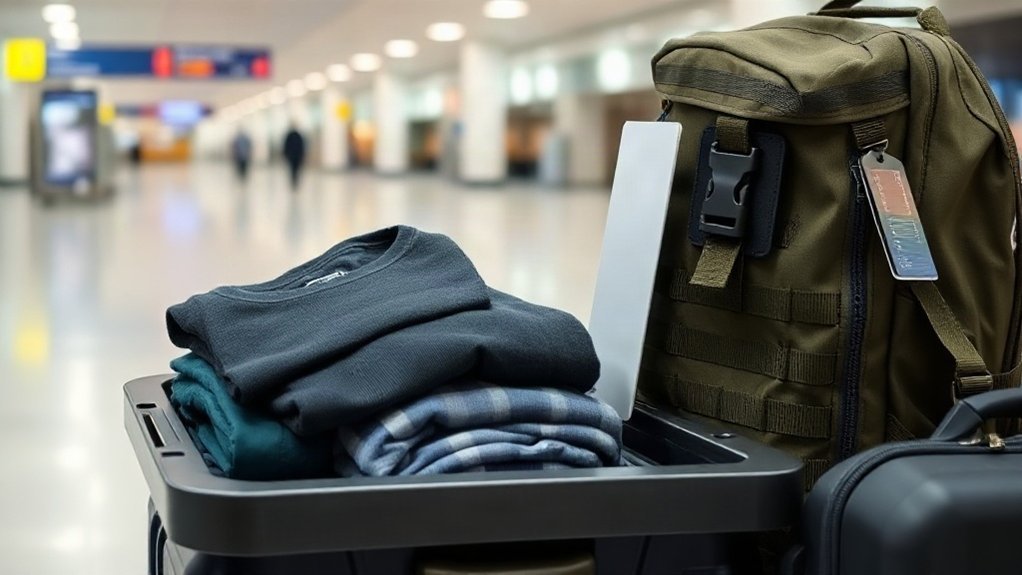
I can’t promise you’ll carry MOLLE pouches onto a plane without questions. TSA doesn’t specifically prohibit MOLLE webbing, but officers may inspect your pouches or backpack if contents, cluttered X-ray images, or another concern prompts a check. Your airline also sets separate carry-on size and weight limits, including for attached pouches. Empty every compartment, remove prohibited items, and check each item’s current rules. I’ll cover practical steps to help you prepare for smoother screening below.
Key Takeaways
- MOLLE pouches and webbing are not specifically prohibited; TSA rules depend on what each pouch contains.
- You may be asked to open pouches for inspection; TSA officers decide whether further screening is needed.
- Empty every compartment, including small pockets, and keep pouches accessible and contents organized.
- Check each item in TSA’s official “What Can I Bring?” tool; prohibited carry-on items include knives, firearms, and ammunition.
- Check your airline’s size and weight limits, counting all attached pouches and straps; approval is never guaranteed.
Can You Carry MOLLE Pouches on a Plane?
Yes, you can usually carry MOLLE pouches on a plane because TSA doesn’t specifically prohibit them. I’d focus on what you pack inside, since officers screen the contents and may inspect your bag more closely. Before leaving, empty every pouch and remove prohibited carry-on items, including knives, firearms, ammunition, and tools over 7 inches. Then organize permitted gear so it’s easy to see and check. Keep each pouch securely attached; loose straps or attachments can snag or draw attention during screening. If TSA needs to inspect your bag, stay calm and follow the officer’s directions. You’re free to travel with your setup when its contents meet security rules, but TSA officers make the final decision at the checkpoint. A little preparation helps you move through screening with confidence and fewer surprises. MOLLE pouches are not specifically prohibited under TSA rules, though their contents must comply with carry-on restrictions.
Check Your Airline’s Size and Weight Limits
I check my airline’s carry-on size and weight limits before I travel, since they’re separate from TSA screening rules. I measure my packed bag with every MOLLE pouch attached, because those count toward its dimensions. If it’s close to the limit, I remove unneeded pouches and confirm whether my airline requires a separate personal item to fit under the seat. A three-day assault pack may exceed typical carry-on limits when fully packed, so it could be gate-checked.
Measure the Packed Bag
Before heading to the airport, measure your fully packed backpack, including MOLLE pouches, straps, wheels, and handles. I check the bag after packing, since a molle pouch attached to backpack webbing can change its overall dimensions. A common U.S. carry-on guideline is 22 × 14 × 9 inches, but your airline’s rules take priority.
- Measure the fullest points, not just the main compartment.
- Compare dimensions with your airline’s limit; budget carriers may allow only a personal item or charge for larger bags.
- Weigh the loaded pack, including its 4–5-pound base weight.
Some airlines cap carry-ons at 15 pounds; 22 pounds is common with certain European and Asian carriers. Leave room for a possibly smaller gate sizer. If you’re close to a limit, remove pouches before travel, so you can board with confidence and fewer surprises.
Include External Pouches
If you attach external MOLLE pouches, count them as part of your carry-on’s overall size. I measure the fully packed bag with every pouch attached, including anything secured by molle attachment straps. A common U.S. guideline is 22 × 14 × 9 inches, but airlines set their own limits, so I check the current rules before departure.
Weight matters, too. Some European and Asian airlines cap carry-ons at just 15 pounds, or about 6.8 kg. I weigh my loaded pack rather than guessing, and remove pouches I don’t need if the bag is close to a limit. I secure the ones I keep so they won’t snag in aisles or during screening. I also avoid shifting gear onto a tactical belt to evade baggage limits; an oversized bag may bring fees or require checking.
Check Airline Allowances
Once your MOLLE pouches are secured, check your airline’s current carry-on size and weight limits. I measure my fully packed bag, including every molle attachment, because each pouch adds to its overall dimensions. A common U.S. guideline is 22 × 14 × 9 inches, but rules and gate sizers can differ.
- Check the airline’s published dimensions and weight limit before you pack.
- Confirm whether your backpack qualifies as a personal item, especially on a budget fare.
- If the bag is close to the limit, remove pouches you don’t need and recheck it.
Many U.S. domestic airlines don’t enforce carry-on weight limits, while some European and Asian carriers cap bags at 15 pounds. An oversized pack may bring a fee or gate check. I verify the rules before leaving, so I can travel with confidence and fewer surprises.
How TSA Screens MOLLE Pouches
TSA doesn’t ban MOLLE pouches; officers screen what’s inside and may hand-check a backpack if its webbing and extra pouches make the X-ray image hard to read. I’d treat pals webbing as a way to organize gear, not a screening concern by itself. Before packing, I empty every pouch and compartment, then leave prohibited items out.
| Prepare | Why it helps | My move |
|---|---|---|
| Check contents | Security comes first | Remove knives, firearms, ammunition, and tools over 7 inches |
| Clear the view | Less clutter aids screening | Limit external pouches |
| Keep items handy | Officers can inspect easily | Set electronics and quart-size liquids bag near the top |
I also secure loose gear so nothing can rattle. A neatly organized MOLLE backpack can help make airport screening smoother, though officers may still inspect it. With a tidy pack, you’re better prepared to move through screening and keep your travel plans on track.
Will MOLLE Webbing Trigger Extra Inspection?
MOLLE webbing isn’t specifically prohibited, but I’d expect attached pouches to draw a hand check if they clutter the X-ray image. I recommend removing unnecessary pouches and packing any you need empty inside your bag. Secure attachments, keep contents visible, and check that external pouches don’t push your backpack over the airline’s size limit. If a pouch holds a hydration bladder, check the airport’s liquid screening rules before you arrive.
MOLLE Pouches and X-Rays
Will webbing alone trigger extra screening? PALS, the modular webbing on your pack, isn’t specifically prohibited by TSA. Still, attached pouches can clutter an X-ray image, making it harder to see what’s inside. I keep my setup simple so screening stays straightforward and my trip stays on track.
- Empty every pouch before travel, and leave prohibited items—such as knives, firearms, ammunition, and oversized tools—at home.
- Organize compartments and keep them easy to open; packed pouches can obscure clear X-ray images.
- Make electronics and your quart-size liquids bag accessible if an officer asks you to remove them.
External pouches count toward your bag’s dimensions, too. I remove ones I don’t need to reduce bulk and avoid preventable delays. A tidy, compliant pack gives you more freedom to travel confidently.
Why Hand Checks Happen
Although MOLLE webbing isn’t prohibited, its straps, attachment points, and pouches can make a bag look cluttered on X-ray and prompt a hand check. That doesn’t mean you’ve done anything wrong or can’t travel with your gear. I’d expect screening decisions to vary: an officer may inspect a utility pouch if an alarm or another security concern arises, even when the webbing itself is permitted.
Before screening, I empty every pouch and compartment so an officer can check the bag quickly if needed. I also keep electronics together in an accessible outer pocket and put my quart-size 3-1-1 liquids bag near the top. Removing unnecessary external pouches and securing items like carabiners can reduce snags and keep the bag’s profile streamlined. A hand check isn’t guaranteed, but officers retain discretion.
Pack for Easier Screening
To make screening easier, I keep my backpack’s contents visible and accessible. MOLLE webbing isn’t prohibited, but extra pouches can clutter an X-ray image or hide what’s inside, prompting a hand inspection. I streamline my storage before heading to the checkpoint:
- Empty every pouch and compartment; remove prohibited items, including knives, firearms, ammunition, and tools over seven inches.
- Keep electronics together in an accessible outer pocket so I can remove them if requested.
- Place my quart-size liquids bag, with containers no larger than 3.4 ounces (100 milliliters), in a separate outer pocket.
I also detach unneeded pouches and secure loose attachments to reduce snags and make the bag easier to inspect. These steps don’t guarantee a quick screening, but they help me travel prepared while keeping useful gear.
Pack Liquids and Toiletries Within TSA Limits
Before you attach toiletries to your MOLLE pouch, put liquids, gels, creams, and sprays in containers no larger than 3.4 ounces (100 ml) and group them in one clear quart-size bag. I keep that bag in an accessible outer pocket, so I can remove it quickly when screening starts. Lotion and some makeup count, too; don’t assume a product is exempt because it’s a toiletry. If you need a larger medically necessary liquid, declare it for inspection. I pack oversized contact lens solution in checked baggage when possible, since an oversized container that alarms may not be allowed through. Check aerosol rules before you go: full-size pressurized cans can’t travel in carry-ons, and permitted aerosol devices need protection against accidental release. A little preparation helps me move freely and confidently.
Check Restrictions on Knives, Ammo, and Tools
Keep knives, box cutters, and ammunition out of your carry-on MOLLE pouches: knives and box-cutter blades must travel in checked baggage, and ammo isn’t allowed in the cabin even when packed apart from a firearm. I check every pocket, including an ifak pouch and magazine pouch, so a forgotten item won’t interrupt my trip or trigger an inspection.
- Remove tools over seven inches; smaller screwdrivers and multitools may still be restricted by their features.
- Check current TSA rules and airline firearm policies before packing any ammunition.
- If checking your pack, secure or remove loose pouches and straps to prevent snags, and confirm baggage requirements.
A chest rig can generally travel in checked luggage, but airline rules and security screening procedures may affect how it should be packed. A quick, careful sweep gives you more confidence and fewer surprises at screening. You can travel freely while keeping restricted gear out of the cabin and your pack ready for inspection.
Choose Carry-On or Checked Bags for Your Gear
If your MOLLE backpack fits your airline’s carry-on size and weight limits, you can bring it into the cabin. I measure the bag with every pouch attached; a common U.S. guideline is 22 × 14 × 9 inches, but airline rules vary. Check your carrier’s limits before departure, including weight and personal-item rules. Packed dimensions include attached pouches and straps that may affect whether your bag fits the airline’s limits.
| Gear choice | What I check | Best option |
|---|---|---|
| Compact backpack | Pouches included in measurements | Carry-on |
| Oversized pack | Airline size limits | Checked bag |
| Plate carrier | Whether it fits permitted baggage | Check airline rules |
I remove unneeded pouches to keep my bag compact. If it’s oversized or holds prohibited carry-on items, I check it instead. I secure loose straps so they won’t snag, then travel with the gear I need and more freedom to move.
Organize Pouches for Faster Screening
To make screening smoother, I empty every MOLLE pouch and compartment so forgotten knives, tools, or oversized liquids don’t trigger extra inspection. I then choose a simple layout that lets me reach required items quickly without unpacking my whole bag. A streamlined setup supports a smoother check and helps me keep moving with confidence.
- I keep electronics together in an accessible outer pocket, ready to remove if an officer asks.
- I place my quart-sized 3-1-1 liquids bag near the backpack’s top for quick access.
- I use packing cubes to form compact clothing blocks, and limit extra pouches that can clutter X-ray images or invite hand inspection.
An edc organizer can help me group small permitted items without adding needless bulk. Before I leave, I secure attached items and check each compartment once more. I can travel freely while keeping screening straightforward. Keeping frequently needed items near the top follows the same quick-access principle used to organize a military-style backpack.
Keep Tactical Gear Easy to Inspect
I empty every pocket and compartment before packing, removing knives, firearms, ammunition, and other prohibited items. I keep electronics and my 3-1-1 liquids bag in easy-to-reach pockets in case security asks to inspect them. I also secure attached gear and remove unneeded pouches to reduce clutter and keep the bag within carry-on limits.
Empty Every Compartment
Before packing, I turn out every pocket in my backpack and MOLLE pouches to catch forgotten knives, tools, or other restricted items. I check seams and small compartments, too; a quick search helps me travel with confidence and avoid an unexpected security issue.
Then I keep the tactical setup simple:
- I remove any pouch I won’t need on the trip.
- I pack needed but unused pouches empty inside the main compartment.
- I keep belongings uncluttered and group clothing in packing cubes, making the X-ray image easier to read.
I place electronics together in an accessible outer pocket and put my quart-sized 3-1-1 liquids bag in a separate, easy-to-reach pocket. These small steps make screening clearer and hand inspection easier, while leaving me free to carry the gear I actually need.
Organize Gear for Screening
Once every pocket is clear, I arrange my bag so screeners can inspect it easily. I keep electronics together in an accessible outer pocket and put my quart-size liquids bag near the top. Each container holds no more than 3.4 ounces (100 milliliters), so I can present it quickly if asked.
I use packing cubes to group clothing and reduce clutter that could complicate X-ray images. I pack only the pouches I need, leaving unused ones empty inside the main compartment. A vertical pouch or radio pouch stays easy to open and check. I limit external attachments and secure any gear with carabiners to prevent snags. Before I leave, I check every compartment again and remove restricted items. This setup keeps screening straightforward while letting me travel with the gear I’m permitted to carry.
Confirm Airline Rules Before You Fly
Check your airline’s current carry-on and personal-item rules before you fly, because attached MOLLE pouches count toward your bag’s size. I measure my pack with every pouch secured, including a horizontal pouch held by snap button straps, so I know its true dimensions before I leave.
- Compare the loaded pack with the airline’s published size limit; 22 × 14 × 9 inches is a common U.S. carry-on guideline.
- Check weight rules: many U.S. domestic airlines don’t enforce them, but some European and Asian carriers cap carry-ons at 15 pounds.
- Confirm cabin eligibility and personal-item sizer rules; budget carriers may charge for bags that don’t fit.
If my pack is close to the limit, I remove unnecessary pouches. I verify current requirements directly with the airline before departure, keeping my travel plans flexible and avoiding surprises at the gate.
How to Check an Item’s TSA Status
To check whether a MOLLE pouch can fly, search TSA’s official “What Can I Bring?” tool for each item inside it—the rules depend on the contents, not the webbing. I check carry-on and checked-bag status separately, then follow any special instructions.
| Check | What I do |
|---|---|
| Item status | Search each pouch’s contents |
| Bag type | Compare carry-on and checked rules |
A grenade pouch doesn’t get a different rule because of its name; its contents determine what’s allowed. I’d check first aid supplies item by item, too. If the tool doesn’t list something or I’m unsure, I contact TSA through official channels or ask my airline about cabin-baggage rules. This check helps me pack confidently, but TSA officers make the final screening decision. They may inspect an item further or refuse it if it raises a security concern.
Frequently Asked Questions
What Three Items Did TSA Just Ban?
I can’t identify three newly banned items from the information provided; TSA rules depend on what each item is, not whether it’s in a MOLLE pouch. Knives, firearms, and ammunition aren’t allowed in carry-ons. Pack box cutters in checked baggage, with sharp edges securely covered. Bear spray isn’t allowed in carry-ons and may be barred from checked bags, so check with your airline or ship it by ground. Remove prohibited items from every pouch.
Can I Take Pouches Through TSA?
Yes, I can take pouches through TSA, and you generally can, too. TSA doesn’t specifically prohibit MOLLE pouches; officers screen what’s inside, while your airline sets carry-on size and weight limits. I’d empty each pouch, remove prohibited items, and organize everything for inspection. Knives, firearms, ammunition, and tools over seven inches aren’t allowed in carry-ons. Attached pouches count toward bag dimensions, so I’d remove extras if needed and secure loose straps.
Are Tactical Backpacks Allowed on Planes?
Yes, you can generally bring a tactical backpack on a plane; I’d focus on its contents, screening, and size—not its appearance. For example, I’d remove a spare pouch and secure loose straps before heading to the airport. I’d also measure the packed bag, including attached pouches, against my airline’s carry-on limits; 22 × 14 × 9 inches is a common U.S. guideline. I’d keep compartments organized and leave prohibited items behind.
Why Shouldn’t You Wear Jeans on a Flight?
You don’t have to avoid jeans on a flight; no general airline or screening rule prohibits them. I’d skip tight or stiff denim because a snug waistband and rigid seams can feel uncomfortable after hours of sitting, especially when you bend or move around the cabin. Choose stretchy trousers if you want more freedom and comfort. Your clothing choice won’t create a security issue by itself, so wear what feels practical for your trip.
Conclusion
I can carry MOLLE pouches on a plane, but I can’t promise they’ll pass without questions. I check airline limits, keep liquids within TSA rules, and pack gear so screeners can see what’s inside. MOLLE webbing alone isn’t a red flag, though bulky or unclear items may invite a closer look. Before I leave, I confirm current rules and keep restricted gear out of my bag. A little preparation clears the runway for a smoother screening.
References
TSA’s *What Can I Bring?* search tool, https://www.tsa.gov/travel/security-screening/whatcanibring/all
TSA, *Traveling with Special Items*, https://www.tsa.gov/travel/tsa
TSA, *PackSafe for Passengers*, https://www.faa.gov/hazmat/packsafe