How Do You Get Diesel and Mud Smells Out of Tactical Duffel Bags?
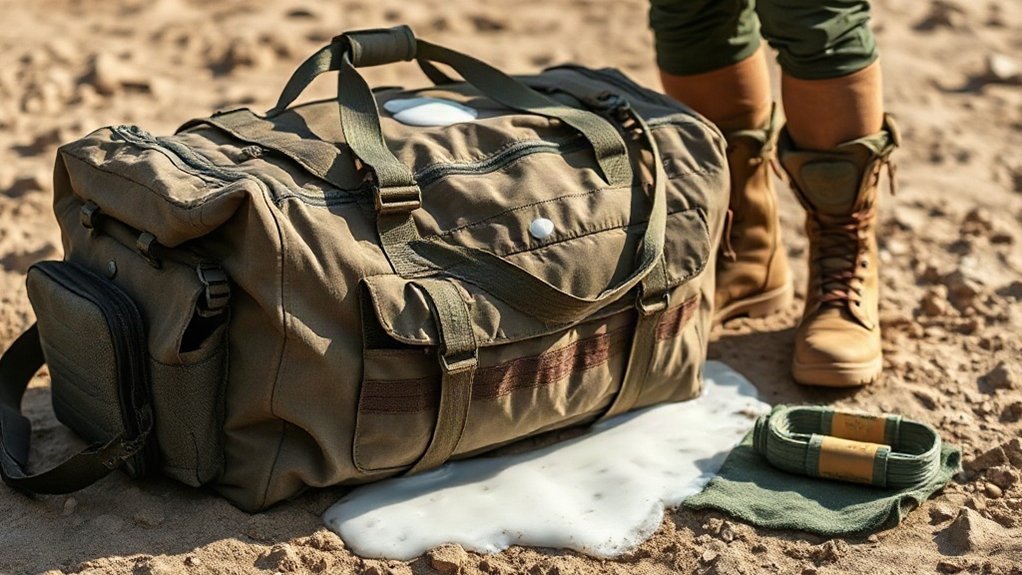
I check the care label first, then empty every pocket and remove loose gear. I keep diesel-soaked items sealed and the duffel outdoors, away from flames and heat. Once wet mud dries, I brush it off gently; I blot diesel with absorbent towels instead of rubbing. I spot-clean fabric, lining, and straps with cool water and mild soap, then wipe away residue. I avoid soaking, harsh chemicals, and machine drying, and air-dry the bag fully. Below, I explain how to check for lingering odors.
Key Takeaways
- Check the care label; spot-clean with cool water and mild detergent, especially if the bag has padding, a frame, or leather trim.
- Empty every compartment, isolate fuel-contaminated items, and gently brush off mud once it is completely dry.
- Blot fresh diesel with absorbent towels outdoors; avoid rubbing, flames, heaters, and other heat sources.
- Clean fabric, lining, straps, and seams gently, then wipe away soap residue with a clean, damp cloth.
- Air-dry the bag fully with compartments open; re-clean lingering odors and wait until it is odor-free before repacking.
Check the Tactical Duffel’s Care Label
Before cleaning, check the care label to identify the bag’s materials and any limits on washing, soaking, or drying. I use those instructions to choose a safe approach for diesel and mud odors, since nylon, 1000d cordura, 600d polyester, ripstop, and leather trim can require different care. Don’t assume every tactical duffel bag can handle a full wash.
If the label prohibits machine washing, or your bag has a rigid frame, padding, or an electronics compartment, spot-clean rather than submerging it. When the label’s missing or unclear, I hand-clean with cool water and mild, pH-balanced detergent. Avoid bleach, chlorine, and harsh scrubbing, which may damage materials. Follow the label’s drying guidance, too; don’t use a tumble dryer or direct heat unless the manufacturer explicitly permits it. For stubborn odors, odor neutralizers can help treat lingering diesel smells after cleaning.
Empty Every Pocket and Remove Loose Items
I empty every pocket, compartment, and sleeve, including hidden sections, and remove damp clothing, food wrappers, and other odor-trapping items. I take out any removable inserts or rigid base boards, then turn the bag upside down and shake out loose mud, sand, and debris. I check corners and seams for grit and remove it with a handheld vacuum or lint roller. Keeping small items in internal pouches can help prevent them from getting lost when you unpack the bag.
Empty All Compartments
Start by clearing out every pocket, compartment, and interior sleeve, removing clothing, gear, wrappers, and other loose items. I check each space carefully, including the wet gear compartment, because damp clothes, spilled drinks, or forgotten food can keep moisture and odors trapped inside tactical duffel bags. Emptying the gear bag also gives me room to inspect its lining without obstruction. If the bag has detachable inserts or a rigid base board, I remove them only when they’re designed to come out safely; I don’t force a stuck part. Next, I leave all zippers open so every compartment stays accessible for inspection and airing. I turn the empty bag upside down and give it a careful shake to dislodge loose mud, grit, and debris before moving on to cleaning.
Remove Loose Debris
With the compartments open, remove everything from every pocket, sleeve, and section, including damp clothing and food wrappers that could hold diesel or muddy residue. Set contaminated items aside for separate cleaning, and wear gloves if they’re oily or strongly soiled. Next, pull out removable inserts and rigid base boards so hidden grit won’t remain trapped underneath. Turn your tactical travel bag upside down over a suitable outdoor surface, then shake it gently to release loose mud, sand, and grit without stressing the seams. Brush dry mud away with a soft-bristle brush before wiping; rubbing first can grind abrasive particles into the fabric. Use a handheld vacuum on interior seams and corners, where fine debris collects. Even a heavy duty, water resistant bag needs careful dry cleanup before washing or deodorizing begins.
Keep Diesel-Contaminated Materials Contained
Before cleaning, I keep the diesel-smelling duffel away from clean gear and empty every pocket and compartment, checking for fuel-soaked items and mud. I set the bag on a tarpaulin base in a clear, ventilated area, well away from flames, sparks, heaters, and other heat sources. Diesel is combustible, so I handle contaminated materials carefully and keep ignition sources out of reach.
I place fuel-soaked clothing and loose items in a sealed, leakproof bag to stop residue and odor from spreading to the duffel’s lining or nearby belongings. I don’t leave those materials in a closed space with the bag. Instead, I isolate them safely and follow local guidance for disposal. I keep the duffel separate from clean gear until it’s been cleaned and fully dried, preserving my freedom to use trusted equipment without spreading contamination. Because truck beds can expose bags to water, I also check the duffel’s water resistance before returning it to vehicle storage.
Lift Off Loose Mud Without Grinding It In
If the mud is still wet, I let it dry completely before removing it so I don’t smear it into the fabric or seams. A little patience protects the material and keeps cleanup controlled, whether I’m caring for a tactical deployment bag after a field exercise or travel.
Once the mud has dried, I use a soft-bristle brush to loosen each crusted patch gently. I work from the patch’s outside toward its center, keeping debris from spreading. I don’t use abrasive tools or scrub hard; either can damage Cordura, ripstop, or water-repellent coatings.
Then I turn the bag upside down and shake out the loosened dirt. With a handheld vacuum, I clear seams and corners. Before moving on, I check pockets, straps, and the base for any remaining clumps.
Blot Diesel Spills and Treat Stains Safely
After clearing away loose mud, I blot fresh diesel with absorbent paper towels or a clean cloth, pressing gently and lifting instead of rubbing so I don’t spread the fuel or drive it deeper into the fabric. I work outdoors or in good ventilation, keep the tactical duffel far from flames and heat, and wear gloves when handling fuel-soaked materials. Before treating the stain, I check the care label and test a hidden spot. I avoid bleach, chlorine, and harsh solvents, which can harm fabric or water-repellent coatings. If the label allows, I use a little mild detergent with cool water and a soft cloth, applying light pressure and removing residue without soaking the bag. I protect the weather resistant zipper. If diesel persists or the spill is extensive, I follow manufacturer guidance or consult a gear-cleaning professional—never use a washer or dryer. Gentle cleaning helps preserve nylon webbing and prevent it from weakening over time.
Spot-Clean Tactical Duffel Fabric With Mild Soap
Once loose mud is gone, I empty the duffel and brush or vacuum debris from the seams and fabric. To spot-clean your tactical duffel safely, I mix a small amount of mild soap with cool water. Hot water, bleach, and harsh chemicals can damage nylon or water-repellent coatings, so I avoid them.
- I test the solution on a hidden area first, checking for color changes or damage.
- I dab soiled fabric with a soft cloth or soft-bristle brush, using light pressure.
- For visible stains, I work in a little soap, wait about 10 minutes, then gently clean the spot.
I wipe away soap with a clean, damp cloth. I’m careful around structured sections and leather trim; don’t soak them. This measured approach helps lift grime while protecting your gear’s materials and finish. Avoid saturating stiffened sections, since excess water can damage the stiffener and affect the bag’s structure.
Rinse the Bag Without Soaking Its Structure
With the mud or diesel-affected areas cleaned, I wipe away suds using a clean cloth dampened with fresh water. I rinse my cloth or soft brush often, then work lightly along seams and crevices. This lifts residue without flooding padding or an internal frame. Don’t dunk a structured duffel; soaking and agitation can harm its shape, ykk zippers, or bar tack stitching.
| Area | Rinse method | Caution |
|---|---|---|
| Main fabric | Wipe with damp cloth | Avoid saturation |
| Seams | Brush lightly | Use little water |
| mesh vent panel | Rinse thoroughly | Clear soap |
| Leather trim | Wipe damp | Don’t soak |
I blot excess water with dry microfiber, then leave the bag open in a well-ventilated spot, away from direct heat, until fully dry. Allowing the bag to dry completely helps prevent mildew growth after exposure to rain or mud. This careful rinse helps protect your gear for the next trip.
Neutralize Diesel Odor in the Lining and Straps
I empty every pocket, then blot diesel residue from the lining and straps with a cloth dampened in cool water and mild, pH-balanced detergent. I gently brush seams and shoulder pads, wipe away soap without soaking the bag, and apply a fabric-safe, fragrance-free bio-based odor eliminator according to its label. If diesel has soaked through, I spot-clean again rather than machine-wash, then leave the bag fully open in a well-ventilated area until it’s completely dry. PALS webbing should be cleaned gently to help prevent fraying.
Treat the Lining
After emptying every compartment, vacuum debris from the lining’s seams and corners so it won’t interfere with cleaning. I spot-clean with a cloth dampened in cool water and a little mild, pH-balanced detergent, using light pressure to protect coatings. Check the care label before trying equal parts water and rubbing alcohol; test a hidden spot first.
- For lingering diesel odor, use a fabric-safe, fragrance-free odor eliminator on the lining, following its label. Don’t mask fumes with perfume.
- Treat the lining carefully in a 50 liter duffel or range bag; harsh scrubbing can damage finishes.
- Open the bag fully in a well-ventilated place and let everything dry completely before packing or storing.
I keep airflow moving and avoid heat or flames around diesel residue. Don’t repack damp fabric: trapped moisture can create new odors and undermine your cleaning.
Deodorize Straps
Once the lining is clean, turn to the straps and shoulder pads, where diesel odor can linger. Empty your tactical duffel and open every compartment so these areas can air out. Dampen a microfiber cloth with cool water and mild, pH-balanced soap, then wipe the straps, lining, and shoulder pads with light pressure, especially around seams. Don’t soak the fabric. Wipe away soap residue with a separate clean, damp cloth.
If diesel smell remains, apply a fabric-safe, fragrance-free bio-based odor eliminator to the affected lining, straps, and pads. Follow the product label, and avoid bleach, chlorine, and harsh solvents; they can damage fabric or finishes. Leave zippers open and air-dry the bag fully in a well-ventilated place, away from direct heat. Don’t store it while damp.
Avoid Harsh Chemicals and Machine Washing
Because harsh cleaners and machine agitation can damage a tactical duffel, I avoid bleach, chlorine, solvents, and the washing machine. These products may weaken fabric or strip its water-repellent coating, while tumbling can harm padding, zippers, and internal frames. It may also void your warranty. To tackle diesel and mud residue, I spot-clean with a gentle method instead:
- Mix cool water with a small amount of pH-balanced soap, then use a soft brush with light pressure.
- Don’t scrub Cordura or ripstop aggressively; that can wear down its DWR coating.
- Wipe leather trim only, and rinse mesh thoroughly to clear away soap.
If your bag has a rigid frame or electronics compartment, don’t submerge it. Careful cleaning protects your gear and keeps you free to rely on it without risking avoidable damage from harsh solvents.
Air-Dry the Tactical Duffel Completely
Gentle spot-cleaning leaves the fabric and coatings in better shape; now I let the duffel air-dry fully before storing it. I open every compartment and unzip all pockets so air can move through the bag, including tucked-away areas that may stay damp.
I hang the tactical duffel upside down or set it on a drying rack in a well-ventilated space. I keep it away from direct sunlight, heaters, and other heat sources; excess heat can damage fabric and protective coatings. Before storage, I check the seams, padding, and pockets for moisture and wait until everything feels completely dry. That helps prevent musty odors and mildew. If I’ll store the bag somewhere humid, I add fresh desiccant packets. These steps also suit a gym bag or luggage I need ready to carry on my next trip.
Check for Lingering Odor Before Repacking
Before I repack the duffel, I let it dry completely in a well-ventilated area, since trapped moisture can make musty smells stronger. Then I open every compartment, including the shoe compartment, and inspect seams, corners, straps, and shoulder pads. These spots can hold diesel residue, mud, or dampness even when the main cavity seems clean.
> Let the duffel dry fully, then check every compartment, seam, strap, and shoulder pad for residue or dampness.
- Smell the lining and contact points for fuel or earthy mildew odors; don’t pack while either persists.
- Look for dark speckling or damp patches that may signal mildew or moisture trapped in the fabric.
- Check a 70 liter duffel’s pockets and seams carefully before adding packing cubes.
If I find an odor or suspect residue, I clean the affected area and air the bag out again. I only store or use it once it’s dry and odor-free.
Frequently Asked Questions
What Neutralizes the Smell of Diesel?
A bio-based, fabric-safe odor eliminator can neutralize diesel smell by breaking down odor-causing compounds rather than masking them. I’d first blot away any fuel with absorbent cloths—never rub—then clean the spot with cool water and a little mild detergent, rinsing well. You can try a diluted vinegar wipe after testing a hidden area. I’d let the item dry fully outdoors or in good airflow, away from heat, sparks, and flames.
How to Remove Bad Smell From Duffle Bag?
I remove bad smells from a duffle bag by emptying every pocket, vacuuming out debris, and leaving it open in a well-ventilated spot. I spot-clean the lining, straps, and pads with cool water and mild detergent, then wipe away soap with a damp cloth. For lingering odors, I use a fabric-safe bio-based eliminator as directed. I air-dry the bag completely, away from heat. For light smells, I leave baking soda inside overnight.
How to Get Rid of Military Surplus Smell?
I treat military-surplus smell like a stowaway: I open every compartment and send it packing. I remove inserts, check seams and corners, then air the bag outdoors for 24 hours. If the odor lingers, I hand-clean it with cool water, mild pH-balanced detergent, and a soft brush. I rinse thoroughly and air-dry with zippers open, away from heat. For stubborn smells, I use fabric-safe odor eliminator, then store it dry and partly unzipped.
How to Clean a Military Duffle Bag?
I clean a military duffle bag by first emptying every pocket and removing detachable inserts or rigid base boards. I shake it outdoors, then vacuum loose dirt and sand. I check the care label; I hand-wash structured bags, framed bags, or bags with electronics or leather trim. For washable fabric, I use cool water and a little mild, pH-balanced detergent, gently brushing seams. I rinse thoroughly, then air-dry fully with compartments open, away from heat.
Conclusion
I don’t put a diesel-smelling duffel back into service just because the outside looks clean. Fuel odor can linger in seams and straps, so I check them after the bag is fully dry and repeat gentle cleaning if needed. I also resist the urge to use bleach, solvents, or a hot dryer; they can damage materials or create hazards. Once the odor’s gone and the bag is dry, I repack it confidently and store it in a ventilated place.
References
Flammable Liquids | Occupational Safety and Health Administration, https://www.osha.gov/flammable-liquids
Volatile Organic Compounds’ Impact on Indoor Air Quality | US EPA, https://www.epa.gov/indoor-air-quality-iaq/volatile-organic-compounds-impact-indoor-air-quality
Technical Overview of Volatile Organic Compounds | US EPA, https://www.epa.gov/indoor-air-quality-iaq/technical-overview-volatile-organic-compounds