Which MOLLE Backpacks Keep Their Stitching Intact After Years of Field Use?
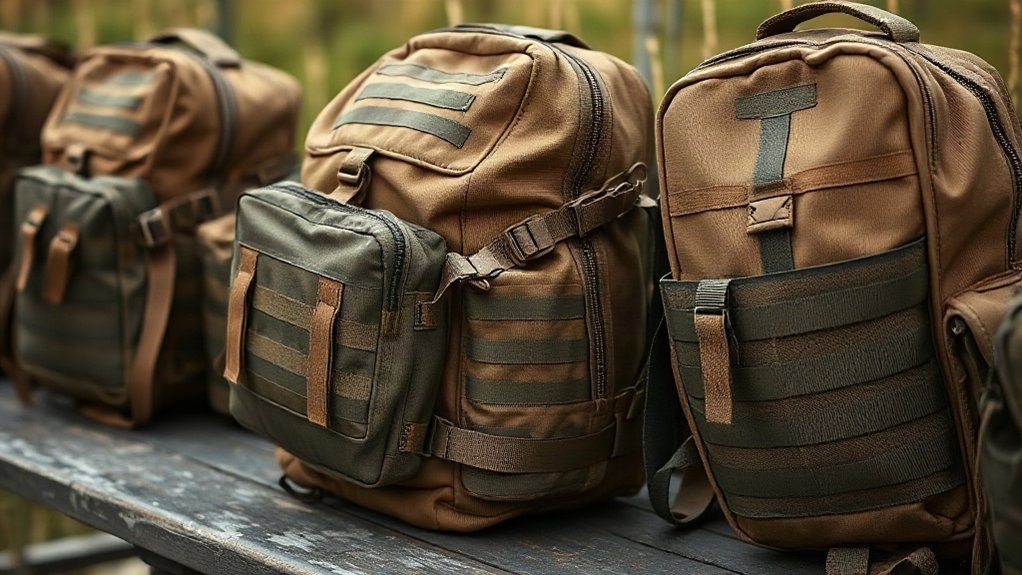
I can’t point to a MOLLE backpack proven to keep its stitching intact for years; comparative long-term field data isn’t available. I’d compare a surplus Army MOLLE II with RUSH® models by capacity, condition, and construction, not assume one lasts longer. Before buying, I’d inspect shoulder-strap anchors, bartacks, seams, and PALS webbing for loose, frayed, or skipped stitches. Then I’d load the pack and test for shifting, strain, and comfort. A closer look at stress points can help you choose with confidence.
Key Takeaways
- No comparative long-term tests establish which MOLLE backpack keeps its stitching intact longest.
- The MOLLE II lists reinforced webbing and heavy-duty stitching, but this does not prove years of stitch durability.
- Inspect shoulder-strap bases, webbing anchors, spine seams, and PALS rows for loose, skipped, fraying, or distorted stitches.
- Gently tug straps and loaded pouches; reject attachments that shift, gape, sag, or separate.
- Choose a pack that fits your load, avoid overloading it, and inspect stress points after demanding outings.
How Do Surplus and RUSH® MOLLE Packs Compare?
Both the surplus U.S. Army MOLLE II 3-Day Assault Pack and RUSH® packs give you MOLLE-compatible options for carrying gear, but I wouldn’t claim one lasts longer based on the available evidence. The 37.5-liter molle ii rucksack uses ballistic nylon, reinforced webbing, and heavy-duty stitching; its field-tested construction is described as solid and combat-proven. RUSH® sizes range from 24 to 60 liters, including the 55-liter 11 tactical rush 72, but the supplied details don’t specify fabric denier or stitch construction.
For years of independent use, I’d inspect bartack stitching at shoulder-strap bases and webbing attachments, then check the spine, seams, and hardware. Neither long-term stitch-failure rates nor comparative durability tests are available. Field use can reveal how construction holds up under demanding conditions over time. Choose by capacity and condition, and let a careful hands-on inspection—not an unsupported longevity claim—guide your decision.
What Makes MOLLE Backpack Stitching Last?
When a MOLLE pack carries heavy gear, reinforced stitching at shoulder-strap bases, webbing anchors, and the spine helps it withstand repeated field use. I look for box-stitched strap anchors and bartacks where loads concentrate or pulling repeats; these details can keep a seam intact when a long outing tests the pack. Strong seams and robust thread matter, too, especially when paired with abrasion-resistant fabric such as 1000d cordura nylon. Evenly spaced, securely stitched PALS rows let pouches attach consistently, reducing uneven strain during movement. After demanding trips, I inspect seams, bartacks, and webbing attachment points for loose or damaged stitches before loading up again. That simple check helps me catch wear early and keep my gear dependable, so I can carry what I need and stay ready to move freely. Comparing real-world wear reports can also reveal which military-style packs maintain their stitching after years of hard use.
What Webbing and Reinforcement Should You Check?
I check PALS rows for straight spacing and firm stitching, since crooked webbing can make pouches fit poorly or shift under load. I inspect molle webbing across the pack, looking for even pals grid rows and secure attachment seams. In the field, loose threads or abrasion can signal wear before a failure leaves you without dependable gear.
I also examine the shoulder-strap bases, spine, and every webbing attachment point; these areas take repeated strain when I carry a loaded pack. Box-stitched strap anchors and bar-tacked stress points help resist pulling, but I still check that each seam stays tight after hard use. Durable 500D–1000D nylon or Cordura can withstand rough conditions, yet strong fabric won’t compensate for weak construction. I rely on sound reinforcement to keep the pack secure and let me move freely. Reinforced stress points also help assault packs withstand the repeated strain of rough field use.
Which RUSH® MOLLE Backpack Fits Your Load?
How much pack do you actually need? I match capacity to the load I carry most often, not the rarest worst-case scenario. Among molle backpacks, the RUSH® 12 2.0 holds 24L, a compact choice for everyday use and shorter outings. The RUSH® 24 2.0 provides 37L for fuller daily loads, travel, or an overnight trip.
A three-day assault pack’s usable space depends on packing style and how efficiently gear is organized.
When I need room for a heavy load over several days, the RUSH® 72 2.0 offers 55L. The RUSH® 100 carries 60L, the greatest volume in this lineup. I check how each pack’s internal organization suits my gear, then add modular MOLLE pouches only when they improve access or sorting. A properly sized pack helps me move freely, keeps essentials organized, and avoids carrying space—and weight—I don’t need.
Is the Army MOLLE II Pack Worth Buying?
I’d start by checking the MOLLE II’s ballistic nylon, reinforced webbing, and stitching for the durability its field-ready design promises. I’d then weigh its structured back insert against thin shoulder padding and limited ventilation during long carries. At $43.95 in surplus, I’d consider it a strong-value day pack or get-home bag, not a choice for hauling loads over 100 miles. Like pack stitching, reinforced webbing helps MOLLE pouches stay attached through repeated field use.
Stitching And Durability
For a surplus pack priced at $43.95, the Army MOLLE II 3-Day Assault Pack offers promising construction, but I wouldn’t treat its long-term durability as proven. Ballistic nylon, reinforced webbing, and heavy-duty YKK zippers suit demanding field use, but materials alone can’t confirm years of service.
| Area | Evidence | What I’d check |
|---|---|---|
| Seams | Reinforced stitching | Loose or frayed threads |
| PALS webbing | Reinforced attachment points | Pulling or separation |
| Back insert | Removable nylon support | Damage or distortion |
I’d inspect shoulder-strap bases, seams, and webbing joins before loading it. Its molle layout lets you add pouches, but every attachment adds strain; keep gear balanced and avoid overloading. The $39.95 member price makes this a low-cost choice for independent use, not a field-tested guarantee. The available details don’t establish how its stitching holds up after years.
Field Comfort And Fit
Construction matters, but field comfort determines whether the Army MOLLE II 3-Day Assault Pack stays wearable under load. I found its relatively thin, padded shoulder straps comfortable at first, and their profile fits over plate carriers and other gear. Quilted back padding cushions the load, but the lack of mesh can trap heat during extended wear. There’s also no lumbar support, a limitation I notice most when carrying heavier loads for long periods or tackling heavy load hiking.
High and low compression straps help stabilize contents, while an adjustable sternum strap lets me tune the fit. I can tuck away the waist belt and shoulder straps when mounting the pack on a U.S. military-issued frame. That adaptability supports changing field setups, though sustained comfort depends on keeping the load manageable and adjusting the pack carefully.
Value For Your Needs
At about $43.95, the Army MOLLE II 3-Day Assault Pack offers strong value if you need a durable surplus field pack rather than a long-haul carry system. I like its 37.5-liter capacity, ballistic nylon, removable back insert, and reinforced attachment points for a practical day pack or get-home bag. Its mil-spec webbing and YKK zippers suit demanding field use, while side and shoulder-strap PALS rows, a hydration sleeve, and compression straps keep gear organized without extra attachments.
I wouldn’t treat the price or hardware as proof that its stitching will last for years; the available evidence doesn’t establish that. Thin shoulder padding, a non-mesh back, and no lumbar support also limit comfort on extended carries. For affordable, adaptable freedom on shorter trips, it’s a sensible buy—not a 100-mile load hauler.
How Can You Check MOLLE Backpack Seams Before Buying?
I check seam stitching for skipped stitches, loose threads, or gaps, especially at strap bases and along the spine. I look for reinforced stress points and make sure PALS webbing sits straight and stays firmly attached to the pack. If possible, I load the bag and confirm the seams don’t pull apart or distort. Load-lifter placement helps transfer weight effectively and can reduce strain on the seams during heavy carries.
Inspect Seam Stitching
Because stress points take the most strain in use, I check the shoulder-strap bases, webbing anchors, and backpack spine for loose, skipped, or fraying stitches. I look for reinforced stitching, bartacks, and box-stitched strap anchors that hold seams securely under load. Then I trace each seam for gaps, uneven thread, or stitching that stops around an attachment point; any flaw can spread during miles of movement.
I also inspect PALS webbing rows for straight alignment, even spacing, and firm attachment. Crooked rows can limit molle attachment straps and reduce compatibility with pouches, restricting how freely I can configure my load. Finally, I judge stitching alongside fabric, zippers, and buckles. Strong materials mean little if seams or hardware fail, so I favor clean, consistent construction backed by careful inspection.
Check Stress Points
To check MOLLE backpack seams before buying, I focus on the stress points where failure is most likely: shoulder-strap bases, the spine, and webbing anchors. I look for reinforced stitching, bar-tacks, and box-stitched strap anchors, then check that seams stay even, without loose threads, skipped stitches, fraying, or gaps. On 500d cordura packs, I gently tug the straps and load lifters; solid construction shouldn’t shift or gape. I also inspect seams around zippers, buckles, and side compression straps for pulling or distortion. If the shop allows it, I load the pack and watch for movement under weight. These checks help me judge whether the bag can carry essentials reliably in the field, so I can travel farther without worrying that a critical seam will fail when I’m away from repair options.
Examine Webbing Attachment Seams
When inspecting a MOLLE backpack, I check that the PALS webbing rows run straight, sit evenly spaced, and attach securely to the pack. Crooked rows can complicate pouch placement and limit how you configure your load. At each webbing seam, I look for tight, reinforced stitching, including bartacks, with no skipped stitches, loose threads, or gaps.
I focus on attachment points, shoulder-strap bases, and the spine because field loads put stress there. I also check strap anchors and load-bearing seams for box stitching. Then I gently tug the webbing to feel for movement or separation. With laser cut molle, I inspect cut edges and attachment details just as carefully. I confirm malice clips sit securely and buckles and zippers show no damage, especially on a tactical assault pack.
Where Do MOLLE Backpack Seams Wear First?
After repeated field use, I check the shoulder-strap bases first: they carry constant loads, and their stitching can start to loosen. On a patrol pack, early strap sag can signal stress at these anchors, not just a comfort issue. I look for bartacks and box stitching, then scan other load-bearing seams before trusting a tactical pack for another long outing.
- At strap bases, I check reinforcement for loose threads, gaps, or separation.
- Around MOLLE/PALS rows, I inspect attachment seams where loaded pouches pull and shift.
- Along the spine, I look for abrasion and seam damage after hard use.
I also examine zipper stitching, buckles, and webbing alignment; a strong seam won’t compensate for a loose buckle or shifted webbing. These checks help me spot weak points before they limit what you can carry—or where you can go. Like duffel bags exposed to baggage handling, packs benefit from abrasion-resistant fabric that can withstand repeated friction.
How Do You Maintain MOLLE Webbing and Stitching?
I inspect MOLLE rows for straight spacing and check stitching, bartacks, and webbing attachment points after demanding outings, especially at the shoulder-strap bases and along the spine. I also examine stress-point seams, buckles, and zippers; loose threads can let a pouch detach and compromise field readiness.
| Check | Maintenance |
|---|---|
| MOLLE webbing and seams | Spot loose or damaged stitching |
| Straps and pouch fit | Weave alternating rows; secure tails |
| Pack surface | Clean with mild soap and water |
I weave pouch straps through alternating pack and pouch rows without skipping, then pull gently to confirm each pouch sits close without wobbling. I secure loose strap tails and leave unnecessary pouches behind: excess load adds bulk and strains attachment points. After cleaning my rucksack, I follow the manufacturer’s care instructions. These simple checks help preserve dependable carry without limiting your freedom to move.
How Should You Test a Loaded MOLLE Pack?
Load your MOLLE pack with the gear and approximate weight you expect to carry, then wear it long enough to judge fit, balance, and comfort. I test a tactical edc backpack on the move, not just in front of a mirror; a stable load protects seams and leaves you free to travel.
> Test your MOLLE pack under a realistic load to check fit, balance, and comfort while moving.
- Pack dense items low, close to your back, and near the center. Walk, bend, and turn; note any shifting.
- Weave pouch straps through alternating webbing rows without skipping. Tug each pouch and check for sagging, looseness, or excess movement.
- Inspect stitching at shoulder-strap bases, attachment points, and spine. Check bartacks, seams, zippers, duraflex buckles, and any aluminum frame under load.
Make sure attachments don’t block zippers, snag, or add unwanted bulk. Secure loose strap tails, then move naturally. Loose threads or shifting webbing signal trouble before a longer field outing.
Frequently Asked Questions
What Backpacks Last a Long Time?
I’d choose backpacks made from 500D–1000D nylon or Cordura, with reinforced seams and bartacks or box stitching at shoulder-strap bases and attachment rows. Check that PALS webbing sits straight, stitches look even, and zippers and buckles feel secure. I’ve found that solid construction lasts longer when the pack also supports its load well. Keep dense gear close to your back, avoid overloading pouches, and inspect stress points after demanding trips.
What Is the 20% Rule for Backpacking?
The 20% rule says your loaded backpack should weigh no more than 20% of your body weight. At 150 pounds, I’d use 30 pounds as a starting ceiling, counting the pack, food, water, and gear. I wouldn’t treat that number as a guarantee: fitness, distance, terrain, and pack fit all matter. Before heading out, I’d weigh the fully loaded pack and remove nonessentials if it exceeds what feels manageable for me.
Which MOLLE Backpack Is the Best?
I’d choose the 5.11 RUSH® 24 2.0 as the best all-around MOLLE backpack: it’s the sweet spot between daily freedom and overnight capacity, with 37 liters for flexible loads. For a compact carry, I’d pick the 24-liter RUSH® 12 2.0; for multi-day trips, the 55-liter RUSH® 72 2.0 or 60-liter RUSH® 100. I’d inspect reinforced seams and webbing after hard use, and avoid overloading the pack with pouches.
What Backpacks Do Navy SEALS Use?
Navy SEALs don’t all use one publicly confirmed backpack; I’d expect pack choice to vary with mission, load, and unit requirements. MOLLE/PALS webbing supports compatible pouches, but it doesn’t identify a specific SEAL-issued model. The Army MOLLE II 3-Day Assault Pack is a separate design, not proof of standard SEAL use. For dependable field performance, I’d inspect reinforced stitching, shoulder-strap bases, and webbing joins—and verify adoption claims through reliable, current sources.
Conclusion
I don’t judge a MOLLE pack by its labels alone; I inspect the stitching, bartacks, webbing, and stress points, then test it under load. Surplus, Army MOLLE II, and RUSH® packs can all serve well, but condition and construction decide how long they last. I check seams after every trip and repair loose threads early. Stitching is a pack’s quiet backbone: when it holds, the whole load stays secure through years of hard miles.
References
MOLLE, https://en.wikipedia.org/wiki/MOLLE
Bar tack, https://en.wikipedia.org/wiki/Bar_tack