Which Multitools Are Best for DIY Projects and Home Repairs?
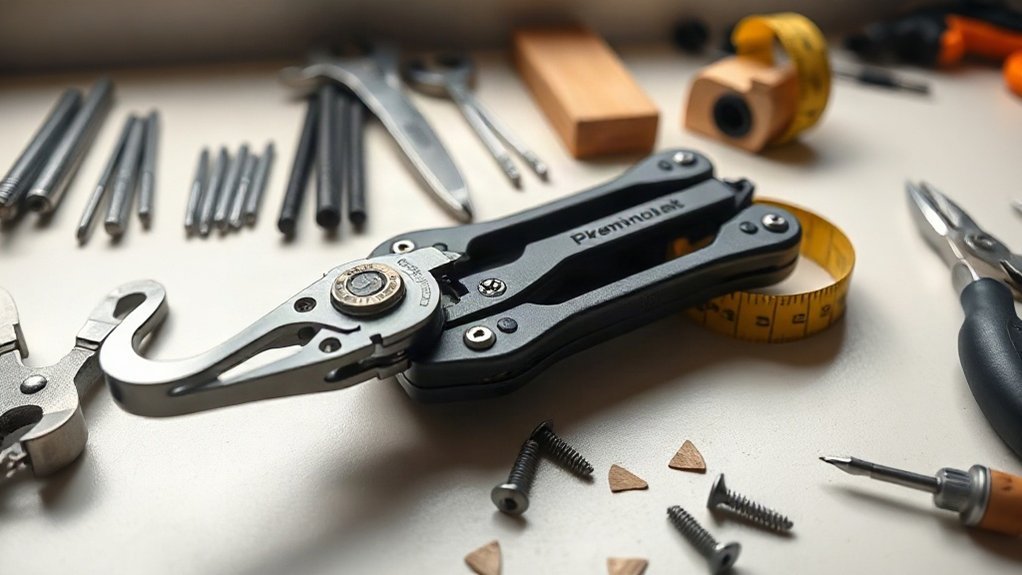
I’d choose an oscillating multi-tool for heavier home repairs, such as cutting baseboards, adjusting drywall, or sanding woodwork. For quick fixes, the Leatherman Wave Plus offers pliers, scissors, wire cutters, and screwdrivers, while the Swiss Army Classic SD handles packages and tiny screws. I’d consider a Dremel 3000 for detailed shaping and a Gerber Suspension for general repairs. Match each tool to your tasks, materials, and budget; the comparisons below can help you find the right fit.
Key Takeaways
- Choose an oscillating multi-tool for heavier cutting, sanding, scraping, or grinding on drywall, baseboards, and woodwork.
- Consider a Dremel 3000 rotary tool for detailed crafting, intricate shaping, and precision work.
- Pick the Leatherman Wave Plus for portable repairs requiring pliers, scissors, wire cutters, or screwdrivers.
- Use the Swiss Army Classic SD for light tasks like opening packages and tightening miniature screws, not demanding repairs.
- Compare the Gerber Suspension, budget Gordon 20-in-1, and premium Leatherman options against your projects, budget, and material needs.
How to Choose a DIY Tool for the Job?
How you choose the right multitool depends on the work ahead. I start with project planning: list the tasks, materials, and level of detail, then pick a tool that gives you freedom without carrying more than you need.
For cutting, sanding, scraping, or grinding drywall, baseboards, and wood, an oscillating multi-tool handles broader DIY work. For intricate tasks, I’d choose a Dremel 3000 rotary tool kit. A Leatherman Wave Plus suits a pocketable repair kit, while a Swiss Army Classic SD can cover small jobs like opening packages or tightening small screws. For general repairs, consider a pliers-based Gerber Suspension, but check its tool set against your needs. I also factor in tool safety: choose a comfortable grip, use the right accessory, and follow the maker’s instructions. You’ll work more confidently.
Best Overall: Oscillating Tool for Home Repairs
For a single tool that can tackle a variety of home repairs, I’d choose an oscillating multi-tool. Its Cutting versatility lets you move between cutting, sanding, scraping, and grinding without changing tools. That freedom comes in handy when a project calls for several kinds of work, such as trimming baseboards, adjusting drywall, or refining woodwork.
I also value its Material adaptability across common DIY tasks. Instead of committing to a tool with just one purpose, you can fit the job at hand and keep working as your repair changes. Use it to make a cut, smooth an edge, remove unwanted material, or grind a rough spot. An oscillating multi-tool won’t replace every specialized tool, but its broad range of applications makes it a strong overall choice when you want flexibility for repairs around the house.
Leatherman Wave Plus for Pocket Repairs
When a repair calls for a quick fix rather than a full toolbox, I’d reach for the Leatherman Wave Plus. It gives you a versatile option for compact pocket repairs at home or on the go, so you can handle minor problems without being tied to a workshop. I can use its pliers to grip or bend, its scissors to trim, and its wire cutters and screwdrivers for common household fixes. That range makes it a practical companion when a loose screw, stray wire, or small adjustment interrupts your day. Its small accessories also add useful flexibility for accessory quick fixes away from a full toolbox. I wouldn’t treat it as a replacement for larger tools, but I like having capable essentials close at hand—and the freedom to get moving again.
Swiss Army Classic SD for Small Jobs
If I need less than the Wave Plus offers, the Swiss Army Classic SD is a handy choice for small jobs around the home. I reach for it when I want a compact tool for quick fixes, not a substitute for a full-size repair kit. Its basic tools let me handle everyday tasks without carrying more than I need.
- Open packages with its small blade.
- Tighten miniature screws with its screwdriver.
- Take on quick fixes around the house.
- Keep a simple tool close for minor jobs.
That freedom suits light DIY work, where convenience matters more than heavy-duty capability. I wouldn’t choose the Classic SD for repairs that need pliers, wire cutters, or full-size screwdrivers. For those, I’d pick a larger multi-tool. But for simple jobs that pop up throughout the day, this little option is easy to keep nearby and ready to use.
Dremel 3000 for Detailed Projects
The Dremel 3000 Rotary Tool Kit earns a place among my top DIY picks for intricate, detailed work. Ranked fourth among my recommended tools, it’s a useful choice when your project calls for a careful touch. I’d consider it for Detailed crafting and Intricate shaping, where control and precision matter more than tackling broad, heavy-duty jobs.
I can’t point you to specific tasks, attachments, speed settings, or included accessories based on the information available, so check the kit’s current listing before you buy. Still, its role is clear: it gives you an option for detailed DIY work when you want to shape your projects with care. If you value the freedom to focus on fine details, the Dremel 3000 deserves a look among the tools in this guide.
Gerber Suspension for Everyday Home Repairs
For everyday home repairs, I’d consider the Gerber Suspension Multi-Tool, which ranked fifth among the DIY tools in this guide. I like having a compact option to reach for when a small fix comes up, without committing to a full workshop setup. Its everyday repair suitability depends on whether its tool selection covers the work you expect to tackle.
> The Gerber Suspension ranked fifth among DIY tools, offering a compact option for small home repairs.
Before you buy, I’d check the product listing for details, since the available information doesn’t specify its tools, dimensions, or weight. That gives you room to decide for yourself rather than rely on assumptions. I’d focus on these checks:
- Confirm which tools the Gerber Suspension includes.
- Compare its selection with your usual repair needs.
- Check dimensions before choosing where to carry it.
- Review weight to see if it suits your preferences.
That way, you can make an informed, independent choice.
Match Each Tool to Your DIY Tasks
I match each tool to the job: an oscillating multi-tool handles cutting, sanding, scraping, or grinding, while a Dremel 3000 suits intricate work. For pocket-sized repairs, I’d choose the Leatherman Wave Plus; the Swiss Army Classic SD is handy for packages and small screws. For general home repairs, I’d consider the Gerber Suspension—what are you planning to tackle?
Match Tools to Tasks
Choosing the right multi-tool depends on the task. I match the tool to the job, surface materials, and safety considerations so I can work confidently and keep my options open. For home projects, I consider these uses:
- Oscillating multi-tool: I cut, sand, scrape, or grind drywall, baseboards, and woodwork.
- Leatherman Wave Plus: I handle household repairs with pliers, scissors, screwdrivers, and wire cutters.
- Swiss Army Classic SD: I open packages and tighten small screws with compact everyday tools.
- Dremel 3000 Rotary Tool Kit: I tackle intricate DIY projects that call for detailed work.
For general home repairs, I also consider the Gerber Suspension. I choose based on the task at hand rather than carrying more capability than I need. That keeps my setup practical and lets me move freely from one repair to another.
Choose Your Project Tool
A loose baseboard, a frayed wire, or a stubborn package each calls for a different tool. For cutting, sanding, scraping, or grinding drywall, baseboards, and woodwork, I reach for an oscillating multi-tool. It lets me handle varied repairs without switching to several separate tools.
For pocket-size fixes that involve gripping, cutting wire, or using scissors, I’d choose the Leatherman Wave Plus. The Swiss Army Classic SD suits quick tasks like opening packages or tightening small screws. If your project needs fine, precise work, consider the Dremel 3000 rotary tool kit. For general home repairs, the Gerber Suspension offers another multi-tool option, though its specific tools aren’t listed here.
I use project planning to match each tool to the job, then check safety essentials before I start. That way, you can choose confidently and tackle repairs on your terms.
Compare DIY Tools by Price and Use
I’ll compare prices, from the roughly $40 Gordon 20-in-1 to the $100 Leatherman Skeletool CX. Then I’ll help you match each tool to your tasks, whether you’re handling pocket-sized repairs, intricate projects, or heavier cutting and sanding.
Compare Tool Prices
For everyday repairs, I’d match the multitool to both your budget and the jobs you tackle. Budget multitool pricing starts near $40 with the Gordon 20-in-1, whose layout resembles the Leatherman Wave+. If you want a compact upgrade, compare these options:
- About $100: the Leatherman Skeletool CX adds pliers, screwdrivers, wire cutters, and a one-handed 154CM knife.
- About $150: the Leatherman Signal includes a saw, awl, and fire starter, though it leans toward outdoor use.
- About $250: the Leatherman Arc offers quick one-handed deployment, a broad tool set, and a durable MagnaCut blade.
- For drywall, baseboards, or woodwork, I’d choose an oscillating multi-tool for cutting, sanding, scraping, or grinding.
Premium multitool value depends on whether those upgraded materials and features justify the added cost to you.
Match Tools To Tasks
Choose a multitool by the work you need it to do: an oscillating multi-tool handles broad jobs like cutting, sanding, scraping, and grinding drywall, baseboards, or woodwork, while the Leatherman Wave Plus suits pocket-sized repairs with pliers, scissors, screwdrivers, and wire cutters. I’d choose based on your projects, not just the tool count. For opening packages or tightening small screws, the compact Swiss Army Classic SD keeps everyday tasks simple. If you tackle intricate projects, consider the Dremel 3000 Rotary Tool Kit; for general home repairs, the Gerber Suspension is another option. Need portable task versatility at a lower price? The Gordon 20-in-1 costs about $40 and closely matches the Wave Plus layout, but its wire cutters aren’t replaceable. Check material compatibility choices before buying so your tool fits both your work and your freedom to move.
Frequently Asked Questions
What Is the Best Multi-Tool for DIY Projects?
I’d choose an oscillating multi-tool for the best DIY versatility. It can cut, sand, scrape, and grind materials like wood, drywall, and baseboards, so you can tackle varied projects with one tool. Check Blade versatility and accessory compatibility before buying; I’d match the attachments to your tasks and confirm replacements are easy to find. For a pocketable option, I’d consider the Leatherman Wave Plus, but it can’t handle workshop jobs as broadly.
What Is the Best Tool Set for DIY Projects?
For a versatile DIY tool set, I’d choose essential hand tools and a cordless drill set. I’d start with a hammer, tape measure, level, pliers, screwdrivers, and an adjustable wrench; then I’d add a drill with assorted bits for faster, freer work. For home repairs, I’d also keep a Leatherman Wave Plus nearby for quick fixes. If you tackle detailed crafts or woodwork, I’d consider a Dremel 3000 or oscillating multi-tool.
What Is the Best Tool Brand for DIY Projects?
For DIY projects, I’d choose Leatherman as the best tool brand because its versatile multitools handle common repairs and everyday jobs. The Wave Plus offers pliers, scissors, screwdrivers, and wire cutters, while the lighter Skeletool CX suits an easy-carry setup. I’d weigh Brand reliability and warranty coverage before buying, since support matters when tools see frequent use. If you want a lower-cost option, Gordon’s 20-in-1 provides similar versatility for about $40.
What Is the Best Multitool for Home Use?
I’d choose the Leatherman Wave Plus as the best multitool for home use: its pliers, scissors, screwdrivers, and wire cutters tackle many essential household repairs. With multiple functions in one tool, it can help you handle quick fixes without hunting through a crowded toolbox. For compact home multitools, I’d pick the Skeletool CX when portability matters, or the affordable Gordon 20-in-1 for a kitchen drawer. You’ll get practical freedom to fix things wherever they arise.
Conclusion
I choose my multitool based on the job, not the hype. An oscillating tool tackles stubborn home repairs, while a Leatherman Wave Plus handles quick fixes on the go. For tiny tasks, I reach for a Swiss Army Classic SD; for fine detail, a Dremel 3000. The Gerber Suspension suits everyday repairs without fuss. No single tool does everything—and the most expensive isn’t always best. Match the tool to the task, and DIY gets easier.