How Can Beginners Choose Hatchets and Tomahawks Without Overspending?
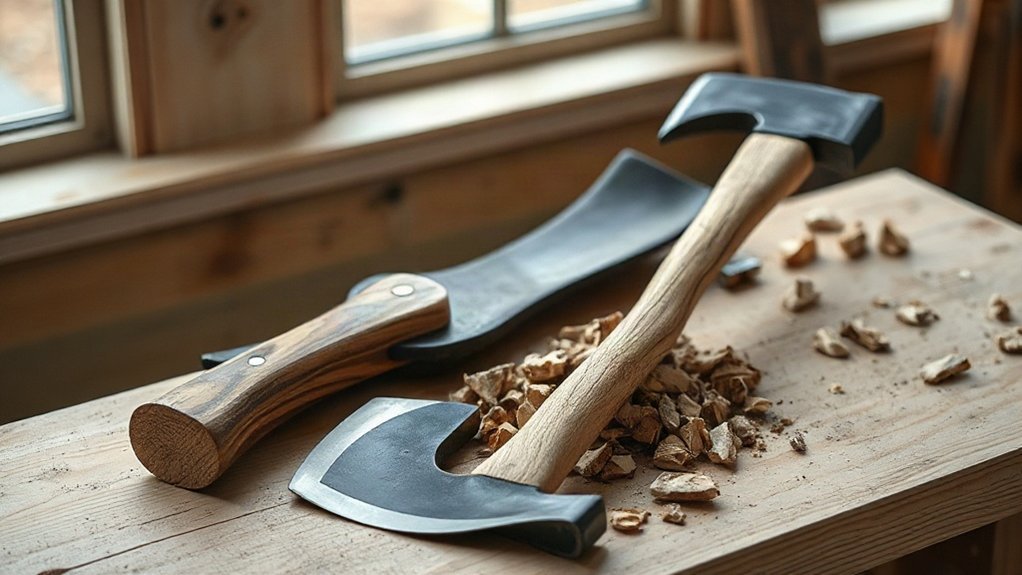
I recommend choosing a hatchet or tomahawk for the jobs you’ll actually do. For kindling and small branches, I’d pick a 1–2-pound hatchet; for lighter backpacking, consider a compact saw instead of relying on a very light axe for firewood. Check that the weight, handle length, and blade profile suit your needs, and compare total cost, including a secure sheath and sharpening tools. I’d also weigh maintenance and construction before buying; the details below can help you decide.
Key Takeaways
- Match the tool to the job: choose a hatchet for camp chores and a tomahawk for throwing or light work.
- Set a budget and compare total weight, balance, construction, and blade shape—not appearance or extra features.
- Choose a 1–2-pound hatchet for kindling and small branches; consider a compact saw for backpacking firewood.
- Check whether a secure sheath is included, since buying one separately adds to the total cost.
- Budget for a file, sharpening stone, and basic maintenance; keep the tool clean, dry, and protected.
Choose a Hatchet or Tomahawk for Your Tasks
Start with the work you need the tool to do. For camp chores like chopping kindling, small branches, or firewood, I’d choose a hatchet. Its thicker, heavier head handles repeated wood impacts better, giving you a dependable way to prepare fuel without relying on anyone else.
If you want a tool for throwing or quick work on twigs and small branches, I’d consider a lighter tomahawk with good throwing balance. It’s nimble, but I wouldn’t count on it for substantial firewood splitting. Before buying, I’d compare weight, balance, blade profile, and intended use—not just price. A lightweight hatchet may chop a stump more effectively than a similarly weighted tomahawk with a thin blade. For backpacking, I’d also ask whether a compact saw offers better value for preparing firewood on your own terms.
Match Hatchet or Tomahawk Weight to the Job
For camp chores like splitting kindling or cutting small branches, I’d choose a hatchet with a 1–2-pound head for more chopping power than a lightweight tomahawk. Match the weight to your plans, not an urge to buy extra heft.
| Job | Weight guide |
|---|---|
| Small branches | 1–2-pound hatchet |
| Light backpacking chores | Sub-pound tool |
| Substantial firewood | Skip an 8-ounce axe |
| Throwing | Tomahawk near 1 pound |
The Allan Foundry Camp Axe weighs just over 8 ounces; the Bark River Mini-Axe, about 10. That’s freedom from needless pack weight, but the Allan sits near the limit for useful chopping. Check kindling capacity before relying on a very light tool. For backpacking firewood, a 6-ounce Bahco Laplander saw may suit better. For throwing, prioritize throwing balance as well as weight; a near-pound tomahawk often rotates more smoothly than a heavy hatchet.
Pick a Handle Length You Can Control
Weight matters, but handle length affects control too. I match length to how I’ll use the tool, so I can work freely without fighting awkward leverage. For camp chores and chopping, a 10–16-inch hatchet handle gives me better handle control. Throwing calls for a different fit:
- For throwing, I look for a 16–22-inch tomahawk handle to support rotation.
- I avoid short handles for throwing because they can make consistent throws harder.
- For chopping, I skip long handles that feel clumsy.
- For mixed outdoor use, I consider a mid-length handle instead of buying a specialist model.
If I can, I hold the tool before buying. I check whether its length and balance feel comfortable in my hands. That length balance helps me choose a useful tool without overspending.
Check the Blade, Steel, and Handle
Before buying, I check whether the blade, steel, and handle suit the work. Check blade geometry: a thicker, wedge-shaped edge handles repeated chopping, while a thinner tomahawk edge suits lighter tasks and throwing but may chip during heavy splitting. For chopping, I avoid fragile, thin bevels and favor a slightly thicker, convex edge that resists impact damage.
I compare steel durability, too. High-carbon 1055 or 1095 steel holds an edge and takes hard use, but needs occasional oiling. Stainless steel resists rust in damp conditions, though I may sharpen it more often.
Then I inspect the handle-to-head joint. Hickory absorbs shock and is easy to replace; synthetic handles resist rot and weather. I also check weight and balance: tools under eight to ten ounces suit kindling, not substantial firewood.
Set a Budget for a Safe, Durable Tool
I set my budget according to the work: a light hatchet can handle kindling and small branches, but repeated firewood chopping calls for a sturdier, heavier head. I won’t buy the lightest option just to spend less; an axe weighing barely over eight ounces may struggle to chop effectively. Before paying, I compare total weight, balance, and construction.
- Set a Purchase limit based on the jobs you expect to tackle.
- Use cost comparison to weigh value, not appearance or extra features.
- Try the tool in hand; choose a sturdy handle and comfortable balance.
- Favor sound construction and a suitable sheath over a bargain blade that may dull or chip.
A typical hatchet weighs one to two pounds, while compact models can weigh less. Pick what fits your needs, and you’ll avoid replacing a poor fit.
Add a Sheath and Sharpening to Your Budget
I’d budget for a secure sheath to protect the edge and help prevent injuries or damage to your pack. I’d also include a flat mill bastard file and a sharpening stone or puck for regular touch-ups. I’ll cover safe sharpening and basic care to help you keep the tool effective and rust-free.
Include Sheath Costs
A hatchet’s price isn’t the whole cost: check whether it includes a secure sheath, which protects the edge and keeps it from injuring you or damaging your pack in storage. I compare the full package before choosing, so a low sticker price doesn’t mislead me.
- Sheath purchase costs: If the tool arrives bare, add a compatible sheath to your budget.
- Included sheath value: Check the fit and security; a nylon snap-button sheath, like the United Cutlery M48’s, may suit your needs.
- Material matters: The CRKT Kangee includes a Kydex sheath, offering another example to weigh when comparing prices.
- Freedom to carry: A secure cover lets me pack and transport my tool more confidently.
I’d rather pay for useful protection up front than discover I need it after buying.
Budget for Sharpening Tools
After budgeting for a secure sheath, set aside money for sharpening supplies, too. A modest sharpening kit cost can save you from paying for repeated professional touch-ups and lets you maintain your tool wherever your adventures take you. Start with a flat mill bastard file and a coarse-to-fine sharpening stone or puck; thoughtful file and stone selection matters more than buying an expensive collection.
I’d use the file at a consistent bevel angle, then refine the edge with the stone. Aim for a durable, slightly convex edge, not a fragile, razor-thin one. Keep the sheath on whenever the hatchet isn’t in use, and pack it in a backpack or proper tool case for travel. Clean and dry the head after use, then apply a thin film of mineral oil or tool protectant to help prevent rust and extra upkeep costs.
Prioritize Safe Maintenance
When you budget for a hatchet or tomahawk, include a secure sheath to cover the edge and protect people and gear during storage and transport. I also set aside money for a flat mill bastard file and a coarse-to-fine sharpening stone or puck. That modest kit helps me maintain the tool and stay ready for independent work outdoors.
- Use the file to restore the bevel, then refine it with the stone.
- Keep a tough, slightly convex edge; a razor-thin edge can chip while chopping.
- After use, practice careful cleaning: remove sap and dirt, dry the head, and apply thin mineral oil or tool protectant, especially to high-carbon steel.
- Make regular handle inspections: check wooden handles for cracks or splits, and synthetic ones for damage where they meet the head.
These simple habits help me protect my gear and use it confidently.
Frequently Asked Questions
Which Is Better for Self-Defense, a Tomahawk or a Hatchet?
I wouldn’t choose either for self defense: neither offers dependable self defense effectiveness, and both can make close range practicality worse by escalating danger and limiting your options. I’d focus on leaving, calling emergency services, and using lawful safety measures instead. Carrying a bladed tool in public may be restricted, so I’d check local laws and never carry one as a weapon. For legitimate work, I’d choose a hatchet for camp chores or a tomahawk for supervised throwing.
Do Navy Seals Carry Tomahawks?
I can’t confirm that Navy SEALs carry tomahawks as standard equipment; that claim needs reliable, unit-specific reporting. Product marketing isn’t proof, and tactical models don’t establish military use. When I weigh claims, I separate military history from equipment selection and look for credible evidence, not assumptions. You deserve clear facts and freedom to judge for yourself. I’d treat tomahawks here as outdoor tools or recreational throwing axes unless trustworthy reporting shows otherwise.
Is It Better to Get a Heavier Hatchet or Lighter Hatchet?
I’d choose based on your tasks: a heavier hatchet gives you more chopping power, while a lighter one makes carrying easier. If you’ll cut substantial firewood, I’d favor a head weighing 16 ounces or more; for small branches and kindling, a lighter model may work. Consider both Swinging effort and packing weight: I’d pick the lightest hatchet that reliably handles your work and feels comfortable in your hands.
Is It Illegal to Carry a Hatchet for Self-Defense?
It can be illegal to carry a hatchet for self-defense, depending on where you live. I’d check Local carry laws before taking one into public; rules differ, and self-defense alone may not count as a lawful purpose. Carry it only when a legitimate activity, like tramping, work, or an axe-throwing event, explains why you need it. I’d keep it sheathed and secured in a pack to reduce risk and avoid legal consequences.
Conclusion
I choose a hatchet or tomahawk by starting with the jobs I’ll actually do, then checking weight, grip, materials, and safety—not chasing the lowest price or fanciest finish. A well-matched tool is easier to control and more useful over time. One useful reminder: a 20-ounce hatchet weighs just 1¼ pounds, but that small difference can change how tiring repeated swings feel. I also budget for a sheath and sharpening, so I’m ready to use and maintain it safely.