What Should You Look for When Buying Hatchets and Tomahawks?
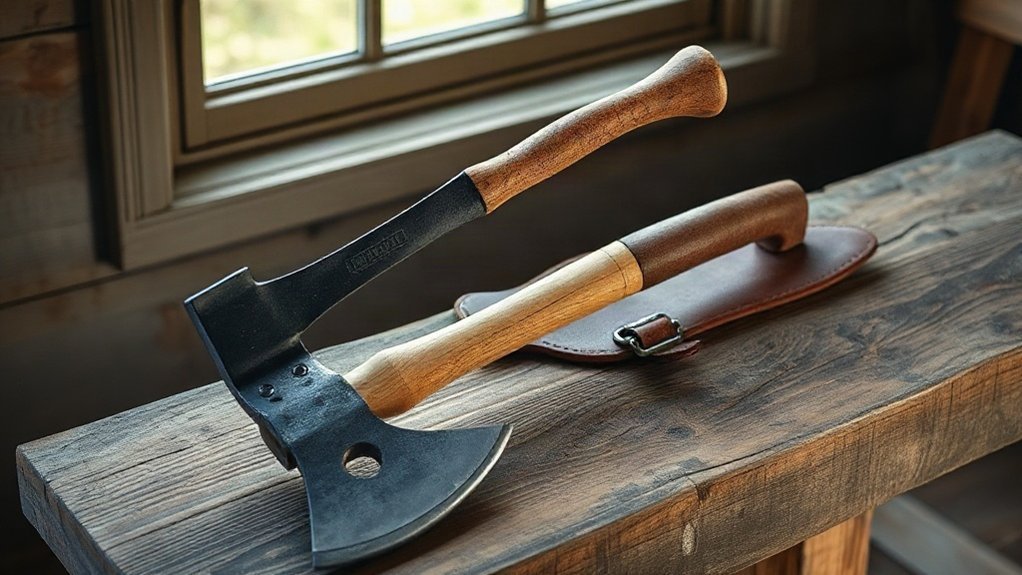
I choose a hatchet for repeated chopping and a tomahawk for lighter carry or throwing. I match head weight and balance to the work, then check that the handle length feels comfortable and controlled. For camp chores, I favor a durable chopping edge and a hammer poll; I choose a spike only for specialized tasks. I also inspect the steel, construction, grip, and secure sheath, and set a budget that leaves room for a replacement handle. The details below can help me refine my choice.
Key Takeaways
- Choose a hatchet for chopping and repeated camp work; choose a lighter tomahawk for throwing and easy carry.
- Match the back style to your tasks: a hammer poll for pounding, a spike for specialized use, or a plain back for chopping.
- Check head weight, balance, and handle length; hold the tool and test its grip and swing if possible.
- Inspect the blade, steel, and construction for a durable edge, secure head, and comfortable grip; ensure the sheath covers the head securely.
- Set a budget, compare reputable makers and warranties, and inspect used tools for cracks or damage; include any replacement handle cost.
Hatchet or Tomahawk: Which Should You Choose?
Which tool suits your needs better? I’d choose a hatchet if I wanted a dependable camp companion for chopping branches, making kindling, and tackling routine wood chores. Its thicker edge and 1–2-pound head handle repeated impacts, while a 10–16-inch handle gives me control. That combination offers practical chopping versatility when I’m setting up camp or preparing a fire.
I’d pick a tomahawk for throwing or lightweight outdoor carry. It often weighs about a pound, and its balance helps it rotate smoothly toward a target, supporting throwing accuracy. Its 16–22-inch handle provides room for that rotation, but a thin edge may chip if I use it for repeated firewood splitting.
For a tool that can travel freely between different outdoor tasks, I’d consider a mid-length option, then judge its blade and balance by what I’ll do most. I wouldn’t buy by appearance alone. If I can, I’ll hold it first: a heavy hatchet may feel awkward to throw.
Match Your Tool to the Job
I match the tool to the work: for chopping branches, making kindling, or preparing firewood, I choose a hatchet’s heavier head and thicker edge for repeated impacts. For everyday camp chores, that dependable chopping performance helps me work efficiently and stay self-reliant outdoors.
When I’m throwing or carrying a lightweight tool for general outdoor use, I consider a tomahawk. Its lighter build and balanced design help it rotate smoothly, making it suited to throwing rather than repeated firewood splitting. I also match handle length to the task: a hatchet’s shorter handle supports chopping control, while a tomahawk’s longer handle allows throwing rotation.
For shelter building or heavier utility work, I look beyond appearance. I want a durable head, comfortable grip, and sturdy construction that can handle demanding tasks. If I need one tool for varied jobs, I may choose a mid-length option, but I’ll favor the design that best supports the work I expect to do.
Choose the Right Weight and Balance
I match the tool’s weight to its main task: a head-heavy hatchet helps me chop wood, while a lighter tomahawk suits throwing. I check how the head balances, since poor weight distribution can make a tool awkward to control. If possible, I handle it before buying to test the grip and feel.
Match Weight to the Task
When you choose a hatchet for chopping, look for one that weighs 1–2 pounds, with most of its weight in the head for stronger strokes. I favor this head heavy design when I need reliable power for splitting kindling or clearing small branches. For throwing, I’d choose a tomahawk close to one pound; its lighter feel generally makes throwing rotation smoother and easier to control. Match the tool to the work, rather than assuming one weight suits every task. A heavier head can drive harder into wood, while a well-balanced tomahawk supports controlled throws. Before buying, I recommend holding the tool if you can. A number on a label can’t tell you whether it feels comfortable and manageable in your hand. Choose what lets you work confidently and carry on independently.
Check Head Balance
As you compare tools, check how the head’s weight balances with the handle. I’d match the balance to your task, so you can choose a tool that supports your plans without limiting your options.
| Tool | Typical head weight | Best fit |
|---|---|---|
| Hatchet | 1–2 pounds | Repeated chopping |
| Tomahawk | About 1 pound | Lighter, faster handling |
| Balanced tomahawk | Varies | Predictable rotation |
For chopping, I’d favor a heavier hatchet with a robust edge; a lighter tomahawk’s thinner edge may chip under hard impacts. If throwing is your priority, avoid a heavy hatchet: its head heavy design may rotate poorly. I’d also check haft head alignment and how weight sits along the handle. When possible, hold the tool before buying and see whether its distribution feels comfortable and controlled—then make your choice with confidence.
Test Grip and Control
How a tool feels in your hand can reveal whether you’ll control it comfortably through repeated swings. I try a tool before buying, if possible, and notice its hand comfort, balance, and swing control. The right choice depends on what you want to do:
- For chopping wood, I consider a hatchet’s typical 1–2-pound weight. Its heavier head delivers power, but I choose one I can swing without strain.
- For throwing, I look for a tomahawk near 1 pound, balanced for smooth rotation.
- For target practice, I favor that balanced tomahawk; a heavy hatchet may rotate poorly.
- I mimic several swings to see whether the tool feels steady, not awkward.
You deserve gear that supports your own choices. I pick a weight and balance I can control freely, swing after swing.
Find a Handle Length That Fits
I match handle length to the job: a 10–16-inch hatchet handle gives me control for chopping and camp chores. For throwing, I choose a longer tomahawk handle—often 16–22 inches—so it can rotate properly. For general use, I’d pick a mid-length handle that balances control and versatility.
Match Length to Activity
Match the handle length to the job: I’d choose a 10–16-inch hatchet for controlled chopping and camp chores, while a 16–22-inch tomahawk gives the head more room to rotate when throwing.
I’d start with what you plan to do, then check how the handle feels in your hands. The right reach comfort and swing range help you work freely without fighting the tool. For general outdoor use, I’d look for a mid-length option that balances chopping control with versatility.
- Cutting branches: A 10–16-inch hatchet suits camp tasks and kindling.
- Throwing: A 16–22-inch tomahawk allows room for rotation.
- Mixed outings: A mid-length handle can serve varied needs.
- Before buying: I’d hold the tool and assess its length, weight, and balance.
Very short handles can hinder throwing; long ones may feel clumsy for chopping.
Short Handles for Chopping
For chopping and camp chores, a 10–16-inch hatchet handle offers control for cutting branches, making kindling, and preparing small firewood. I favor this compact handle when I want to work efficiently around camp without wrestling with an unwieldy tool. Its shorter reach can make woodwork easier to manage and give you chopping control where careful cuts matter. A longer handle may feel clumsy for these tasks, so match the tool to the work you actually plan to do.
Before buying, grip the hatchet and try a comfortable, controlled swing if you can. Check that its balance and reach feel natural in your hands; the right fit helps you work confidently and independently. For one dependable outdoor tool, I’d consider a mid-length option that balances chopping control with everyday versatility.
Long Handles for Throwing
When throwing a tomahawk, a 16–22-inch handle gives it room to rotate toward the target. I’d choose a length that suits your throwing style and feels steady in your hand. A short handle may not rotate enough to stick, while a longer one can feel clumsy when you’re chopping. Match the tool to your purpose, and keep your freedom to practice your way.
Before you buy, consider:
- Throwing distance: I’d test the distance you plan to throw and see how the handle’s rotation meets the target.
- Rotation control: Choose a length you can manage confidently through each throw.
- Balance: If possible, hold the tomahawk and check how it feels in your grip.
- Your priorities: Pick a longer handle for throwing, not camp woodwork.
A comfortable fit helps you throw with confidence.
Pick a Hammer Poll, Spike, or Plain Back
If you want more than a chopping edge, consider what the back of the hatchet head can do. I’d match it to the work you expect, so your tool supports your plans rather than weighing you down with features you won’t use.
| Back style | Best fit |
|---|---|
| Hammer poll | Pound stakes or handle camp tasks |
| Spike | Specialized breaching or digging |
| plain back | Keep the head focused on chopping |
A Hammer poll gives you a flat surface for pounding. The Cold Steel Trail Hawk and CRKT Woods Chogan T-Hawk include one, making them practical choices for camp chores. A spike adds a pointed tool feature; the SOG Tactical Tomahawk and Browning Shock ’N Awe offer examples. I’d consider that option when specialized breaching or digging matters. A plain back leaves the head dedicated to chopping, without a hammer surface or spike. Tactical designs may favor spikes or breaching edges, while camp-oriented models often include hammer polls. Choose the layout that fits your needs and gives you freedom to carry one useful tool.
Check the Blade, Steel, and Construction
How much chopping will you do? I’d match the blade and construction to your work so you can count on your tool when you’re out in the woods.
- Choose the right edge thickness. For repeated firewood chopping, I’d favor a thicker, durable edge. Thin tomahawk edges can chip under heavy impacts, limiting your freedom to work confidently.
- Check steel quality. High-carbon steel generally holds an edge well and handles repeated strikes. Stainless steel resists rust, but you’ll still need to clean it to prevent stains.
- Match the head to the job. A hammer poll helps with pounding. A spike or pry-bar back adds utility, but I wouldn’t treat either as a substitute for a robust chopping edge.
- Inspect the construction. Friction-fit heads depend on a flared handle; full-tang or one-piece steel designs reduce separation concerns. For used heads, look for cracks, bulged eyes, and poor edge geometry. A sound vintage head can take a suitable replacement handle.
Test the Grip, Sheath, and Carry Options
Before buying, hold the tool to check its balance and make sure the grip feels comfortable. I look for a textured handle that stays secure in my hand without feeling so rough or sticky that it causes blisters. A confident grip gives me better control when I’m working outdoors, while a balanced tool feels easier to manage.
I also check whether the tomahawk’s head comes off. A removable head with a friction-fit handle can make it useful for tasks such as scraping wood, and I can replace the handle if it breaks.
Next, I inspect sheath security. The sheath should fully cover the head and stay closed during travel. For example, the CRKT Kangee T-Hawk includes a Kydex sheath with snap-button closures. Then I consider carry options: a Molle-equipped sheath with a buckled strap, or multiple attachment points, lets me secure the tool to a pack or carry it on my person. Choose a setup that suits how you travel.
Set a Budget for a Reliable Hatchet
I set aside about $50 for a dependable new working hatchet; cheaper models may dull quickly or chip. I treat that amount as a Price ceiling, not a promise that every tool below it will serve me well. I compare cost with construction and the chores I expect to tackle.
I budget about $50 for a dependable new hatchet, weighing its construction and intended chores—not just its price.
- For camp use, I prioritize a sturdy chopping blade and suitable head weight over polished looks.
- If I can spend more, I consider higher-quality options, knowing they cost more than basic hatchets.
- I check warranty coverage before buying; it can add peace of mind, but it doesn’t replace sound construction.
- I may choose a used head to stretch my budget, but I inspect it for cracks, a bulged eye, and poor edge geometry. I also include a replacement hickory handle in the total, since rehandling may be necessary.
A clear budget helps me choose a reliable tool and keep more freedom for the work ahead.
Compare Trusted Brands and Vintage Finds
Once I’ve set a budget, I compare established makers with vintage finds. Trusted makers for new hatchets include Wetterlings, Gränsfors Bruk, Hultafors, Council Tools’ Velvicut line, and Vaughn Tool, known for U.S.-forged heads. For tomahawks, I’d consider H&B Forge, Coal Creek Forge, or Wolf Creek. Cold Steel offers inexpensive starter hawks, though I may need to modify one.
Vintage brands can offer capable tools and more choice, especially if I enjoy finding and restoring gear. I look for Warren, Collins (including Legitimus, Red Seal, Old Timer, and Bonded), Kelly (Perfect, Flint Edge, and Red Warrior), Walters, Keen Kutter, and Plumb at flea markets, yard sales, or antique malls. Finds may come from the United States, Canada, Austria, Germany, or Sweden.
Before buying, I check the edge profile and geometry, and reject heads with cracks or a bulged eye. A sound head can often be revived with a new hickory handle, giving me a dependable tool without limiting my options.
Frequently Asked Questions
Which Brand of Hatchet Is Considered the Best?
I wouldn’t name one best hatchet brand for every reader; your ideal choice depends on your work, budget, and preferred design. For premium craftsmanship, I’d compare the Hults Bruk brand with Gransfors Bruk quality, Wetterlings, and Council Tools’ Velvicut line. If you want a dependable U.S.-forged head, I’d consider Vaughn. For an affordable used option, I’d hunt for vintage Warren, Collins, Kelly/True Temper, Walters, Keen Kutter, or Plumb hatchets.
Do Navy Seals Carry Tomahawks?
Not routinely, as far as I can confirm; a tomahawk isn’t standard SEAL field gear. I’d treat reports of military use like a trail map, not proof that every operator carries one: some professionals may use tactical models for breaching, rescue, or utility work, depending on the person and mission. Military axe history includes varied tools and roles, but I can’t name a SEAL-specific model or standard-issue policy. You deserve clear distinctions between fact and assumption.
What’s the Difference Between Tomahawks and Hatchets?
A hatchet prioritizes chopping power; a tomahawk favors lighter, faster handling and may suit throwing. For Head design differences, I’d choose a thick, durable hatchet edge for repeated firewood work, while a thinner tomahawk blade can stick in targets but may chip under heavy splitting. For handle length comparison, hatchets commonly measure 10–16 inches; tomahawks often run 16–22 inches. I’d match the tool to your task and freedom of movement.
What to Look for When Buying a Hatchet?
I’d choose a hatchet by testing whether its build suits your work, not by trusting looks or a bargain price. For chopping wood and camp chores, I look for a durable, relatively thick edge and a head weight of 1–2 pounds for solid power. A 10–16-inch handle offers control without feeling clumsy. I also check the Handle material, steel quality, edge geometry, and, on used tools, cracks or a bulged eye.
Conclusion
I buy a hatchet or tomahawk by starting with the job, then checking weight, balance, handle length, head design, steel, and construction. I also make sure the grip feels secure and the sheath suits how I’ll carry it. Set a realistic budget, compare trusted brands, and inspect vintage tools carefully. The right choice should feel like an extension of your hand, not a burden on your pack. Choose thoughtfully, and you’ll be ready for the work ahead.