What Blade Materials Make Machetes and Kukris More Durable?
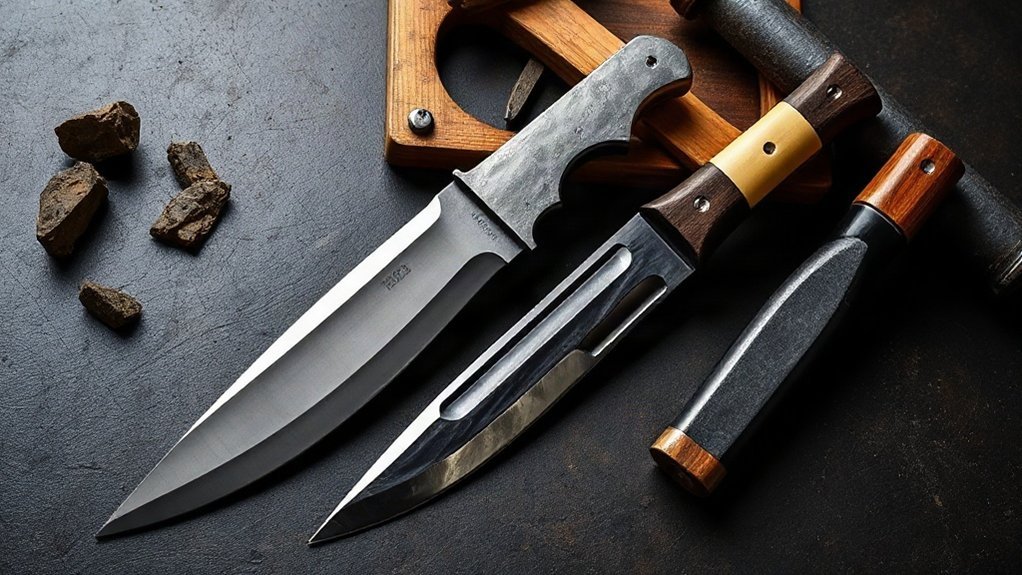
I’d choose tough 5160 spring steel for a chopping kukri because it absorbs impact and resists chipping when properly heat-treated. For a working machete, I’d pick 1055 or 1075 carbon steel for a practical balance of edge life and vegetation-cutting performance. Carbon steel needs cleaning, drying, and oiling to prevent rust; stainless steel suits wet conditions and needs less upkeep. Steel grade isn’t everything: heat treatment, blade thickness, and edge geometry also matter. Here’s what else helps a blade last.
Key Takeaways
- 5160 spring steel suits heavy kukri chopping because its toughness helps absorb impacts and resist bending or breaking.
- 1055 or 1075 carbon steel provides a practical balance of edge life and toughness for machetes used to clear vegetation.
- At similar hardness, 5160 is generally less prone to chipping than 1095, making it a tougher choice for demanding chopping.
- Proper heat treatment and edge geometry matter as much as steel grade; hardness supports edge retention, while toughness helps resist impact damage.
- Full-tang construction and secure fittings reduce the risk of failure under impact; inspect the blade, handle, and sheath before use.
What Makes Kukri and Machete Steel Durable?
A durable kukri or machete needs steel that can take repeated impacts without chipping or bending. I look at steel composition first: 5160 spring steel, with about 0.56–0.64% carbon, balances toughness and flexibility, helping a kukri absorb chopping force. Machetes often use carbon steels such as 1055 or 1075, which can hold an edge well. Stainless steel resists rust better, though it may dull faster.
Heat treatment matters just as much. Differential hardening can give a kukri’s edge a hardness of 52–56 HRC while leaving its spine more flexible at 30–40 HRC. This balance helps the blade endure impact without sacrificing a firm cutting edge. Sound grain structure and an even grind also support reliable performance.
I also check construction: full-tang steel runs through the handle, reducing the risk of failure under impact. Secure fittings matter, too. To keep carbon steel ready for demanding work, I clean and oil it regularly to prevent rust.
Which Blade Steel Suits Your Cutting Tasks?
After considering durability, I match the steel to the work: for heavy kukri chopping, I favor tough 5160 spring steel; for clearing vegetation, 1055 or 1075 carbon steel handles repeated cuts well. The 5160’s 0.56–0.64% carbon content helps it absorb shock and retain an edge through demanding blows. For lighter, repeated vegetation cuts, either machete steel offers a practical balance.
Your cutting techniques matter, too. I choose 5160 when a kukri must withstand forceful chopping, while I select 1055 or 1075 for routine brush clearing. This task selection lets you equip yourself for the job without carrying more blade than you need.
I also factor in upkeep: carbon steel needs cleaning and oiling to guard against rust. If you’ll work in wet conditions, stainless steel resists corrosion and takes less maintenance, though its edge may dull sooner. High-carbon stainless can offer durability and better corrosion resistance, but usually costs more. I weigh those trade-offs against your conditions and budget.
Carbon vs. Stainless Steel: Which Should You Choose?
I’d choose carbon steel when I need a durable edge for hard cutting, but I’ll need to dry and oil it to prevent rust. Stainless steel resists corrosion and needs less upkeep, though its edge may dull sooner. I’ll compare these trade-offs to help you choose the right blade material.
Corrosion Resistance
If you use your machete or kukri in wet conditions, stainless steel resists rust better because its chromium forms a protective layer and requires less upkeep. I’d choose it for humidity exposure or frequent trips near the coast, where Saltwater corrosion can threaten carbon steel. Stainless gives me more freedom to use my blade without constant worry.
| Condition | Carbon steel | Stainless steel |
|---|---|---|
| Rain or dampness | Rust risk | Better protection |
| Saltwater corrosion | Needs careful care | More resistant |
| After use | Clean, dry, oil | Rinse and dry |
| Best fit | Careful maintenance | Easier upkeep |
Carbon steel can rust when moisture remains, so I clean, dry, and lightly oil it after use. High-carbon stainless costs more but blends improved rust resistance with carbon steel–like edge retention. I’d match steel to my conditions and maintenance habits.
Edge Retention
Beyond rust resistance, edge retention matters when you’re cutting or chopping often. I’d choose carbon steel for a machete or kukri that needs to stay sharp through demanding work. It generally holds an edge longer than stainless, giving you more freedom between sharpening intervals. Stainless steel is usually softer, so it may dull sooner, but it’s easier to resharpen and resists rust—useful in damp conditions when you want less upkeep.
High-carbon stainless steel aims to balance long edge life with corrosion resistance, though it often costs more. Don’t judge a blade by its steel label alone: proper heat treatment strongly affects durability and edge retention. I also consider edge geometry, since it influences cutting performance. For maximum edge life, I’d pick carbon steel if I can clean and oil it regularly.
Maintenance Needs
Maintenance needs often decide whether carbon or stainless steel suits you better. I’d choose carbon steel if I value longer edge retention and don’t mind caring for the blade. After each use, I clean and dry it, then apply a light coat of oil to guard against rust. That routine affects cleaning frequency and limits carefree storage options, especially in damp places.
If I want more freedom from upkeep, I’d choose stainless steel. It resists corrosion, needs less routine care, and suits wet conditions. Its softer edge may dull sooner, but I can usually resharpen it more easily. High-carbon stainless steel offers a useful middle ground: better rust resistance with carbon steel–like edge retention, though it usually costs more. I’d match my choice to my climate, habits, and priorities.
Why 5160 Works Well in Chopping Kukris
Because a chopping kukri must withstand repeated impact, 5160 spring steel is a strong choice: its toughness and springiness help it absorb blows without bending or breaking. I value that resilience when I need a blade to work reliably outdoors, where a damaged edge can limit my options. Its spring steel composition—typically 0.56–0.64% carbon, 0.7–0.9% chromium, and 0.75–1.0% manganese—supports the impact energy absorption that makes it suited to hard chopping.
With proper differential hardening, the edge can reach 52–56 HRC for edge retention, while a softer spine around 30–40 HRC adds flexibility. Compared with 1095 at similar hardness, 5160 is less prone to chipping during forceful cuts. That matters when I’m processing wood and want to keep moving instead of stopping to repair damage. A 5160 kukri can hold its edge through repeated impacts, yet remains relatively easy to sharpen in the field, helping you stay self-reliant.
How 1055 and 1075 Perform in Machetes
For a machete built to clear brush, 1055 and 1075 carbon steel offer a useful balance of edge life and field practicality; both grades typically contain 0.55–0.75% carbon. I value that dependable cutting performance when I’m working far from a shop or trailhead.
The 1055 steel composition and 1075 steel composition suit demanding agricultural tasks and vegetation clearing. Carbon steel can hold a sharp edge longer than stainless steel, so you may spend less time restoring its bite. Still, a sharpening tool is worth carrying on extended outings: that durable edge can take more effort to resharpen.
These steels need simple care to stay ready. After use, I clean and dry my machete, then apply a light coat of oil to guard against rust. Keep its limits in mind, too. A thin blade excels at vegetation, but larger or dry wood can make it bend, bind, or lose its edge. Choose the right tool and keep your independence in the field.
How Hardness Affects Kukri and Machete Edges
I’ll show you how edge hardness affects sharpness and how long your kukri or machete stays keen. Harder steel can hold an edge longer, but too much hardness can make it chip under impact. I’ll compare that trade-off with toughness and explain why heat treatment matters.
Edge Hardness and Sharpness
A blade’s hardness affects how long it stays sharp and how easily you can restore its edge. I find harder carbon steel keeps its initial keenness longer than softer stainless steel, though restoring it takes more work. Your choice shapes how freely you can maintain your tool in the field.
- Machetes often use 1055 or 1075 carbon steel.
- Kukris may use 5160 spring steel, which retains an edge after impact.
- Differentially hardened kukris can have 52–56 HRC edges and 30–40 HRC spines.
- Proper heat treatment helps balance edge hardness with toughness.
- Carbon steel needs oiling; stainless resists rust but may dull sooner.
When I sharpen a harder blade, I expect slower edge grinding and plan ahead. Choose the steel and maintenance routine that fit your work and independence.
Hardness, Toughness, and Chipping
While a hard edge can stay sharp longer, too much hardness may make it chip under impact. When I compare kukri and machete steels, I look for balance: toughness helps a blade absorb shocks, while hardness resists edge deformation and keeps cuts clean.
For heavy chopping, I’d favor tough, shock-absorbing 5160 spring steel over more brittle 1095. A kukri can also use differential hardening: a 52–56 HRC edge for cutting and a flexible 30–40 HRC spine for impact resistance.
A soft or poorly heat-treated blade may dull, bend, or chip. Thin machetes can bind or lose their edge in large, dry wood, so I wouldn’t push them beyond their design. Stainless steel may dull faster; carbon steel often holds an edge longer, but I oil it regularly to prevent rust and keep my blade ready for demanding work.
How Heat Treatment Prevents Chips and Bends
When I choose a kukri, I look for heat treatment that balances a hard, edge-holding blade with a tougher, more flexible spine. That balance helps me cut confidently without making the edge so brittle that it chips.
- Differential hardening can give the edge about 52–56 HRC hardness.
- A softer spine, around 30–40 HRC, can flex under impact.
- This contrast provides impact flex protection while the edge resists dulling.
- With 5160 spring steel, normalizing, oil quenching, and double tempering can build a tough, shock-absorbing blade.
- Poorly controlled heating or cooling can cause uneven treatment failure, leaving weak spots that chip or bend.
I don’t judge a blade by hardness alone; I want the maker to treat the whole length consistently. A softer spine may help absorb shock, but it can’t guarantee that a blade won’t fail. One reported lightweight kukri broke near the handle on its first chop, showing why careful heat treatment matters. Ask how the maker controls the process before trusting a blade with demanding work.
How Thick Should a Kukri or Machete Blade Be?
How thick should your blade be? I match Blade thickness to the cutting applications you expect, so you can work freely without carrying more weight than you need.
| Task | Suitable blade | Why it fits |
|---|---|---|
| Grass, vines, light brush | Thin machete, about 2–3 mm at the spine | Light and flexible for sweeping cuts |
| Larger limbs, wood | Thicker, stiffer kukri | Added spine strength and forward weight support heavier chopping |
For long clearing sessions, I’d choose a light machete. Its slim profile helps reduce fatigue, but it isn’t built for every job. In larger wood, a thin blade may bind, bend, or lose its edge; if it’s too thin for hard chopping, it can wedge. When I’m preparing firewood or tackling substantial limbs, I prefer a more substantial blade. A kukri’s thicker spine and forward balance give me better support for forceful cuts. There’s no universal ideal: choose thickness for the work, and you’ll have a tool suited to your own needs.
How to Care for Your Kukri or Machete
The right blade thickness helps your kukri or machete handle its intended work; regular care keeps it ready to use. I keep maintenance simple so you can rely on your blade outdoors and carry it with confidence.
The right blade thickness suits the work, while simple, regular care keeps your kukri or machete ready for the outdoors.
- Clean it after every use, then dry it thoroughly.
- Apply a light oil coat, especially on carbon steel; moisture can cause rust.
- Follow sound storage practices: keep the blade dry, and don’t leave it damp. Stainless steel resists rust better, but still needs cleaning.
- Sharpen the edge as needed. Carbon steel usually holds an edge longer; stainless steel is generally easier to resharpen.
- Check that handle scales, rivets, and bolts stay tight. Use a sturdy sheath to protect the edge during carry and storage, and check whether one comes with your blade.
These cleaning techniques help preserve performance without complicated routines. Before heading out, inspect the blade, handle, and sheath. A few minutes of care can help keep your tool dependable for the work and freedom you value.
Frequently Asked Questions
What Is the Best Material for a Machete Blade?
For a durable working machete, I’d choose properly heat-treated carbon steel, such as 1055 or 1075. It offers strong Machete edge retention and handles regular cutting well, giving you dependable performance in the field. You’ll need to clean and dry it after use, then apply a little oil to prevent rust. If you’d rather spend less time on upkeep, I’d consider high-carbon stainless steel for a useful balance of cutting strength and corrosion resistance.
Is a Kukri or Machete Better?
I’d choose a kukri for heavy chopping, but a machete for clearing broad, overgrown ground. One striking fact: a kukri’s forward-heavy design concentrates impact near its edge, giving it impressive kukri cutting performance on thick limbs and hardwood. You’ll appreciate machete versatility when you need long reach and quick, sweeping cuts through vines and weeds. For freedom to tackle varied outdoor jobs, match your tool to the terrain—and workload—rather than buying one for every task.
What Is the Strongest Material for a Knife Blade?
I’d choose 5160 spring steel for a knife that must survive hard use, because its blade toughness helps it absorb impacts without snapping. But no material wins every contest: harder steels can improve edge retention, while stainless steels resist rust and demand less upkeep. I’d match the steel to your tasks, then check its heat treatment and sharpening needs. That choice gives you control over performance instead of chasing a supposed strongest steel.
Is Magnacut Tougher Than 1095?
Yes—at comparable hardness, I’d expect MagnaCut to resist impact chipping and cracking better than 1095. Still, MagnaCut heat treatment effects matter: a poorly treated blade can lose to well-treated 1095. For chopping, 1095 remains capable and easy to sharpen, while MagnaCut offers better corrosion resistance. In MagnaCut vs. 1095 edge retention, results depend on hardness, geometry, and use. I’d choose based on your work, care routine, and freedom to maintain the blade.
Conclusion
I choose blade steel by matching toughness, edge retention, and corrosion resistance to the work. For heavy chopping, I favor a properly heat-treated 5160 kukri; for lighter, routine clearing, 1055 or 1075 machete steel can be a practical choice. Then I check blade thickness and care for the edge after use. Sometimes the best tool is the one already in your hand—if it suits the task, maintain it well, and it may serve you for years.