How Can Beginners Choose Machetes and Kukris Without Overspending?
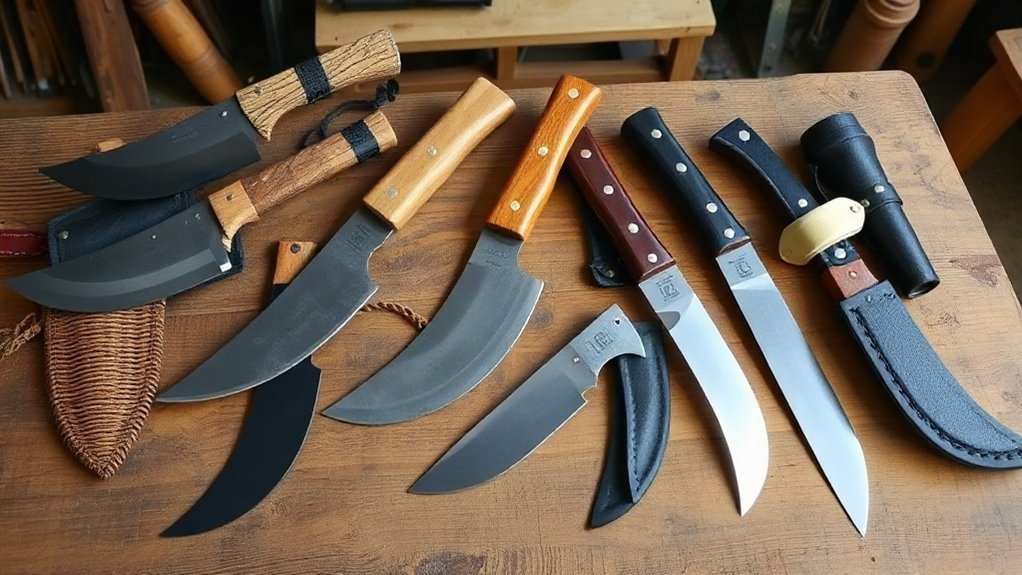
I’d choose a machete for regular grass, vines, and brush clearing, and a kukri for close work and compact chopping. Compare blade length, weight, and balance with the space and effort your tasks require; don’t pay for reach or chopping power you rarely use. Check the steel, construction, handle, and sheath, then compare independent reviews, warranty terms, and return costs. Set a firm budget, and I’ll explain how to weigh these details before you buy.
Key Takeaways
- Match the blade to your main task: choose a machete for repeated vegetation clearing or a kukri for compact chopping.
- Pick a practical size and weight: longer machetes extend reach, while shorter, forward-weighted kukris concentrate chopping power.
- Set a budget ceiling and prioritize durable construction, a secure handle, and a suitable sheath over extra features.
- Compare steel, heat treatment, dimensions, and independent reviews; investigate recurring reports of failures before buying.
- Check the warranty, return window, and shipping costs, which can reduce the value of a low-priced blade.
Choose a Machete or Kukri for Your Main Task
Choose your blade by matching it to the work: a machete’s long reach and lighter blade make repeated sweeping cuts effective for clearing grass, vines, cane, and light brush, while a kukri’s forward-weighted blade delivers more chopping power in a shorter swing for kindling, small limbs, and camp wood. I’d make workload first selection: decide what you’ll cut most often, then choose the tool that handles it efficiently. For broad areas of soft vegetation, a machete can save time and effort. An 18-inch model suits routine brush work; longer blades offer added reach for extensive clearing, while a shorter one packs more easily. For concentrated chopping and close brush work, I’d choose a kukri. It can tackle small limbs and light-to-medium camp wood chores, but it won’t replace an axe for heavy processing. Terrain specific blade choice gives you more freedom to move and work with confidence. Match the tool to your conditions, and avoid paying for capabilities you rarely need.
Machete vs. Kukri: Compare Size and Weight
When reach matters most, I’d compare blade length and overall weight before buying. Most machetes have 14–24-inch blades, and I’d start with an 18-inch model for a versatile fit. If you clear extensive brush, a 22–24-inch blade can help you bend less. A compact 12-inch machete weighs less and fits a survival kit or camp setup, but gives you less reach.
Kukris usually measure around 10–14 inches. Their forward-curving blades concentrate weight near the front, so they’re shorter but often feel denser in hand. A working kukri commonly weighs 400–600 grams; a quality machete typically weighs about 350–500 grams. Individual models vary, so check blade dimensions and weight balance rather than relying on labels or price alone.
I’d choose the size that leaves you free to carry and handle the tool comfortably. Longer machetes favor reach and repeated vegetation cuts; heavier kukris favor compact chopping. Compare specifications before spending, and pay only for dimensions and weight that suit your needs.
Machete vs. Kukri: See How They Cut
I’ll compare how a machete’s long blade clears grass and brush quickly with broad, sweeping strokes. Then I’ll show how a kukri’s forward-weighted curve delivers more chopping power in a shorter swing. As you compare tools, consider the specific blade’s design, since neither excels at every task.
Cutting Reach And Speed
For broad, fast sweeps through grass and vines, I’d reach for a machete: its typical 14–24-inch blade covers more ground per stroke. That reach means fewer passes across a wide patch, helping me keep a steady stroke rhythm and gain more vegetation coverage. A 20-inch model can sweep a broad arc through soft growth, making it a practical choice when I want to clear space efficiently and move freely.
A kukri usually has a shorter, forward-weighted blade, often around 10–14 inches. It covers less ground per cut, so I’d expect to work more slowly across broad areas. For close brush or thicker branches, its concentrated weight can make each compact chop more powerful. I’d choose by the job: machete for reach and speed, kukri for compact chopping—not price alone.
Chopping Power And Control
Reach and speed matter when clearing ground, but chopping power depends on how each blade carries its weight. I’d choose a kukri for compact camp tasks: its forward-heavy curve concentrates force at the cutting belly, helping with small limbs and short, controlled swings. A field test found it cut branches about 2–6.5 inches thick, but split wood poorly.
- Choose a kukri for tight spaces and controlled chopping.
- Choose a machete for wider clearing; its longer, thinner blade sweeps through grass, vines, and light brush.
- Keep a clear swing path. A kukri’s momentum can turn a glancing blow unpredictable; a machete needs room for its longer arc.
- Use a controlled swing technique and a comfortable grip for hand fatigue prevention.
I’d match the blade to the job, so you can work safely without paying for power or reach you don’t need.
Check Steel, Edge, and Build Quality
When you compare blades, prioritize proven heat treatment and toughness over a flashy steel name: 1055 or 1075 carbon steel works well in many machetes, while tough 5160 spring steel suits chopping kukris. I check edge shape and construction before buying, so you can choose confidently without paying for a label.
| Check | Machete | Kukri |
|---|---|---|
| Steel | 1055 or 1075 carbon | Tough 5160 spring steel |
| Edge | Thin and sharp for vegetation | Thicker for chopping |
| Build | Solid tang construction | Solid, consistent finish |
Good Heat treatment helps prevent rapid dulling, bending, or chipping. I inspect the blade for an even finish and reject bargain models with a thin rod tang or hollow handle; hard swings can cause failure near the bolster. A low price isn’t value if the blade won’t hold up. Compare construction and intended use, then spend only where durability matters. That leaves you free to take on your work without buying features you don’t need.
Look for a Secure Handle and Sheath
I check that the handle fits my hand and stays secure through repeated swings, even when wet or dirty. A kukri handle must resist the blade’s forward pull, while a machete handle should stay steady as I cut. I also make sure the sheath fully covers the edge, holds the blade securely, and protects its tip.
Secure Handle Fit
A secure fit matters because a handle that shifts during a swing can undermine control and safety. I check handle dimensions and grip retention before buying, because a dependable hold lets you work with confidence and move freely. I also look for a shape that suits my hand; a lanyard hole can’t fix a poor fit.
- Hold the tool and check for looseness or movement.
- Choose a handle with enough room for a comfortable, secure grip.
- For a kukri, make sure the handle resists the blade’s forward pull.
- For a machete, check that the grip stays firm when wet or dirty.
I inspect the handle in person when possible, rather than trusting appearance alone. A stable fit supports control through repeated swings and helps me avoid paying for features that don’t improve safe handling.
Reliable Sheath Retention
Beyond a secure grip, dependable sheath retention keeps the blade covered and prevents it from slipping out during carry. I check that a sheath fully covers the blade and holds it firmly, without forcing me to trade confidence for freedom of movement. Match its shape to the tool: a kukri sheath should accommodate the forward curve, while a machete sheath must protect the full edge and tip. Before buying, I inspect the handle and sheath for a firm fit. A quick Sheath retention test helps me confirm a secure carry fit; I won’t carry a blade in a loose or damaged sheath. I also make sure the handle stays stable when wet or dirty—a lanyard hole can’t replace a sound grip. After use, I clean and dry the blade, then check the sheath for moisture or grit before storage.
Set a Budget Without Buying False Savings
When you set a budget, start with the work: a machete for routine brush clearing typically costs about $20–$35, while a kukri built for heavier chopping starts around $95. I’d choose the tool that gives you freedom to handle your actual tasks, not the one with the lowest entry level price or the most features.
Choose a machete for routine brush clearing at $20–$35, or spend around $95 for a kukri built for heavier chopping.
- Set a budget ceiling based on your main job. For brush, the roughly $20 Tramontina 24-inch machete adds reach, while the approximately $35 OKC Military Machete offers a basic alternative.
- Check construction before buying. Weak steel, poor heat treatment, or a failing handle can turn a bargain into a replacement expense.
- Pay more only for a useful advantage. A Condor Heavy Duty kukri starts around $95; a handmade Himalayan Imports Ang Khola costs about $275.
- Match weight and shape to the task. I’d save with a machete for vegetation, and choose a kukri when compact, heavier chopping justifies its higher cost.
Check Seller Reputation and Warranty Terms
Before you buy, check the seller’s track record and warranty: poor heat treatment, weak tangs, and failing handles can turn a cheap blade into an expensive mistake. I look for an established seller with a solid seller track record, not just a low price or polished product photos. Check whether the listing names the steel and explains the construction. A steel label alone doesn’t prove quality, but vague details make comparisons harder.
Next, read the warranty coverage closely. Find out which defects qualify, whether chopping or other hard use is excluded, and how long you have to return the blade. Compare the return window and shipping costs, too; paying to send back a defective tool can erase your savings. I also check independent reviews and repair reports rather than relying only on seller claims. Repeated reports of bolster failures in inexpensive kukris deserve attention. With these checks, you can choose confidently and keep more freedom—and money—in your hands.
Frequently Asked Questions
Are Kukris Legal in the US?
Yes, kukris are generally legal to own in the United States, but I’d check state by state regulations before buying or carrying one. Local rules may impose legal carry restrictions, including limits on blade length, public carry, or concealed carry. I wouldn’t assume a kukri’s legal at home is legal elsewhere. For flights, pack it securely in checked baggage, never in your carry-on, and transport it covered.
Are Kukris Considered Machetes?
No—a kukri isn’t simply a machete, though some sellers group them together. I picture its forward-weighted curve chopping like a thunderbolt; that’s the defining Kukri blade design. Machete classification usually covers longer, straighter blades built to clear grass, vines, and brush efficiently. Both can tackle vegetation and camp chores, but their balance and origins differ. I’d check the specific blade’s shape and intended use, so you can choose freely without trusting its label alone.
What Is a Kukri Knife Good For?
I use a kukri for powerful chopping and versatile camp tasks. Its forward-weighted, curved blade makes quick work of small limbs, kindling, and camp wood, while its compact size helps me clear close brush without wrestling a long machete. I also turn to it for rough Camp Cooking and Wood Carving. I control each swing carefully, though; it takes practice, and I wouldn’t rely on it for heavy timber or delicate knife work.
Who Makes the Highest Quality Kukri?
I’d put Himalayan Imports among the strongest choices for a high-quality kukri, especially its handmade 15-inch Ang Khola. Its Nepalese craftsmanship and reputation for hard-use blades make it a compelling option. Himalayan Blades also reports using 5160 spring steel, oil quenching, and double tempering, though I’d treat those as maker claims. For freedom to choose confidently, check Kukri steel quality, heat treatment, tang construction, edge geometry, and independent reviews before buying.
Conclusion
I choose my machete or kukri by matching it to the work, then checking its balance, cutting style, steel, handle, and sheath. I don’t pay extra for features I won’t use, but I also avoid the cheapest option if its build or seller seems unreliable. It’s a useful coincidence that the best value often appears when I stop chasing the lowest price: a dependable tool that fits my needs can save money—and frustration—for years.