How Do You Maintain Folding Tactical Knives to Prevent Rust and Wear?
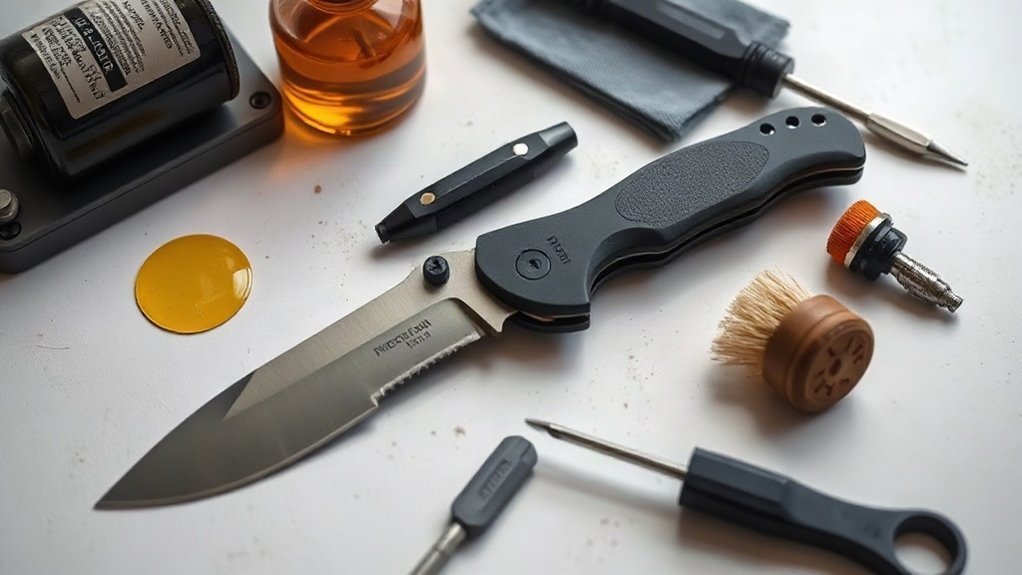
I check the manufacturer’s care instructions first, then clean my folding knife with mild soap and warm water if its materials allow. I keep fingers clear of the edge, brush away grit around the pivot and lock, rinse off residue, and dry every part completely. Once dry, I add a small drop of suitable knife oil to the pivot, cycle the blade, and wipe away excess. I store it in a dry place and inspect regularly; below, I’ll explain how to handle common wear and rust.
Key Takeaways
- Follow the manufacturer’s care instructions, keep fingers clear of the edge, and never force the blade, pivot, or lock.
- Clean grime with compatible mild soap and warm water; promptly rinse off salt, then thoroughly dry the blade, handle, pivot, and lock.
- Once fully dry, apply a small amount of recommended lubricant to the pivot, cycle the blade, and wipe away excess.
- Store the knife clean and dry in a ventilated place; protect carbon steel with compatible blade oil and check periodically for rust.
- Address light rust gently with a soft cloth or nylon brush; stop using the knife if the lock fails or vertical blade play develops.
Clean Your Folding Tactical Knife Safely
Before cleaning your folding tactical knife, check the manufacturer’s care instructions because the blade steel, finish, handle material, and construction can affect what’s safe to use. I confirm cleaning requirements before choosing a method, so I can care for my knife without risking avoidable damage.
Keep your fingers clear of the cutting edge. Use a soft-bristled brush or clean cloth to lift away dirt and residue. If the materials allow, wash routine grime with mild soap and warm water. Dry the blade, handle, pivot, and locking area completely to limit moisture-related wear.
> Keep fingers clear of the edge, clean gently with a soft brush or cloth, and dry every part thoroughly.
Protect handling surfaces by keeping your grip steady and the knife secure while you clean. Work around the pivot and lock gently; don’t force the mechanism or disassemble the knife, since that could affect warranty coverage or make reassembly difficult.
After exposure to salt, mud, or moisture, remove residue promptly. Inspect for trapped debris, corrosion, or damage before putting the knife away. This simple check helps keep your gear ready for the next task.
Choose Safe Cleaning and Lubrication Supplies
I choose mild soap and warm water to clean my knife without scratching it. Check the care instructions, then use only a compatible, manufacturer-recommended lubricant sparingly. Avoid harsh chemicals and abrasives unless the manufacturer approves them.
Choose Gentle Cleaners
Choose gentle cleaners to remove grime without scratching the blade or harming its finish. I use warm water, mild soap, a soft cloth, and a soft-bristled brush. Check care instructions, cleaner ingredients, and pH compatibility before applying any product; harsh chemicals, rust removers, or abrasives can damage coatings or handles.
| Area | Gentle method | Check |
|---|---|---|
| Blade | Wipe with soapy cloth | Confirm material compatibility |
| Pivot and lock | Brush carefully; don’t disassemble without permission | Follow maker’s instructions |
I rinse away all soap and residue, then dry the knife completely, especially around moving parts, to limit corrosion and wear. This simple routine lets me keep my folder ready for the next outing without risking its finish. For other cleaning supplies, I follow the manufacturer’s guidance rather than guessing.
Use Blade-Safe Lubricants
After cleaning and drying my folding knife, I apply a lubricant recommended by its manufacturer. Purpose-made knife oil or USP food-grade mineral oil suits many blades and pivots, but I always check blade compatibility and follow the maker’s guidance. I place one drop at the pivot, open and close the blade 15–20 times to spread it, then wipe away excess so it won’t trap dust or grit.
For carbon steel, I also spread a thin film over the blade, especially in humid conditions, to create corrosion barriers. I do this promptly after water-based cleaning. I avoid cooking oils, which can turn sticky, and WD-40 as a lasting lubricant because it can attract dirt. For synthetic scales, I use compatible mild soap, water, or isopropyl alcohol; I never soak wood, bone, or horn.
Avoid Harsh Abrasives
The right lubricant helps protect a knife, but harsh cleaners can scratch its blade, damage its coating, or harm its edge. To keep your folding knife ready for the freedom of the outdoors, I use a soft cloth, soft-bristled brush, cotton swabs, and mild soap. Skip abrasive pads and harsh chemicals; they can spoil scratch resistant surfaces and compromise coating preservation.
Before choosing a cleaner, rust treatment, or lubricant, I check the manufacturer’s care instructions. Safe products vary with blade finish, steel, and handle materials. I gently clear dirt around the pivot and lock without disassembling the knife unless the maker recommends it. I lubricate moving parts only as directed, applying a small amount of the specified product. If the mechanism sticks, I don’t force it; I seek qualified help.
Clean the Blade, Handle, and Pivot
Since moisture and debris can collect around a folding knife’s pivot, wipe the blade, handle, and pivot with a clean cloth after each use. I remove sweat, salt, dirt, Handle residue, and blade smudges promptly, so they don’t build up and limit my knife’s readiness.
For routine cleaning, I use a soft-bristled brush or cotton swab to reach around the pivot and lock. When grime needs more attention, I wash the knife with mild soap and warm water, keeping my fingers clear of the edge. I rinse away soap and debris, then dry the entire knife thoroughly, especially around the pivot and other tight spaces where moisture can linger.
I clean my folding knife without disassembly whenever possible. Taking it apart can affect warranty coverage, and incorrect reassembly may cause problems. If the pivot stays stiff or the knife doesn’t operate normally after cleaning, I don’t force it. I follow the manufacturer’s care instructions or seek professional service.
Dry Every Part of Your Folding Knife
Once I’ve cleaned my folding knife, I dry the blade, handle, pivot, and locking components thoroughly with a clean, soft cloth. I open the knife so I can reach the pivot and lock, then use a cotton swab or soft-bristled brush to clear moisture from tight spaces. Don’t let hidden pivot moisture linger: trapped water can encourage corrosion or interfere with smooth operation.
If I’ve used my knife near the coast or in wet conditions, I pay extra attention to salt residue. After saltwater exposure, I rinse the knife with fresh water, then dry every part promptly and thoroughly. A quick surface wipe isn’t enough if water remains around the moving parts or inside the handle.
Before storing my knife, I check that the entire tool is dry, including its sheath. This simple habit helps protect your gear from rust and wear, so you can carry it with confidence and keep your freedom to explore.
Lubricate the Pivot and Lock Sparingly
After the knife is completely dry, I apply a small amount of manufacturer-recommended lubricant to the pivot. I match the Pivot oil amounts to the pivot style: for washers, I place one drop on each side of the pivot screw; for bearings, I use one drop total. More isn’t better—excess oil can trap dust and grit, increasing wear and limiting the knife’s smooth action.
I open and close the blade 15–20 times to spread the lubricant, then wipe away any excess. For lock lubrication points, I follow the lock design and use lubricant sparingly where appropriate. A button lock’s detent track may need one drop, but I don’t put oil in the button mechanism. This measured approach keeps maintenance controlled without compromising the lock.
If the blade stays stiff or the lock doesn’t operate normally after cleaning and appropriate lubrication, I don’t force it. I consult the manufacturer or a qualified professional before using the knife again.
Prevent Rust on Your Folding Knife
To prevent rust, I wipe the blade dry after every use, especially if it’s touched sweat, rain, saltwater, food, or other residue. After saltwater exposure, I rinse the knife with fresh water, dry it thoroughly, then apply a thin layer of manufacturer-recommended blade oil.
I inspect carbon-steel blades regularly and oil them more often when humidity monitoring shows damp conditions. Stainless steel can corrode, too, if moisture or salt stays on it for long. These simple habits help keep your knife ready for the next outing without restricting where you carry it.
I keep moisture and debris out of the pivot and use only the lubricant the manufacturer recommends; excess oil can attract dirt. For storage, I choose a dry place and put the knife away only when it’s clean and completely dry. I don’t leave it in a damp leather sheath for extended periods. Protective coatings may help, but I follow the maker’s guidance to preserve the blade’s finish.
Remove Light Rust Before It Spreads
I check my blade regularly so I can catch discoloration or light rust early. For minor oxidation, I use a soft cloth or nylon brush with a little suitable oil, avoiding harsh abrasives that could scratch the steel or damage its finish. If rust persists or looks deep, I follow a blade-safe removal method or seek professional advice.
Spot Rust Early
Check your blade regularly, especially after exposure to sweat, rain, saltwater, or humidity; small orange-brown spots or discoloration may be the first signs of rust. Early spotting gives you more freedom to keep your folding knife ready and dependable. I look closely along the edge, around the pivot, and near screws, where moisture can linger. These rust indicators deserve attention, even when they seem minor.
At the first sign of light rust, I clean and dry the blade, then gently rub the spot with a soft cloth or nylon brush and a little suitable knife oil. If rust persists, I use a compatible rust-removal product or fine pad, follow its directions, and apply light pressure. I avoid aggressive abrasives that could scratch the blade or damage its coating; pitting may remain after corrosion is gone.
Remove Surface Rust Safely
When a rust spot appears, I wipe the blade with a clean, soft cloth and gently work at minor discoloration with a soft cloth or nylon brush, taking care not to scratch the steel or its finish. Regular inspection lets me address light rust before it spreads and limits your repair options.
I judge Rust severity before choosing my next step. If discoloration remains, I use a rust remover only after checking coating compatibility and confirming it suits the blade’s steel and finish. I follow the product instructions; your knife deserves careful treatment, not guesswork.
- Avoid harsh chemicals and aggressive abrasives.
- Don’t scrape or grind at a spot.
- Dry the blade completely after treatment.
- Apply a thin layer of recommended protective oil.
These simple steps help you keep your folding knife ready for the work and freedom you choose.
Store Your Folding Knife in a Dry Place
Store your folding knife in a dry, well-ventilated place, away from humidity, condensation, rain, and saltwater. I keep mine where air can circulate and moisture can’t quietly damage the blade. Climate control helps if your home swings between damp and dry, but a cool, stable room is often enough.
Before storage, I wipe away dirt and residue, then dry the blade, handle, and pivot thoroughly. Even a small amount of trapped moisture can encourage rust, so I don’t put my knife away until every surface feels dry.
For long-term storage, I use a dry storage container with silica-gel packs or a blade protector to limit moisture exposure. I avoid leaving a knife in a leather sheath for extended periods; leather can hold moisture against the blade. I also check stored knives periodically for moisture or rust, then clean and dry them again if needed. That simple routine lets me keep my gear ready without sacrificing its freedom to move with me.
Troubleshoot Stiff Action and Loose Parts
Even with careful storage, a folding knife’s action can stiffen or develop blade play over time. I first check for grit and excess lubricant before attempting a Pivot adjustment. Small, careful steps help preserve reliable function and your confidence in the field.
- Flush the pivot with isopropyl alcohol, then let it dry completely.
- Add one small drop of suitable knife oil and cycle the blade 15–20 times.
- Wipe away surplus oil; if action stays sluggish, try a lighter lubricant.
- Check pivot screws for overtightening. If the maker allows adjustment, loosen them in quarter-turn increments, testing action and blade play each time.
To address lateral blade play, tighten the pivot only in small increments. If play remains, worn washers or bearings may need professional inspection. Don’t force a repair or compromise safe handling for a quick fix. Vertical play or a lock that fails to engage normally can signal lock wear. I’d stop using the knife and contact the manufacturer or a qualified service professional. Follow the maker’s instructions; dependable gear supports independent use without inviting preventable risk.
Frequently Asked Questions
What Is the Best Lubricant for Folding Knives?
I recommend purpose-made knife oil or USP food-grade mineral oil for most folding knives; 10–20 cSt viscosity works well. Check Lubricant compatibility with your blade, pivot, and lock materials before applying it. Use one drop at a bearing pivot, or one on each side of a washer pivot, then cycle the blade 15–20 times. For Application frequency, reapply when movement feels dry or after cleaning, and wipe away excess. I avoid cooking oils.
How to Keep Pocket Knives From Rusting?
I keep pocket knives rust-free by drying them after use, storing them in Dry Storage, and applying Protective Coatings. Think of your knife as a trail companion: I shelter it from dampness so it stays ready for the next adventure. After sweat, rain, food, or saltwater, I rinse away salt and dry the blade immediately. I add a thin layer of knife oil, inspect for rust, and never leave it in a damp sheath.
Does WD-40 Prevent Tools From Rusting?
Yes, WD-40 can help prevent tools from rusting by displacing moisture and leaving a temporary protective tool coating. I’d use it for short-term WD 40 rust prevention, especially after cleaning or exposure to damp conditions. However, it isn’t a permanent barrier, and it can attract dirt. For lasting protection, I’d dry tools thoroughly, apply a suitable oil or corrosion inhibitor, and reapply as needed so you can store and use them confidently.
Should You Oil Your Knives?
Yes, I oil my knives when their care instructions call for it, especially carbon-steel blades or knives exposed to humidity. I adjust oil frequency to the steel, climate, and use rather than following a rigid schedule. For a folding knife, I add one drop to each side of a washer pivot or one drop to a bearing pivot. I open and close the blade 15–20 times, then wipe away excess. After washing, I dry carbon steel and oil it promptly.
Conclusion
I keep my folding tactical knife dependable by cleaning it gently, drying every part, and applying only a little lubricant. After use, I check for moisture, rust, stiff movement, or loose hardware, then address problems before they grow. I store the knife somewhere dry and inspect it regularly, especially after exposure to sweat or rain. A few careful minutes can prevent costly wear and keep the blade ready when needed. As the saying goes, an ounce of prevention is worth a pound of cure.