Are Folding Tactical Knives Strong Enough for Heavy-Duty Outdoor Use?
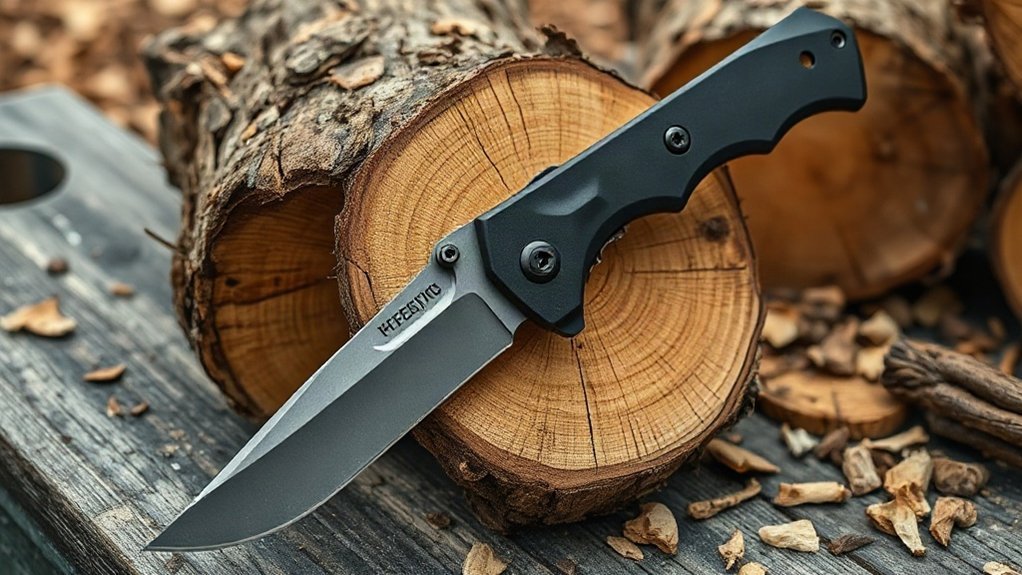
I’d trust a sturdy folding knife for many demanding outdoor tasks if it has a strong lock, durable construction, and a blade suited to the work. For regular camp use, I’d look for a blade at least 3.5 inches long. But a folder’s pivot and lock can become weak points under repeated impact, prying, or sustained batoning. I’d choose a fixed blade for those jobs; the sections below explain how to match strength and carry weight to your needs.
Key Takeaways
- A sturdy folding knife can handle demanding outdoor tasks, but suitability depends on the hardest job and how long you’ll use it.
- For batoning, prying, repeated impacts, or sustained heavy work, choose a fixed blade to avoid stressing a folder’s pivot and lock.
- Strong locks, full liners, durable handle materials, and secure grip support a folder’s reliability, but do not eliminate its hinge as a weak point.
- Thick blades and tough steels can improve strength and edge durability, though they may cut less efficiently and weigh more.
- For occasional heavy tasks, pair a capable folder with a lightweight fixed blade; for regular camp work, favor the fixed blade.
Are Folding Tactical Knives Strong Enough for Hard Use?
Yes—if I choose a folder with a strong lock, durable construction, and a blade suited to the job, I can rely on it for many demanding outdoor tasks. You can carry a capable tool without giving up the freedom and convenience of a folding design. For hard use, I look for a blade at least 3.5 inches long and a lock built to hold securely. The Benchmade Adamas pairs a 3.8-inch D2 blade with an Axis lock; the Spyderco Manix 2 XL has a 3.9-inch CPM-S30V blade and a ball-bearing lock.
When I expect especially tough work, the Cold Steel 4-Max’s thick, 4-inch CPM-20CV blade and Tri-Ad lock offer substantial strength, though its weight can make everyday carry cumbersome. A folder may not suit the heaviest jobs, where I’d choose a fixed blade instead. I also keep the pivot clean and practice pivot maintenance to reduce wear and limit material fatigue.
What Makes a Folding Knife Durable?
A folding knife’s durability depends on more than blade steel: I look for a strong blade, a reliable lock, and a handle that stays secure in my hand. For dependable performance outdoors, I weigh four practical features:
- A robust frame, liner, Axis, compression, or Tri-Ad lock helps prevent accidental closure under load.
- Full liners and sturdy materials such as G10 support the handle, while textured scales help me keep control in wet or demanding conditions.
- Weather sealing and corrosion resistance protect moving parts and help the knife handle changing conditions. Steel choice matters, too: CPM-20CV resists wear and corrosion, while D2 needs more rust protection.
- Secure opening, solid lockup, and simple maintenance routines keep the knife ready for the next task.
I also consider blade construction and thickness for strength, but no feature replaces careful use and upkeep. When I’m far from help, a dependable folder gives me confidence without limiting my freedom to move.
How Do Blade Steel and Thickness Matter?
Beyond a dependable lock and grip, I consider how blade steel and thickness shape a folder’s performance. Steel toughness helps a knife withstand hard tasks, while edge retention and corrosion resistance affect how freely I can rely on it outdoors.
| Steel | Strength | Corrosion resistance |
|---|---|---|
| CPM-20CV | Tough, holds an edge | High |
| D2 | Strong, holds an edge | Limited |
A D2 blade’s protective coating can help guard against rust; CPM-20CV needs less concern in wet conditions. CPM-S30V and CPM-S35VN also appear in substantial outdoor folders, such as the 3.9-inch Spyderco Manix 2 XL and Zero Tolerance 0909.
Stock thickness can support demanding work: the Cold Steel 4-Max has a 4-inch blade, 0.18 inches thick, and the 0909 measures just under 0.16 inches. Yet thickness alone won’t guarantee versatility. The 0909’s high hollow grind preserves slicing ability, so I’d weigh blade geometry alongside steel and heft before choosing a folder for the trail.
Which Folding Knife Locks Are Most Secure?
When I judge a folding knife lock, I look for a design that resists closing under pressure and suits the knife’s intended use. I also check Lock engagement, wear resistance, and how confidently I can operate it outdoors. These designs offer different routes to security:
- Benchmade’s Adamas Axis lock uses a lock bar and omega-shaped springs. Benchmade claims it withstands up to 800 pounds of lock pressure.
- Cold Steel’s Tri-Ad lock, featured on the 4-Max, is built for heavy-duty strength and anchors the knife’s robust construction.
- Spyderco’s Manix 2 XL uses a spring-loaded stainless-steel ball that bears against the blade tang.
- The Umnumzaan’s frame lock places a ceramic ball at the lock-bar interface; it also serves as the closed detent and helps prevent lock stick.
A thick liner lock, like the Zero Tolerance 0909’s, offers another option, with full stainless-steel liners supporting the lock. I’d choose based on fit, maintenance, and the demands of my route.
How Do These Three Hard-Use Knives Compare?
All three meet my 3.5-inch blade minimum for hard-use folders, but they take different approaches. The Benchmade Adamas has a 3.8-inch D2 blade and a strong Axis lock. At 7.7 ounces, it’s the heaviest here, and D2’s limited corrosion resistance is worth noting.
The Spyderco Manix 2 XL gives you a 3.875-inch CPM-S30V blade in a lighter 5.2-ounce package. Full steel liners and a ball-bearing lock support its hard-use role, while deep finger choils offer a secure grip. For Everyday carry, that lower weight may matter when you want capability without extra bulk.
Zero Tolerance’s 0909 splits the difference at 7 ounces, with a 3.9-inch CPM-S35VN blade, full steel liners, and a thick liner lock. Its thick blade and high hollow grind balance strength with cutting performance. Brand history may shape your preference, but I’d choose by lock, weight, and blade steel. Each offers a distinct route to dependable, independent outdoor use.
Where Do Folding Knives Struggle Outdoors?
I find that a folder’s hinge and lock can be weak points during demanding outdoor work. A thicker blade may add strength but make slicing less efficient. I also watch for slippery handles, since wet conditions can compromise my grip.
Blade Strength Limits
For sustained heavy work, a folding knife has a structural limit: its pivot and lock remain potential weak points, even on models with strong locks like the Tri-Ad or Benchmade’s Axis. I’d choose a heavy-duty folder with care, matching blade design to the task:
- Look for a blade at least 3.5 inches long, with thick stock; the Cold Steel 4-Max has a 4-inch, 0.18-inch blade.
- Remember that added thickness supports edge stability but cuts less efficiently.
- Consider tip vulnerability: the LionSteel TM1’s robust 0.18-inch blade has a high-tip profile that can feel cumbersome for everyday cuts.
- For batoning or sustained hard work, I’d carry a fixed blade; it avoids a folding joint and can simplify food preparation.
A folder offers freedom and portability, but it can’t match a fixed blade in every demanding task.
Grip In Wet Conditions
When rain or damp hands reduce friction, a folding knife can become harder to control. I look beyond blade strength: Wet Weather Traction depends on surface, shape, and fit. Smooth metal may feel sturdy yet slip when conditions turn rough. The Kershaw Bel Air scored 7.0 for grip, but testers noted it was slippery when wet.
| Handle feature | Outdoor effect | Example |
|---|---|---|
| Smooth metal | Can slip when wet | Bel Air |
| Textured G10 or rubber | Improves grip | Recommended |
| Full-size shape, finger choils | Supports secure holds | Manix 2 XL |
For demanding work, I’d prioritize weather-resistant materials and Handle Ergonomics that suit your hand. The Manix 2 XL offers forward and rearward grip positions. Testing doesn’t establish wet-grip performance for the other listed knives, so I wouldn’t assume how they compare. Choose a handle that helps you work confidently outdoors.
When Is a Fixed Blade the Better Choice?
When I’m batoning wood or prying during shelter-building, I prefer a fixed blade because it has no folding joint or lock to strain. For repeated heavy-duty tasks, that simpler construction can offer more confidence than a folder. I’ll compare suitable fixed blades next, from compact options to models built for tougher work.
Batoning and Prying
If you need to baton wood or pry, a fixed blade is usually the better choice: it has no lock or pivot to take the strain. When I expect impact force or leverage, I don’t want joint stress to become the weak point. Strong locks help, but the reviewed folders have no cited batoning or prying test results. I’d choose based on the job:
- Pick a fixed blade when heavy force is unavoidable.
- Remember, fixed blades aren’t always heavier than folders.
- Consider an ESEE 3 or 4, Becker tweener, or Mora for backpacking.
- If you want a substantial folder, the Cold Steel 4-Max offers a four-inch, 0.18-inch-thick blade and Tri-Ad lock, but weighs 9.2 ounces.
That choice gives me more confidence without surrendering freedom to carry what suits me.
Extended Heavy-Duty Tasks
For sustained batoning or demanding camp work, I’d favor a fixed blade: it has no folding joint or lock to collect debris or become a failure point. That simpler build can inspire confidence when you’re working hard and far from help. Still, I wouldn’t dismiss a stout folder; models like the Cold Steel 4-Max pair a thick blade with a strong Tri-Ad lock. Your choice depends on the job and how long you’ll use it. Extended task fatigue can set in with any knife, so I’d prioritize prolonged grip comfort and control. A fixed blade doesn’t have to weigh more, either: compact outdoor models can be surprisingly light. For backpacking, I’d consider an ESEE 3 or 4, Becker tweener, or Mora, paired with a Swiss Army Knife for everyday tools.
How Should You Choose by Task and Carry Weight?
Match a folder to your hardest likely task, then decide how much weight you’re willing to carry. I’d start with the work, not the biggest knife on the shelf. Blade length, lock strength, and blade thickness matter when camp chores get demanding; Carry weight matters every mile.
- For regular camp work, I’d choose a sturdy folder with a blade at least 3.5 inches long. That size handles many outdoor jobs without excessive bulk.
- If you need more reach and grip, consider a 3.9-inch Manix 2 XL, which weighs 5.2 ounces. The 5-ounce Umnumzaan is another capable, lighter choice.
- For maximum strength, the 4-inch 4-Max weighs 9.2 ounces; the 7.7-ounce Adamas also adds heft. I’d carry that weight only when the work justifies it.
- For everyday carry or backpacking, a slim 3.1-ounce Bel Air feels easier on the move, but isn’t built for the hardest jobs.
If heavy work is occasional, I’d pair a capable folder with a light fixed blade or Swiss Army Knife.
Frequently Asked Questions
What Is the Best Folding Knife for Outdoors?
I’d choose the Spyderco Manix 2 XL as the best all-around outdoor knife. Its 3.875-inch CPM-S30V outdoor blade, full steel liners, grippy G10 scales, and secure ball-bearing lock give me confidence for demanding camp chores and solid field durability. If you want something lighter for everyday carry, consider the Kershaw Bel Air; for tougher work, I’d pick a fixed-blade ESEE 3 or 4 and keep a Swiss Army Knife handy for general camp tasks.
What Knife Do Navy SEALS Really Use?
I can’t confirm one standard knife that Navy SEALs really use; that doesn’t mean you’re missing a secret model. Public information here doesn’t identify an issued, unit-specific choice. I’d treat Navy SEAL knife selection criteria as mission-dependent, not as a shopping list, and be wary of military knife myths. The Benchmade Adamas, Manix 2 XL, 4-Max, and Umnumzaan are substantial consumer folders, but none is verified here as SEAL-issued. You’re free to choose for your needs.
What Is the Toughest Folding Knife?
I’d call the Cold Steel 4-Max the toughest folding knife here, especially if you value structural strength over low weight. Its thick CPM-20CV blade, full titanium liners, and Tri-Ad lock give you a rugged combination of blade steel and lock durability. If you want a lighter carry, I’d also consider the Benchmade Adamas or Spyderco Manix 2 XL; both offer robust locks, so you can choose freely based on your needs and priorities.
What Is the Best Folding Tactical Knife?
I’d choose the Benchmade Adamas as the best folding tactical knife; “fortune favors the prepared.” Its 3.8-inch D2 blade steel and strong Axis lock make it a dependable companion when your plans take you off the beaten path. I like its secure handling and hard-use design, though its 7.7-ounce weight may feel substantial. If you value freedom to roam without extra heft, consider the 5-ounce Chris Reeve Umnumzaan instead. Compare locking mechanisms before buying.
Conclusion
I’d trust a well-built folding tactical knife for camp chores, trail repairs, and other demanding tasks—but not for prying, batoning, or anything that could overwhelm its lock. Steel, blade thickness, construction, and lock quality all matter, yet no folder is invincible. For extreme work, I’d choose a fixed blade; for lighter carry, a folder makes sense. Match the knife to your task, and don’t ask a pocket-sized tool to move mountains.