What Makes Bushcraft Knives Different From Regular Survival Knives?
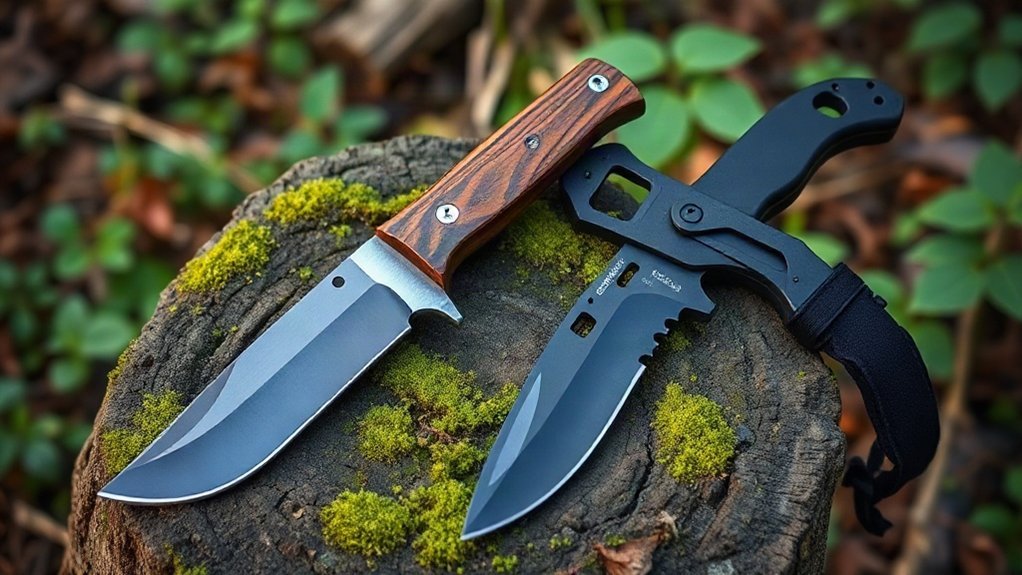
I choose a bushcraft knife when I need precise control for carving, making tent pegs, and shaping camp tools. Its typically shorter, lighter blade and Scandi or convex grind can make detailed woodwork easier. A survival knife is usually designed for a broader mix of outdoor tasks, with some models built for heavier cutting or batoning. The categories overlap, so I match the knife to my plans, conditions, and other gear. The details can help you choose confidently.
Key Takeaways
- Bushcraft knives prioritize controlled woodcraft, such as carving, making feather sticks, and shaping camp tools; survival knives cover a broader range of emergency tasks.
- Bushcraft blades are usually 9–13 cm long, while survival blades vary more widely to suit different workloads.
- Scandi and convex grinds are common on bushcraft knives for carving control; survival knives often use flat grinds to balance cutting ability and strength.
- Bushcraft knives may be thinner and lighter for precise work, while sturdier survival knives are better suited to demanding tasks like batoning.
- The categories overlap: choose based on your tasks, conditions, and kit, and consider pairing a carving knife with an axe or saw for heavier work.
What Makes Bushcraft and Survival Knives Different?
Although bushcraft and survival knives can overlap, they’re designed with different priorities: a bushcraft knife favors controlled woodcraft, while a survival knife aims to tackle a wider range of emergency tasks. That distinction in Intended Use shapes each knife’s size, build, and feel in your hand.
Bushcraft blades typically measure 9–13 cm, most often 10–11 cm, and often use a Scandi grind for controlled cuts. Their lighter build and comfortable, precise grip help me work steadily during detailed hand tasks. Survival knives vary more widely, around 7–18 cm, and generally use thicker, tougher construction for demanding use. Their secure grips and rugged builds favor durability over fine control.
These Design Priorities aren’t strict rules. Some knives blend bushcraft-friendly handling with survival-level toughness, and labels alone won’t tell you which is right. I’d choose by the work I expect, the feel I prefer, and how much freedom I want to carry one versatile tool rather than settle for a category.
What Do Bushcraft and Survival Knives Do?
When I’m planning a trip, I use a bushcraft knife for precise woodwork: carving tent pegs, shaping feather sticks, cutting notches, and making useful tools from natural materials. That controlled Wood carving helps me build a shelter and adapt to camp without relying on store-bought gear. For fire preparation, I shape tinder and kindling, then make the small pieces I need to get a fire going. I can also craft traps or other practical items when the setting calls for them.
I turn to a survival knife when an emergency demands a broader, stand-alone tool. I can use it to cut rope, prepare food, build shelter, and split kindling. Depending on its strength, I may also baton wood, chop, or limb a small tree. Both knives help me work outdoors, but each suits a different plan: a bushcraft knife supports deliberate campcraft, while a survival knife tackles varied, demanding jobs when I need to respond quickly and stay self-reliant.
How Do Their Blade Sizes and Shapes Compare?
I notice the size difference first: bushcraft knives usually have 9–13 cm blades, most often around 10–11 cm, while survival knives range from about 7–18 cm and often run longer. That shorter Blade length gives me a lighter, more controlled tool for carving, shaping wood, and making measured cuts. Survival knives tend to have broader, thicker blades, built to handle demanding jobs such as batoning. The extra heft can help when I need a tougher, more versatile tool outdoors, though it may feel less nimble for fine work.
The tip profile also shapes each knife’s character. Drop points are common in both: their useful tip, curved belly, and straighter cutting section offer a practical balance. Survival models often add clip points, serrations, sawbacks, or sharpened swedges for specialized tasks. Bushcraft designs usually keep a simpler outline, letting me focus on controlled woodwork without unnecessary features. I’d choose by the work I expect, not by size alone. A compact blade gives me precision; a longer one can offer reach and resilience when conditions demand more.
Which Grinds Suit Bushcraft and Survival Knives?
For controlled carving, I’d look first at the grind: bushcraft knives often use Scandi grinds, whose broad bevels guide clean cuts in wood, or convex grinds, which offer a strong edge for woodworking. The right profile depends on how you want to work, not on a rigid label. I’d compare three common choices:
- Scandi: Its broad, flat bevel makes scandi carving intuitive and controlled, especially when shaping wood or making precise cuts.
- Convex: I’d choose this for convex durability and a strong edge that suits varied woodworking tasks.
- Flat: Survival knives often use flat grinds, balancing cutting ability and strength when a task calls for heavier use.
These are tendencies, not rules. Some bushcraft knives have flat grinds, and some survival-knife users prefer Scandi edges. If freedom to carve precisely matters most, I’d favor Scandi or convex; for broader, demanding work, a flat grind may suit you better. Consider the jobs you expect to tackle before choosing.
How Do Steel and Construction Affect Durability?
Grind shapes cutting behavior, but steel and construction determine how well a knife holds up to hard use. I choose blade thickness for the work, not just the label. Thinner bushcraft blades make controlled carving and feather-stick cuts easier, but repeated heavy batoning can overtax them. Survival knives often use thicker, heavier blades and full-tang construction to handle higher stress, including batoning, hammering, and chopping. Full tang strength matters when you need a dependable tool far from help.
Steel toughness also shapes durability and upkeep. Carbon steels such as 1095 and CPM 3V are tough and relatively easy to sharpen in the field, but I protect them from rust. Stainless steel resists corrosion better in damp or coastal conditions. I also consider blade length: a longer knife needs enough thickness for its workload, though I wouldn’t treat any knife as an axe. Choose construction for the freedom to work confidently within a blade’s limits.
How Do Their Handles Affect Grip and Comfort?
Bushcraft handles often suit several grips, so I can guide precise cuts while making feather sticks, notches, or wooden tools. Survival knives focus more on a dependable hold across demanding tasks, particularly when conditions turn wet or unpredictable. I weigh comfort against traction and durability:
- Fine work: A contoured handle helps me carve repeatedly with less fatigue and steadier control.
- Wet conditions: Rubberized, micarta, and G10 are wet grip materials that can help prevent slipping.
- Traditional feel: Wood feels comfortable, but it may split or warp over time.
The right handle gives me the freedom to work confidently: I favor comfort for detailed carving and secure traction when tasks get rough.
Do Bushcraft and Survival Knives Need Different Sheaths?
I don’t think the knife’s label alone should determine its sheath. Leather suits many bushcraft knives, while Kydex or plastic can better withstand harsh weather and rough handling. I’d prioritize a snug fit or retention strap to keep your knife secure.
Sheath Material And Durability
Although bushcraft and survival knives don’t require different sheaths, their conditions of use should guide your choice. I’d focus on weather resistance and material longevity, then pick what suits your route and priorities.
- Leather: I like its natural look for bushcraft, where conditions may be gentler. But heavy rain and sliding over rocks can wear it down.
- Kydex or plastic: I’d consider these for survival use in harsh weather or rough terrain. They’re popular choices when exposure and abrasion matter.
- Fit and durability: Whatever the material, I’d check that the sheath fits snugly or has a retention strap, so the knife stays with me during demanding activity.
You don’t need to follow category labels. Choose a sheath that can handle your conditions and lets you travel with confidence. My choice comes down to exposure, durability, and dependable carry.
Retention And Secure Carry
When I’m moving through rough terrain, I want my knife to stay secure without making it hard to draw. That balance matters most when I’m scrambling over rocks or facing heavy rain. For survival carry, I’d choose a sheath built to resist the elements, with dependable sheath retention. Kydex and plastic are common options because they handle harsh conditions and can hold a knife firmly. A snug fit or an added retention strap can keep the blade from slipping free and getting lost.
Bushcraft sheaths leave more room for personal choice. I might prefer leather for its natural feel, but it isn’t essential. The right sheath depends on how I’ll use the knife: bushcraft favors preference, while survival demands durability and reliable retention. Either way, I want secure carry and a draw that lets me move freely.
Which Knife Fits Your Outdoor Plans?
I’d match your knife to your main tasks: choose a bushcraft knife for precise woodwork, or a sturdier survival knife for heavier cutting and batoning. I’d also consider your full kit—an axe or saw can handle demanding work while a lighter knife covers fine carving. Before choosing, I’d test the knife for grip, control, and comfort with the gear you’ll carry.
Match Your Main Tasks
Match your knife to the work you expect to do: choose a bushcraft knife for controlled woodcraft, such as carving feather sticks, shaping tent pegs, and cutting notches, or a survival knife for a broader range of tougher tasks, from chopping small branches to building emergency shelter.
I’d choose based on the jobs I want to handle outdoors:
- For precision carving, traps, and wooden camp tools, I’d favor a bushcraft knife. Its typical 9–13 cm blade, often with a Scandi grind, gives me control for measured cuts.
- For heavier chores like splitting kindling or cutting rope, I’d pick a tougher, broader-use survival knife. Blade sizes and weights vary, so I’d match one to the work.
- If my plans demand both, I’d carry a controlled bushcraft knife alongside a stronger tool.
That way, I can choose freely without expecting one blade to excel at every task.
Consider Your Full Kit
I choose a knife that complements my full kit and the work I expect it to do. If I carry an axe or saw, I’ll often pick a bushcraft knife for controlled carving, feather sticks, tent pegs, and other woodcraft. That reduces tool overlap and keeps my options open without packing another heavy-duty blade.
When I expect one knife to handle varied or demanding jobs, I’ll consider a sturdier survival knife for chopping small branches, splitting kindling, and preparing food. I match its size and pack weight to my plans: bushcraft blades around 9–13 cm suit lighter campcraft kits, while survival models vary widely. If I need both fine carving and tougher work, I can pair a controlled bushcraft knife with a stronger tool and carry only what earns its place.
Test Before Choosing
Before choosing, try knives that suit the work you expect to do. I’d match the blade to your plans, not a label. A bushcraft knife handles carving, feather sticks, tent pegs, and other precise woodwork; a survival knife covers a wider range of demanding jobs.
- Test carving control with detailed cuts. A shorter Scandi-ground blade often feels easier to guide during extended woodcraft.
- Compare sizes and weights. Bushcraft blades commonly measure 9–13 cm; survival knives range from about 7–18 cm and 75–500 g.
- Check heft for harder work. If your trip may involve heavy cutting or batoning, see whether a sturdier survival-style knife feels manageable with your kit.
Use trial handling to find your fit. If you’re unsure, start with a lower-cost outdoor knife and compare designs on real tasks.
Frequently Asked Questions
What Are the Key Differences Between Bushcraft Knives and Survival Knives?
I choose a bushcraft knife when I want precise control for carving tent pegs, feather sticks, and wooden tools. Its compact, lightweight build, often with a Scandi or convex blade geometry, makes detailed cutting easier. I reach for a survival knife when I need broader emergency versatility and tougher construction for demanding work, such as batoning. Consider blade size, handle ergonomics, and your priorities; some knives bridge both roles, so you can choose your own balance.
What Are the 5 C’s of Bushcraft?
The 5 C’s of bushcraft are cutting tools, combustion, cordage, containers, and cover. I use them as a flexible checklist, not a strict rulebook, so you can choose what suits your trip. A knife handles carving; Firecraft techniques help you light a dependable fire; Cordage making gives you ties for shelters and gear. Containers carry or boil water, while clothing and shelter provide cover. Together, they help you meet basic needs outdoors.
What Is the Best Bushcraft Knife of All Time?
There’s no single best bushcraft knife of all time; I’d choose the one that feels like an extension of your hand. Timeless Knife Designs, including Scandinavian puukkos, offer a useful starting point: a roughly 10–11 cm blade, comfortable grip, and Scandi or convex grind suit carving and camp chores. Expert Craftsmanship matters, but reputation isn’t everything. I’d test several knives for carving, sharpening, and grip, then pick the one that fits your work and lets you roam freely.
What Is the Best Steel for a Bushcraft Knife?
I’d choose high-carbon steel for a bushcraft knife if you want easy field sharpening and a keen edge. Steels like 1095 and CPM 3V offer toughness, while edge retention varies by steel and heat treatment. You’ll need to clean and protect carbon steel to prevent rust. If you often work in damp or coastal conditions, stainless steel gives you better corrosion resistance, though sharpening it may take more effort. No steel suits everyone.
Conclusion
I choose a bushcraft knife for careful woodwork and camp chores, and a survival knife when I need a tougher, more versatile tool for unpredictable conditions. Blade shape, grind, steel, handle, and sheath all affect how a knife performs, so I match those details to my plans and skills. No single design does everything best; the right knife should feel like an extension of my hand, ready for the trail ahead. Before buying, I consider what I’ll actually do outdoors.