How Do You Maintain Bushcraft Knives to Prevent Rust and Blade Damage?
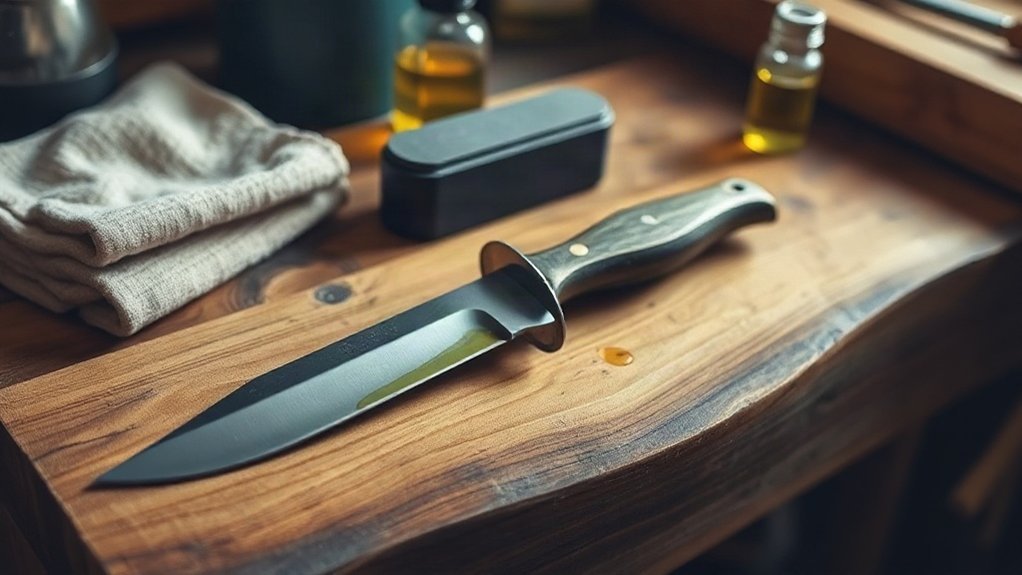
I maintain my bushcraft knife by cleaning it after every trip with warm water, mild soap, and a soft sponge, then drying it completely instead of letting it air-dry. I inspect the blade and handle for rust, chips, or other damage, treating small rust spots gently. Once the blade’s clean and dry, I apply a thin coat of food-safe mineral oil. I store the knife somewhere dry, and I’ll explain how steel type and storage affect long-term care.
Key Takeaways
- Clean your knife promptly after each outing with warm water, mild soap, and a soft sponge; never soak it or put it in a dishwasher.
- Dry the blade and handle completely with a soft cloth, then inspect for moisture, rust, chips, scratches, or damage.
- Apply a thin layer of food-safe mineral oil or knife oil to the clean, dry blade, especially after water or acidic-food exposure.
- Treat small rust spots early with gentle abrasion and oil; address pitting or persistent corrosion carefully.
- Store the knife completely dry in a protected, ventilated place, and avoid damp storage or long-term storage in a leather sheath.
Clean Your Bushcraft Knife After Every Trip
After every trip, I clean my bushcraft knife as soon as possible to remove dirt, sap, and food residue that can trap moisture against the blade. A quick wash protects your dependable tool and keeps it ready for the next time you head off the beaten path.
I use warm water, a little mild dish soap, and a soft, non-abrasive sponge to clear debris from the blade. To remove sap, I gently work the sponge over the sticky spots rather than scraping with anything that could scratch the steel. I avoid the dishwasher and harsh cleaners; they can damage the knife or its finish.
If I’ve cut acidic foods or handled salty materials, I rinse the blade promptly. Those residues can encourage corrosion if they linger. I wash by hand and never soak the knife. Once it’s clean, I wipe the blade and handle completely with a clean cloth. Don’t put your knife away damp; proper cleaning helps preserve its freedom-ready reliability.
Dry the Blade and Check for Damage
Once I’ve washed my bushcraft knife, I dry the blade immediately and thoroughly with a clean, soft cloth rather than letting it air-dry. This simple Drying technique helps me protect a dependable tool for the next trip and keeps lingering moisture from causing trouble. I pay close attention to spots where water and residue can hide:
> I dry my bushcraft knife right away, checking hidden moisture spots before storing it safely.
- Wipe along the edge carefully, keeping my fingers clear of the cutting surface.
- Dry the spine, where droplets can collect unnoticed.
- Check the handle junction and wipe away moisture or food residue.
- Before storage, inspect the blade for damp spots, rust, discoloration, scratches, or chips.
This damage inspection gives me a chance to catch problems before they compromise the knife. If I find light surface rust, I treat it with a suitable knife-care method, then rinse and dry the blade completely. When I spot a chip or other visible damage, I don’t force the edge through hard material. I arrange appropriate sharpening or repair instead, so I can carry my knife with confidence and freedom.
Remove Surface Rust From Your Bushcraft Knife
I first check whether the mark is surface rust or pitting, since pitting signals deeper damage. For light rust, I gently rub the spot with fine wire wool and a little oil, or use a baking soda paste. I avoid aggressive scrubbing so I don’t scratch the blade.
Assess Surface Rust
How can you tell harmless patina from rust that may pit your blade? I look for texture as well as color. A smooth blue gray patina is usually harmless; raised, flaky, or spreading orange-brown marks suggest active rust spotting that can damage steel.
I inspect my knife after damp trips and whenever it’s touched acidic food or salty residue. Catching changes early lets me protect the blade without surrendering time outdoors. Check:
- Color: Is the mark a stable gray tone or fresh orange-brown?
- Texture: Does the surface feel smooth, or rough and pitted?
- Location: Are spots appearing where moisture or residue collected?
- Change: Are marks spreading since my last inspection?
If I’m unsure, I clean and dry the blade, then check again. Deep pits or persistent corrosion call for careful attention before I return the knife to hard use.
Remove Rust Gently
For light surface rust, I gently rub the spot with fine steel wool or a non-abrasive rust remover, using only enough pressure to lift the corrosion without scratching the blade. My polishing technique stays controlled, so I can care for my knife without taking away its freedom-ready edge. For mild spots, I may use baking soda mixed with water; I apply the paste gently, then rinse the blade thoroughly.
| Step | What I do |
|---|---|
| Clean | Lift rust gently |
| Rinse | Remove all paste |
| Dry | Wipe completely |
| Protect | Apply thin oil |
I dry the blade with a clean cloth, then add a thin layer of food-safe mineral oil or knife oil. A blue-gray or purplish carbon-steel patina isn’t damaging rust, so I leave stable patina alone.
Protect Your Blade With Oil or Wax
Once I’ve cleaned and thoroughly dried my bushcraft knife, I apply a thin coat of food-grade mineral oil or food-safe knife oil to guard against moisture and rust. This simple habit helps me keep my blade ready for the trail, camp, or kitchen without letting corrosion limit my plans.
- I reach for food safe oil after the blade touches water or acidic foods, then wipe away any excess.
- I avoid olive and other cooking oils; they can turn sticky or rancid instead of protecting the steel.
- For longer storage, I use a light layer of protective grease or petroleum jelly, then wipe it off before preparing food.
- I can also apply protective wax for a thin barrier, but I let it dry fully before sheathing the knife.
I keep the coating light, since a clean, dry blade and a little protection are easier to maintain than damage discovered later. With this quick routine, I can store my knife confidently and carry it freely, knowing I’ve taken practical steps to guard its edge.
Care for Carbon and Stainless Steel Differently
I clean and dry carbon steel promptly, then coat it lightly with oil before storage. Stainless steel resists rust, but I still clean and dry it after use, especially in humid conditions. I keep both types out of the dishwasher and follow the maker’s instructions for Damascus steel.
Carbon Steel Care
Because carbon steel rusts more readily than stainless steel, I clean it promptly after use—especially after contact with acidic or salty materials—then wash it by hand with mild detergent and a non-abrasive sponge. I skip dishwashers, soaking, and rough scrubbers to protect the blade. After washing, I dry it completely with a clean cloth and apply a thin coat of food-safe mineral oil or knife oil.
- Watch for patina development; it can mark use, but it doesn’t replace cleaning and drying.
- Store the knife in a dry block, sheath, or other protected space.
- Avoid damp storage and don’t leave the blade in a leather sheath long-term.
- Let steel selection match your needs, then give carbon steel this simple care routine.
With these habits, I keep my knife ready for the freedom of the trail.
Stainless Steel Care
Although stainless steel resists rust, moisture and grime can still cause corrosion. I rely on its chromium protection, but I don’t treat the blade as invulnerable. After a day outdoors, I wash it by hand with mild soap and a soft, non-abrasive sponge. Dishwasher avoidance matters: heat, harsh detergents, and knocks can damage the knife. I rinse acidic or salty residue promptly, then dry the blade completely with a clean cloth before putting it away.
I store my knife in a dry block or storage box, never a damp sheath or humid space. Stainless steel generally needs less oil than carbon steel, but I apply a light coat of food-safe mineral oil before prolonged storage or after moisture exposure. This simple routine lets me count on my knife without adding needless upkeep.
Match Care to Steel
Match your care routine to the blade’s steel: carbon steel needs prompt cleaning, thorough drying, and a thin coat of food-safe mineral oil, especially before storage. I treat acidic or salty residue as an urgent reason to clean. Stainless steel resists rust better thanks to chromium, but humidity still calls for prompt cleaning and complete drying.
- Identify steel before choosing your routine; don’t assume every blade’s needs.
- For carbon steel, clean after use, dry fully, then apply suitable protective oil.
- For stainless steel, clean and dry promptly, especially after damp outings.
- Skip the dishwasher for either type; heat and harsh detergents can damage blades and speed corrosion.
Carrying Damascus steel? Check composition and follow the care needs of its carbon or stainless layers. That small check helps me keep my knife ready for the next trip.
Store Your Bushcraft Knife in a Dry Place
When you put your bushcraft knife away, choose a dry spot away from damp areas that can encourage rust. I wash off residue, then dry the blade completely with a clean cloth before storage. A simple routine protects your tool and keeps you ready to head outdoors on your own terms.
| Storage choice | What I do |
|---|---|
| Moisture free storage | I choose a dry shelf or cabinet, not a damp shed. |
| Ventilated storage location | I let air circulate around the knife. |
| Long-term storage | I dry the blade fully and apply a light coat of food-safe oil, especially on carbon steel. |
I don’t leave my knife in a leather sheath for long periods; trapped moisture can promote corrosion. In humid conditions, I check the stored blade regularly. If I spot moisture or rust, I dry it again and reapply oil as needed. This keeps storage practical without tying you to complicated gear or routines.
Prevent Rust With Regular Knife Maintenance
Even in a dry storage spot, regular care helps prevent rust and blade damage. I clean my knife promptly after each outing, so residue won’t compromise its edge or leave me unprepared on the trail. A simple maintenance schedule makes this routine easy to follow:
- I wash away acidic or salty residue with mild soap and a non-abrasive sponge.
- I rinse the blade, then dry it thoroughly with a clean cloth; I never soak it or leave it damp to air-dry.
- I protect carbon steel with a light coat of food-safe mineral or knife oil, especially before storage or after moisture exposure.
- I inspect the blade and treat small rust spots early with gentle abrasion and oil.
I store the knife completely dry in a ventilated place, not long-term in a moisture-trapping leather sheath. During handle upkeep, I check for damage that could affect my grip. Surface oxidation may lift away; pitting needs closer attention. Regular checks let me keep moving freely with dependable gear.
Frequently Asked Questions
What Can I Put on My Knife to Keep It From Rusting?
I put a thin coat of Food grade mineral oil on my clean, completely dry knife to help prevent rust. If you use your blade for food, choose food-safe oil, and don’t use olive oil; it can turn sticky or rancid. For longer storage or damp conditions, I may apply a beeswax blade coating. I always dry the blade first, since oil or wax can’t protect a wet knife from corrosion.
What Is the Best Oil to Keep Knives From Rusting?
Food safe mineral oil is my best all-around choice for preventing knife rust; Camellia oil for blade protection is another good option. Carbon steel can rust after just one exposure to moisture, so I dry the blade completely and apply a thin, even coat before storage. I reapply oil after wet or acidic use. I avoid cooking oils because they can turn sticky or rancid, and I store my knife somewhere dry, not in its leather sheath.
Will WD-40 Remove Rust From a Knife?
No, I wouldn’t rely on WD-40 to remove rust from your knife. It can displace moisture and help protect a clean, dry blade, but WD 40 rust removal limitations mean it isn’t an established rust remover. For safe rust removal methods, I’d try a baking soda paste, white vinegar, lemon and salt, or an approved knife-care product. Rinse and dry the blade completely, then apply food-safe knife oil to protect it.
What Type of Knives Will Not Rust?
No knife is truly rustproof, but I’d choose stainless steel for a blade that resists corrosion; its chromium acts like a shield, not an impenetrable wall. I’d still clean and dry it after use, especially in damp weather. Ceramic blades won’t rust because they contain no iron, though they can chip more easily. For fewer worries and more freedom outdoors, I’d store either knife clean and dry, following its maker’s care instructions.
Conclusion
I keep my bushcraft knife clean, completely dry, and lightly protected after every trip. I check the edge for chips, remove any surface rust promptly, and choose care suited to the steel: carbon blades need extra attention, while stainless steel still benefits from routine maintenance. Store your knife somewhere dry, not in a damp sheath. That small habit matters: even stainless steel can corrode under the right conditions. Keep up this simple routine, and you’ll help your knife stay sharp and ready for years.