How Can You Choose Bushcraft Knives for Long Camping Trips?
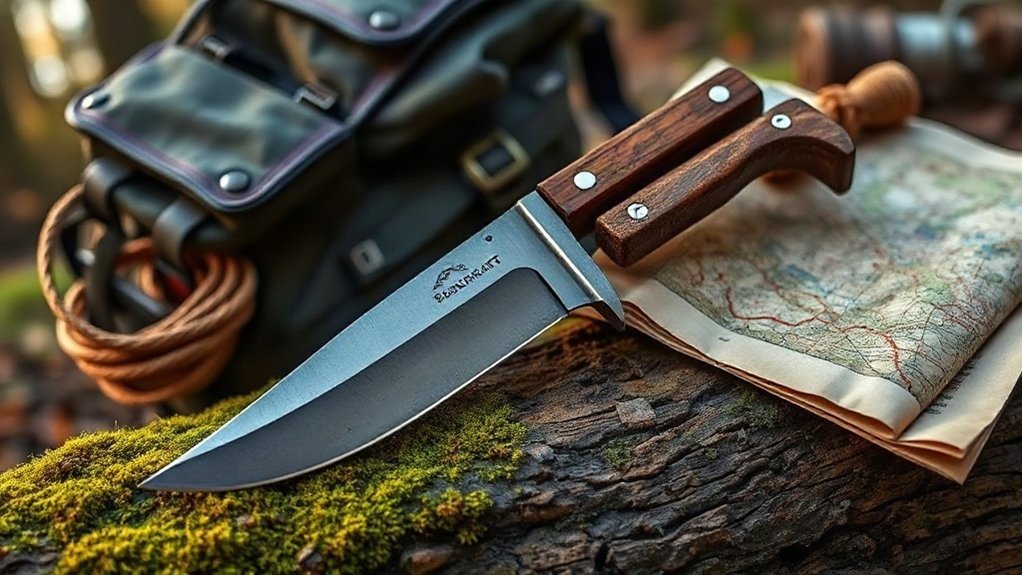
I choose a bushcraft knife for a long camping trip by matching its size, weight, and steel to the work and weather I expect. For carving, food prep, and routine chores, I prefer a 4–4½-inch blade; heavier firewood tasks may call for a robust fixed blade, saw, or hatchet. I also check that the handle fits comfortably and the grind suits my tasks. In wet conditions, I favor stainless steel, then clean and dry the blade after use. The details below can help you narrow your choice.
Key Takeaways
- Choose a 4–4½-inch blade for versatile carving, food preparation, and routine camp chores; go longer only when heavier work demands it.
- Match the grind to your tasks: choose flat for general use and food slicing, or Scandi for controlled wood carving and tinder preparation.
- Select a full-tang fixed blade for demanding camp and fire-preparation work, but avoid twisting, prying, or using a knife for heavy chopping.
- Balance blade strength and carry weight; test handle fit and consider a lighter knife or two-knife setup for varied tasks.
- Choose steel for conditions: stainless reduces upkeep in wet weather, while carbon steel is easy to sharpen; clean and dry any blade after use.
Choose a Bushcraft Knife for Your Camp Tasks
Which bushcraft knife suits your camp tasks? I start with the jobs I expect to handle, then choose a blade that gives me freedom without adding needless bulk. For carving and routine camp chores, a 3.5–5-inch blade offers a practical balance. If I’ll prepare food, I favor a thin blade—up to ⅛ inch at the spine—with a flat grind, which slices meat and vegetables cleanly.
When carving wood matters most, I look for a Scandi grind for controlled whittling. I choose a full tang if I expect heavier work, such as batoning, but I don’t twist or pry with my knife. A saw or hatchet handles large or knotty wood better. A fixed blade generally stands up to camp use better than a folder. For precise chores, I prefer a plain edge that’s easy to sharpen. On long trips, stainless steel needs less rust care; carbon steel is easier to touch up. I also consider Shelter cordage and emergency signaling among my camp needs.
Compare Kukris, Becker BK2s, ESEE 6s, and Condor Hudson Bays
These four knives cover very different camp needs. I’d choose a Nepalese kukri when I need serious chopping: its 10-inch, ⅜-inch-thick blade carries weight forward, making it effective for harvesting hazel or willow coppice. Its Cultural significance and Historical origins also give it a story beyond camp utility.
For a compact, rugged workhorse, the Ka-Bar Becker BK2 brings a 5-inch, ¼-inch-thick blade and a roomy, comfortable handle that suits medium or larger hands, even with gloves. The ESEE 6 offers a lighter carry and better slicing with its coated 1095 steel, full-flat grind, and 6.5-inch blade, though its length limits fine carving.
The Condor Hudson Bay balances camp chores with an 8.5-inch, 3/16-inch-thick 1095 blade that handles shelter work and firewood processing; I’d keep it dry to prevent rust. All four can chop or baton. Thicker blades wedge wood apart, while a convex edge helps. On long trips, I’d pair a heavy knife with a smaller detail blade for finesse.
Match Bushcraft Knife Length to Chopping and Carving
I’d start with a 3.5–5-inch blade for general camp use, then go longer if chopping wood is your priority. For detailed carving, I’d choose a shorter blade that’s easier to control. I’ll compare how reach and chopping leverage trade off against precision and control.
Blade Length for Chopping
For a versatile camp knife, I’d start with a 4–4½-inch blade: it handles routine carving and camp chores without feeling unwieldy. For heavier work, I match blade length to wood thickness; a longer edge gives you more reach and chopping leverage, but less control for detail.
| Blade length | Best fit | Trade-off |
|---|---|---|
| 3.5–5 inches | Everyday camp tasks | Balanced carry |
| 4–4½ inches | Carving and chores | Versatile, manageable |
| 6.5 inches | Larger wood; ESEE 6 | More reach |
| 8.5 inches | Chopping; Condor Hudson Bay | Heavier, harder to control |
I’d choose a longer knife only when processing larger wood is a priority. For big or knotty pieces, I reach for a saw or hatchet, not a knife. A thick blade can help with batoning, though it adds weight and may slice less cleanly. Don’t twist or pry with it.
Short Blades for Carving
When does a shorter bushcraft knife make more sense? I reach for one when carving and routine camp chores matter more than heavy chopping. A blade around 3.5–5 inches gives me useful Carving control; 4–4½ inches handles many general camp tasks. Its compact edge helps me make precise cuts and enjoy detailed whittling without wrestling a longer blade.
For camp versatility, I favor a narrow, straight blade with a central point. It peels vegetables, slices food, and manages everyday jobs. I also choose a thin blade, up to ⅛ inch at the spine, because it carves and slices more easily than a thick chopping blade. I save longer knives for fish filleting or heavier woodwork, and pick a smaller blade when fine carving is my priority.
Balance Reach and Control
Although a longer blade gives me more reach for larger jobs, it can make precise carving harder. I choose knife length around the work I do most, so you can pack for your own style rather than carry an oversized blade for every possibility.
For carving and routine camp chores, a blade around 3.5–5 inches offers a practical balance. A 4–4½-inch knife handles peeling potatoes and slicing vegetables, with enough Reach advantage for everyday tasks and Control precision for detail work. If I’m filleting fish or tackling heavy chopping and splitting, I may bring a longer, heavier blade; it can provide useful reach but adds carry weight and limits fine control. I’d rather use a smaller knife for carving and choose a larger tool when chopping demands it. That keeps my kit capable without tying me to one unwieldy blade.
Balance Bushcraft Knife Weight, Thickness, and Grind
A knife’s weight, thickness, and grind should match the work you expect on a trip. I favor a light, compact blade for routine camp chores because it rides comfortably and gives me control for fine cuts. A blade around 3.5 to 5 inches makes a useful starting point; extra length adds carry weight and can hinder carving.
Consider spine thickness alongside your tasks. At ⅛ inch or less, a blade slices food more easily. A thicker spine can wedge through wood during batoning, but it adds weight and makes slicing harder. I’d choose the edge geometry to suit the work: a flat grind handles general chores and slicing, a Scandi grind offers control for carving, and a convex edge favors chopping and batoning.
The 6.5-inch ESEE 6 balances slicing and durability, though its length may limit fine carving. The 3.52-ounce Morakniv Kansbol is lighter, with a thin Scandi blade for woodwork and slicing, but its partial tang limits heavy use.
Choose Bushcraft Knife Steel for Trip Conditions
I match steel to your trip’s weather: stainless grades like 12C27 resist corrosion in rain, while 1095 needs prompt drying and light oil. If you’ll sharpen often, 1095 is easier to touch up than edge-retentive S30V; for heavy splitting, I consider tough CPM-3V and the knife’s heat treatment and edge geometry. Even stainless needs care, and a coating or patina can help protect carbon steel from rust.
Match Steel to Weather
When rain or humidity is likely, I’d choose stainless steel such as 12C27, N690, M390, or MagnaCut to reduce rust risk, though no stainless blade is rust-proof. For monsoon corrosion or humid storage, I’d still wipe the blade dry after use and clean it before packing. That small habit protects your freedom to keep moving without worrying about constant maintenance.
For dry trips, I might carry carbon steel, such as 1095, 1075, O1, or 5160. It can develop a protective patina, but I’d clean and dry it, then apply light oil to limit rust. Tool steels like CPM-3V, CruWear, D2, and Sleipner offer a middle ground, yet damp weather still calls for care. I’d match my choice to the trip’s climate and chances to maintain the knife.
Balance Edge Retention and Sharpening
Longer trips make edge retention tempting, but I’d balance it against how easily I can sharpen in the field. If I expect demanding use, CPM-S30V offers strong wear resistance, but it takes more effort to restore its edge away from home. For a simpler touch-up, carbon steel such as 1095 sharpens readily; stainless Sandvik 12C27 suits wet conditions and food prep. On wet trips, CPM-MagnaCut is another option with strong corrosion resistance. Steel alone won’t decide performance: heat treatment and edge geometry also shape Edge retention and sharpening ease. I’d pack a compact sharpener, such as the Work Sharp Guided Field Sharpener, so I can maintain the blade and stay self-reliant. Choose for your route and skills, not a promise of never needing Field sharpening.
Consider Rust Prevention
If your trip involves steady rain or frequent food prep, I’d choose stainless steel such as 12C27, N690, or MagnaCut to reduce corrosion and upkeep—but none is rust-proof.
For drier trips, I’d consider carbon steel like 1095, 1075, or O1. It’s easy to sharpen in camp, but I’d dry the blade after use and apply a light coat of oil. A patina or protective coating can help limit rust; don’t mistake a colour change for damage.
D2 and CPM 3V offer a middle ground, yet neither is fully stainless. I’d still guard them against moisture exposure and use protective storage when the knife isn’t in hand. Match steel to your route: prioritize corrosion resistance in persistently wet country, or choose carbon steel when drier conditions let you maintain it and roam freely.
Check Handle Fit and Carry Comfort
Choose a handle that feels secure and comfortable in your hand, since the right fit depends on your grip and hand size. I’d test a knife before committing to a long trip, checking whether its shape lets me hold it naturally without pressure points. The Morakniv Kansbol’s rounded, rubbery polymer grip is one example of a comfortable, secure fit.
Consider Glove Compatibility, too. The Ka-Bar BK2 fits medium-sized hands while leaving room for larger hands or gloves. For Wet Weather Grip, textured rubber or polymer can help; smoother Micarta or G10 may need contours or grip lines. I’d favor an ergonomic, curved handle for prolonged carving, like the TOPS BOB Fieldcraft’s contoured design, which supports comfortable control.
Carry weight matters when I’m covering distance. At 3.52 ounces, the Kansbol feels lighter to pack than the 10.5-ounce TOPS BOB Fieldcraft. I’d balance hand comfort with carry comfort so the knife suits my route, kit, and freedom to travel.
Use a Bushcraft Knife for Food and Fire
When I use a bushcraft knife for camp meals and fire prep, I look for a thin, straight blade about 4–4½ inches long. It gives me control for slicing meat and vegetables, peeling fruit, and other camp meal prep without weighing me down.
| Task | Feature I choose |
|---|---|
| Slicing food | Flat grind |
| Carving tinder | Scandi grind |
| Fire preparation | Full-tang fixed blade |
A plain edge handles precise chores like feathersticking and is easier to sharpen than a serrated edge. For ferro rod sparking, I can use either carbon or stainless steel. Carbon steel can also strike flint, though I must dry it and protect it from rust.
A sturdy, full-tang fixed blade gives me confidence when preparing kindling. I don’t force it through large or knotty wood; I reach for a saw or hatchet instead. With the right knife, I can prepare food and tinder efficiently, then move freely through camp without carrying more than the job requires.
Keep Carbon Steel Sharp and Rust-Free
After camp chores, I wipe my carbon-steel knife dry, especially after cutting food or working in wet weather. Drying techniques matter on long trips: I clean away residue, dry the blade and handle area, then leave no moisture trapped in the sheath. A light oil coat helps keep rust at bay. For Oil selection, I use a small amount of suitable knife oil, applying it sparingly so the blade stays ready for camp tasks.
Steels such as 1095, 1075, 5160, and O1 are tough and easy to sharpen, so I can restore an edge in the field. I pack a compact sharpener and follow the maker’s guidance rather than removing more steel than needed. Carbon steel may darken or form a natural patina; a coating or patina can limit corrosion, but neither replaces cleaning and drying. I value that simple upkeep: it helps me stay self-reliant and keep moving, whatever the weather brings.
Pair a Large Bushcraft Knife With a Small Detail Blade
For demanding woodwork, I rely on a robust 6–8-inch bushcraft knife for batoning, chopping, and shelter tasks, then switch to a 3.5–5-inch blade for carving, food prep, and other precise chores. This pairing gives you freedom to tackle tough jobs without forcing a long, heavy blade into delicate work.
I use a large blade like the 6.5-inch ESEE 6 to process firewood and handle camp chores that call for strength. For fine cuts, I reach for a detail knife, which offers better control for carving and food preparation. A compact 3.38-inch Benchmade Mini Bushcrafter can manage many small cutting jobs, but its short blade limits batoning.
Two knives add weight, so I choose this setup when versatility matters more than an ultralight kit. If you’re planning a long trip with varied tasks, matching each knife to its strengths can make camp work safer, smoother, and more efficient.
Frequently Asked Questions
Are Bushcraft Knives Allowed on Public Lands and in National Parks?
Sometimes, but I wouldn’t assume every bushcraft knife is allowed on public lands or in national parks. Knife regulations vary by agency, location, blade type, and intended use; some areas restrict fixed blades or prohibit knives entirely. Before you go, I’d check the managing agency’s current rules and local laws, especially where land access overlaps with campgrounds, visitor centers, or trails. That quick check helps you carry responsibly and enjoy the freedom to explore.
What Sheath Features Improve Safety During Extended Backcountry Travel?
A secure sheath is a seat belt for your blade: I look for a snug fit, a retention strap design that releases easily but won’t pop open, and drainage holes that let rain and sweat escape. I prefer durable stitching, a reinforced tip, and a belt or pack attachment that stays put as I hike. These features keep the knife accessible yet controlled, giving you room to roam with greater confidence.
How Should You Pack a Bushcraft Knife for Air Travel?
I pack a bushcraft knife only in checked baggage, never in my carry-on. I secure the blade in its sheath, wrap it firmly, and place it inside a sturdy case so it can’t shift or injure baggage handlers. Before I leave, I check Carry on screening rules and airline policy checks, since restrictions can vary. I also confirm destination laws, then keep the knife inaccessible during my flight. This lets me travel prepared and responsibly.
Can a Bushcraft Knife Serve as an Emergency Survival Tool?
Yes, a bushcraft knife can serve as an emergency survival tool, giving you practical options when plans change. I’d use it to cut branches for emergency shelter, prepare kindling for fire starting, and shape simple tools or stakes. Choose a sturdy knife you can control safely, and practice basic skills before relying on it outdoors. A knife won’t replace water, warmth, or judgment, but it can help you respond with greater independence.
What First-Aid Supplies Should Accompany a Bushcraft Knife on a Camping Trip?
I pack sterile gauze, adhesive dressings, antiseptic wipes, medical tape, tweezers, blister pads, pain relievers, and nitrile gloves alongside my bushcraft knife. I also carry emergency bandages and a pressure dressing to control bleeding if a Knife wound occurs. Add a compact tourniquet if you know how to use one, plus personal medications and a first-aid guide. I keep everything in a waterproof pouch, so I can handle problems independently outdoors.
Conclusion
I choose a bushcraft knife by matching its size, steel, and grind to the work I’ll ask of it—not by chasing the biggest blade on the shelf. A kukri or stout chopper can make quick work of camp wood, while a slimmer knife handles finer chores with a lighter touch. I also check the handle and carry before setting out. With sensible care and a small detail blade, I can keep camp’s sharp companion ready for the long haul.