What Makes Military-Style Knives Different From Regular Outdoor Knives?
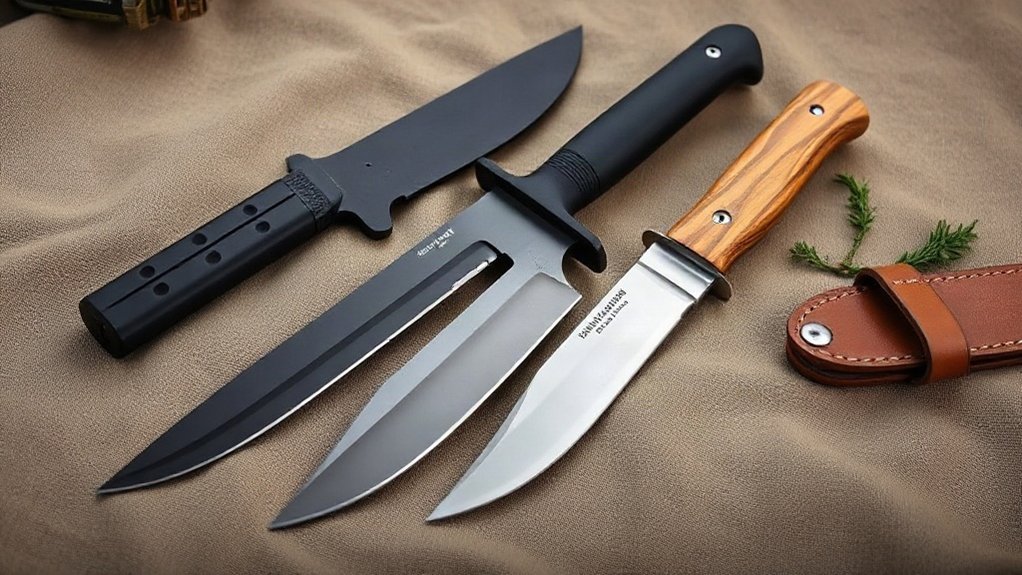
I see military-style knives as compact tools built for quick access and precise, controlled cuts, while regular outdoor knives are made for tougher, sustained fieldwork. A tactical knife’s lighter, often thinner blade suits lighter tasks, but it’s not ideal for repeated hard impacts. For batoning wood, cutting brush, or preparing shelter materials, I’d choose a robust, full-tang outdoor knife. Blade length, grip, steel, and carry method also matter, and the right choice depends on the work you have planned. I’ll explain how those features compare next.
Key Takeaways
- Military-style knives prioritize fast access, compact carry, and controlled, precise cuts; outdoor knives favor sustained fieldwork.
- Tactical knives are generally lighter and thinner, while survival knives often have thicker blades and full-tang construction for demanding tasks.
- Military-style designs suit piercing, slashing, and quick-response cutting; robust outdoor knives handle camp chores like batoning, shelter building, and cutting brush.
- Compact tactical knives are easy to carry, while larger outdoor knives may offer more strength but add weight and fatigue.
- Choose based on intended tasks, grip, steel, and carry needs; check local laws before carrying.
Military-Style vs. Outdoor Knives: Key Differences
When you compare military-style and outdoor knives, focus on what each is built to do. I see military-style models as tools for fast access and controlled use under stress. Their compact, lightweight profiles and thinner blades support precise cutting or piercing. Serrations, lanyard holes, and rapid-opening mechanisms can serve that mission specific design, while corrosion-resistant steel and non-reflective coatings help reduce maintenance and glare.
Outdoor knives favor demanding fieldwork. Their thicker, more robust blades can handle repeated force, and full-tang construction with textured grips supports stability. High-carbon steel can hold a strong edge, though you’ll need to guard against rust. These knives may also include practical features for wilderness use, such as preparing food or building shelter.
I’d consider legal considerations before carrying either style. Rules on blade length, opening mechanisms, and where you can carry a knife vary by location. Check local laws so your choice supports personal freedom without creating avoidable trouble.
Which Knife Fits Your Outdoor Tasks?
Choose a tactical knife for compact carry, quick access, and precise cutting; its thinner blade and grippy handle aren’t built for chopping or repeated hard impacts. For demanding camp work, I’d choose a survival knife with a robust full tang. It can take repeated force while batoning wood, preparing food, building shelter, or cutting brush, giving you more freedom to handle varied tasks.
For hunting, match the blade to your quarry. A 3–4-inch drop point with a pronounced belly gives me control and sweeping cuts when skinning deer or hogs; four inches is plenty for deer. For elk or other larger animals, I’d consider a 4–5-inch blade for extra reach, but longer blades can be harder to control in the field. Good Hunting knife ergonomics matter when you’re making careful cuts. I’d also weigh camp knife maintenance: 1095 steel at 58–59 HRC sharpens quickly on a pocket stone, while stainless steel resists corrosion better.
What Tactical Knives Prioritize: Speed and Access
Why carry a tactical knife? I choose one when Immediate Access and efficient handling matter more than a tool built for heavy work. Military and law-enforcement personnel often carry tactical models because they need to reach and use a knife quickly under stress.
Most tactical knives are smaller, lighter, and more compact than survival knives. That makes them easier to carry discreetly and draw when needed. Their thinner blades support fast, controlled cuts, piercing, or slashing—not heavy chopping. I look for a securely textured handle, too; it helps me keep control in wet or dry conditions, even during rapid use.
Some models add assisted or automatic opening for Quick Deployment. Those mechanisms can speed access, but they don’t replace sound judgment or careful handling. I’d choose a design I can carry legally, open reliably, and control confidently. Tactical knives prioritize speed, access, and precision, giving me a compact option when a quick response matters.
What Outdoor Knives Handle Best
Tactical knives favor quick access, but outdoor knives need to handle sustained work. I look for a full-tang fixed blade that can take demanding chores without becoming a burden on the trail. A slim blade slices cleanly through food and hides; thick stock can wedge instead of cutting smoothly. For Field dressing, I value control and a secure grip, especially when rain or blood makes the handle slick. G-10, Micarta, and Kraton help, while a glove-friendly shape keeps my hand steady through long sessions.
For camp carving, I want an edge that’s easy to maintain far from a workshop. With 1095 steel at 58–59 HRC, I can touch up the edge using a small pocket stone; a lightweight diamond plate helps me keep it keen. That practical combination lets me work independently, whether I’m preparing a meal, processing game, or shaping wood around camp. I choose a knife that supports sustained use, not just fast access.
Blade Length and Shape for Each Knife
Blade shape and length should match the work: I favor compact, thinner blades for military-style knives because they make quick, controlled cuts, while outdoor knives often use larger, thicker blades for demanding jobs such as batoning or chopping. For general survival tasks, I find a 3–6-inch blade gives me a useful balance of control and reach without tying me to one job.
For hunting, I’d choose a 3–4-inch blade to work carefully around the pelvis and diaphragm. A 4–5-inch blade can make longer strokes easier when processing larger game. A drop point suits many outdoor jobs: its curved belly controls cuts, and its lower tip helps reduce the chance of puncturing an animal’s stomach wall. Clip points offer finer tips for detail, while trailing points provide more belly for skinning but less versatility. I also consider tip geometry and Blade retention when selecting a knife, matching the design to the work I’m free to take on.
Tactical Blades vs. Rugged Outdoor Builds
When I compare tactical blades with rugged outdoor builds, I focus on how I’ll use and carry the knife. A tactical design suits quick access, compact carry, and controlled cutting or piercing. Its smaller, lighter profile can move easily with me, while a non-reflective coating reduces glare and a secure-grip handle helps me stay in control in wet or dry conditions.
For repeated, forceful wilderness work, I’d choose a rugged outdoor build. A larger, thicker, full-tang knife can handle demanding jobs such as batoning wood and preparing shelter. That strength may come with extra weight, so I consider how long I’ll carry it and whether the handle could cause hand fatigue.
I also weigh field maintenance: some outdoor knives need more attention to prevent rust, though high-carbon steel can hold an edge and strike sparks from flint. I choose based on the freedom I need in the field—rapid access and focused use, or a robust tool for hard, sustained tasks.
Stainless or High-Carbon Outdoor Knife Steel?
If I expect wet conditions or don’t want much upkeep, I lean toward stainless steel because it resists corrosion. Its corrosion resistance makes it a practical choice when I’d rather spend time outdoors than clean and dry a blade after every use.
Stainless steel resists corrosion, making it a practical choice for wet conditions and less blade maintenance.
I choose high-carbon steel when a keen edge, field sharpening, or fire-starting matters more. It can hold a sharp edge and strike sparks against flint or stone, but I clean and dry it promptly to limit rust. For hunting, 1095 carbon steel at 58–59 HRC can return to working sharp quickly with a small pocket stone.
- Stainless: Better for wet conditions and less upkeep.
- High-carbon: Takes and holds a sharp edge.
- Maintenance: Clean and dry carbon steel promptly.
- Fire-starting: Carbon steel can spark against flint or stone.
- Field sharpening: A pocket stone can restore a 1095 hunting blade.
I’d match the steel to my conditions and care habits: stainless for corrosion resistance, high-carbon for easy field sharpening and greater upkeep.
Grips, Coatings, and Carry Options
I look for textured G-10, Micarta, or polymer grips that stay secure when wet and work with gloves. Non-reflective coatings cut glare, while ergonomic handles can improve control and reduce fatigue. For carry, I compare lanyard holes and belt clips with the simpler sheath options common on outdoor knives.
Secure Tactical Grips
Because a secure grip matters in demanding conditions, I’d look for a handle shaped and textured to stay steady in wet weather or gloved hands. Thoughtful glove ergonomics and wet hand retention help you keep control without sacrificing comfort or freedom of movement. I’d also weigh material, since dependable traction matters when conditions turn rough:
- G-10: A durable choice with a secure, textured feel.
- Micarta: A sturdy handle material suited to demanding use.
- Kraton: A grippy option for varied conditions.
- Lanyard hole: Lets you add a cord for convenient carry.
- Belt clip or movable Kydex sheath: Supports quick access and lets you adjust fixed-blade carry to suit your setup.
These features don’t guarantee performance, but they can help you choose a knife that feels secure and accessible when you need it.
Non-Reflective Coatings
A secure grip helps you control a knife, while a non-reflective blade coating can reduce glare and unwanted attention in bright conditions. I see this finish as a practical choice when you want to move confidently without flashing sunlight from the blade. Some coatings add a protective layer, but reflection control remains their main tactical purpose. A ceramic coating may offer useful corrosion resistance, though performance depends on the product and care. I’d check the maker’s specifications rather than assume every finish protects equally. Also inspect how the coating meets the edge: it shouldn’t interfere with cutting or make sharpening needlessly difficult. Pairing a subdued finish with a textured handle can support dependable control in changing conditions, giving you a capable tool without sacrificing freedom of choice or straightforward maintenance.
Practical Carry Options
When hands are wet or gloved, grip and carry details can make a knife easier to control and access. I look for a handle that stays secure without restricting movement, plus a setup I can adapt to my gear and routine.
- Textured G-10, Micarta, or Kraton helps maintain control in wet conditions.
- A handle should fit comfortably with or without gloves.
- Non-reflective coatings reduce glare when visibility or discretion matters.
- Lanyard holes, belt clips, and movable Kydex sheaths offer flexible, secure carry.
- A compact, lightweight knife carries and stores easily, but its handle should still fit a gloved hand.
Before choosing a carry method, I check Legal carry considerations where I live and travel. For Off season storage methods, I clean and dry the knife, then store it securely, ready for responsible use. A practical setup leaves me free to move while keeping access predictable.
Choose a Knife for Your Outdoor Plans
Which knife suits your plans depends on the work ahead: choose a full-tang, thicker survival-style blade for camping, hunting, or bushcraft, where repeated tasks like batoning wood demand strength. For lighter carry and quick, controlled tasks, I’d choose a smaller, thinner tactical-style knife that handles precision cutting without weighing me down.
For one versatile outdoor knife, I’d look for a 3–6-inch blade and a comfortable handle with a secure grip. G-10, Micarta, and Kraton stand up well to regular use. If wet conditions are likely, stainless steel offers useful weather protection against corrosion. High-carbon steel can hold a sharp edge, but I’d give it more care to prevent rust.
For skinning game, a 3–4-inch drop-point blade with a generous belly supports controlled, sweeping cuts. I’d also pack a small diamond plate to restore sharpness in the field. Match the knife to your plans, then let budget planning guide how much you invest in materials and upkeep.
Fixed or Folding: Which Outdoor Knife?
Choosing between a fixed blade and a folder comes down to the work and how you’ll carry it. I favor a fixed blade when I expect repeated, forceful tasks. With no hinge or lock, it has a straightforward, sturdy design. A full-tang model extends steel through the handle, supporting batoning or preparing shelter materials—and underscoring fixed blade durability.
- Choose a fixed blade for demanding outdoor work.
- Look for full tang when strength and stability matter.
- Pick a folder when pack space is tight.
- Consider folding knife portability for convenient everyday carry.
- Match blade length to the job; 3–6 inches is common for survival knives.
A folding knife handles lighter cutting and slips easily into a pocket or pack, but its pivot and lock add moving parts that need care and can limit heavy-duty use. I’d choose the style that fits your plans, not a label: a dependable tool gives you more freedom to travel light or tackle harder work with confidence.
Frequently Asked Questions
What Is the Holy Trinity of Knives?
The “holy trinity” of knives is a large fixed blade, a smaller fixed blade, and a folding knife. I’d choose the large blade for chopping or batoning, the smaller one for precise cuts and food prep, and the folder for convenient everyday tasks. Match blade geometry and handle ergonomics to your work, so each knife earns its place. You’re free to build a different trio; sharpness and useful tools matter more than redundancy.
What Is the Most Banned Knife in the World?
There’s no single most-banned knife in the world, but I’d point to switchblades as among the most widely restricted. Knife legality around the world varies, and international knife ban laws differ by country and sometimes region. Some places also restrict butterfly knives, push daggers, or blades based on length, concealment, or opening mechanism. I’d check current local rules before carrying, possessing, or importing a knife, so you can make informed choices and avoid unexpected penalties.
What Brand of Knife Does the US Military USe?
The U.S. military doesn’t use one knife brand—apparently, even a knife needs to fit its mission. I’d look first at the Marine Corps’ Ontario Knife Company 498, or OKC 3S, bayonet, and the Army’s M9, supplied by several contractors. These Standard Issue Knife Brands vary by service and purpose. Military Knife Procurement isn’t a single-brand shopping spree, and troops may carry personal or unit-selected knives, too. You choose your own gear.
What Are the Key Differences Between a Tactical Knife and a Survival Knife?
I distinguish a tactical knife by its compact, lightweight build, quick access, and precise cutting; a survival knife favors strength and versatility for extended wilderness work. Tactical Knife Design often uses thinner, corrosion-resistant steel and a non-reflective finish, making it useful for controlled cuts, not chopping. Survival Knife Functionality relies on a thicker, often full-tang blade for batoning, shelter-building, and firewood prep. I’d choose based on the freedom to carry light or tackle demanding outdoor tasks.
Conclusion
I choose a knife by matching it to the work, not the label. A tactical design may offer quick access and a tough build; an outdoor knife may better suit camp chores, food prep, or longer cutting. Once, I packed a fast-drawing tactical knife for a quiet weekend hike—and found my folding camp knife would’ve handled every task more comfortably. That coincidence stuck with me: the best knife isn’t the most imposing; it’s the one that fits your plans, carry style, and hand.