Which Military-Style Knives Are Best for Heavy-Duty Field Work?
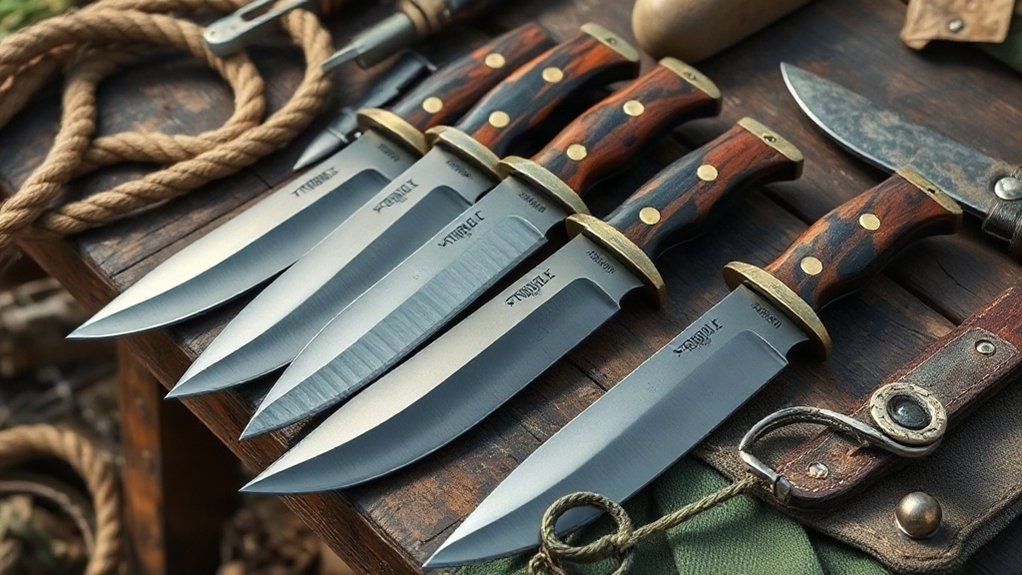
For heavy-duty field work, I’d start with the KA-BAR Becker BK2: its thick, full-tang 1095 Cro-Van blade handles demanding camp chores and small-kindling splitting. Choose the KA-BAR Fighter 1269 if you want a longer blade with proven splitting ability, or the 5.11 CFK7 for baton work and heavy bushcraft, though it’s bulky for belt carry. I’d pick the lighter Cold Steel SRK for more manageable field use. The comparisons ahead can help you match a knife to your tasks.
Key Takeaways
- KA-BAR Becker BK2 Campanion: Its 16-ounce weight, quarter-inch-thick 1095 Cro-Van blade, and full tang suit demanding camp chores and splitting small kindling.
- KA-BAR Fighter 1269: The 8-inch 1095 Cro-Van blade split wood effectively, but its 12.4-ounce weight and length hinder fine carving and all-day carry.
- 5.11 CFK7: Its 7-inch blade handled baton-splitting and heavy bushcraft well; its size and weight make backpack carry more practical than belt carry.
- Cold Steel SRK: At 8.2 ounces, it offers a more manageable field option, though its SK-5 blade needs prompt cleaning, drying, and oiling.
- Choose by task and carry weight: Use an axe or saw for large wood, avoid twisting or prying, and keep exposed steel clean and dry.
Best Military-Style Knives for Field Work
When field work means splitting kindling, preparing a campsite, and handling rough cutting tasks, I’d favor a sturdy military-style knife—but not one so heavy that it becomes a burden. The KA-BAR Fighter 1269 split wood well in testing, thanks to its 8-inch 1095 Cro-Van blade, though its 12.4-ounce weight can make fine carving awkward. For demanding camp chores, the Becker BK2 brings a thick blade and full-width tang, but its 16 ounces and thick edge limit lighter cutting. The 5.11 Tactical CFK7 handles baton-splitting and shelter work, yet its unusual heft makes pack carry more sensible than belt carry. I’d choose the 8.2-ounce Cold Steel SRK when freedom of movement matters; its SK-5 steel simply needs cleaning, drying, and rust protection. Check Blade retention and sheath comfort before heading out, and don’t twist or pry with your knife. For large wood, I’d reach for an axe or saw instead.
Compare the Four Top Field Knives
I’d start with the KA-BAR Fighter 1269 as the best all-rounder, though its size makes fine work harder. If you want a budget-friendly field knife, I’d compare it with the lighter Cold Steel SRK. For heavy camp chores, I’d look at the sturdy but weighty Becker BK2.
Best for All-Round Use
For an all-round field knife, I’d match size and weight to the work you expect to do most. The KA-BAR Fighter 1269 is my large all-rounder: its 8-inch 1095 Cro-Van blade and 12.4-ounce weight suit rugged field work, but its size can hinder fine carving.
For Field knife balance and everyday versatility, I’d compare it with the other three. The Cold Steel SRK’s 6-inch blade and 8.2-ounce weight offer flexible use, though its steel needs rust care. The 16-ounce Becker BK2 handles demanding camp chores, but feels heavy and cuts less precisely. At just 4.8 ounces, the Gerber StrongArm Camp is easier to carry and better for lighter tasks like food preparation and notching. I’d choose the Fighter for broad capability, unless your work favors lighter carry or tougher camp chores.
Best Budget Field Knife
The Cold Steel SRK (SK-5) is my best budget pick among these four field knives, balancing a versatile 6-inch clip-point blade with a manageable 8.2-ounce weight. Its 10.75-inch overall length stays practical for general outdoor tasks without weighing down your kit.
| Knife | Field-use snapshot |
|---|---|
| Cold Steel SRK | 6-inch blade; 8.2 ounces |
| KA-BAR Fighter 1269 | 12.4 ounces |
| Becker BK2 / Gerber StrongArm Camp | 16 ounces / 4.8 ounces; 4.1-inch blade |
The textured Kray-Ex handle offers confident Handle ergonomics, while the Secure-Ex sheath provides practical sheath retention for carry. I’d choose the SRK for a comparatively low-cost, nimble balance; the StrongArm Camp is lighter, but its blade is shorter. The BK2 better suits heavy camp chores. Because SK-5 isn’t stainless, I clean and dry the blade after use, then apply light oil to help prevent rust.
Best for Heavy Camp Work
When camp chores call for serious wood processing, the KA-BAR Becker BK2 Campanion is my pick among these four field knives. Its 5.25-inch, quarter-inch-thick 1095 Cro-Van blade and full-width tang handle demanding work, though its 16-ounce weight and thick edge limit fine carving and Food preparation.
- The KA-BAR Fighter 1269 splits wood best in testing, but its 8-inch blade and 12.4-ounce weight make precise Shelter carving and all-day carry harder.
- The Cold Steel SRK (SK-5) weighs 8.2 ounces and costs less; clean, dry, and protect its non-stainless steel.
- The 4.8-ounce Gerber StrongArm Camp suits notching and light carving, not substantial splitting.
For large wood, I’d choose an axe or saw. Don’t twist or pry with any knife; protect your freedom to keep working by using each tool within its limits.
KA-BAR Fighter 1269: Best Rugged All-Rounder
I find the U.S.-made KA-BAR Fighter 1269 a rugged field tool, with an 8-inch 1095 Cro-Van blade that splits wood well and holds its edge. Its grippy handle and scraping spine help me tackle outdoor tasks, though the long blade isn’t ideal for fine carving. At 12.4 ounces without the sheath, it may feel heavy for all-day carry, so I’d weigh its control against its heft.
Rugged Field Performance
For a rugged all-rounder that can split wood and hold up to hard field use, I’d choose the U.S.-made KA-BAR Fighter 1269. Its 8-inch plain-edge 1095 Cro-Van blade delivers field-ready strength, and my testing showed it split wood effectively. After a year of ownership, the edge showed little visible wear, a strong sign of long term durability.
- The grippy handle and scraping spine support practical camp tasks.
- Choose the plain-edge 1269 over the partially serrated 1271 for a simpler working edge.
- Keep the non-stainless blade clean, dry, and lightly oiled to support harsh weather reliability.
The long blade can feel awkward for fine carving, and it’s relatively thin for its length, so I wouldn’t treat it as a precision tool. But for demanding work and self-reliant field use, it’s a capable choice.
Weight And Control
Although its rugged build adds weight, the KA-BAR Fighter 1269 balances reach with a secure grip. At 12.4 ounces before the sheath, it’s no lightweight, so I notice the carry burden on long outings. Its 8-inch plain-edge blade and 12.875-inch overall length give me the reach and strength to tackle demanding field tasks, including splitting wood. The grippy handle helps me maintain control, and its handle ergonomics support a steady hold during hard use. A scraping spine adds useful versatility when I’m working outdoors. Still, that long blade can feel thin and awkward when I try fine carving, where precision matters more than reach. I’d choose this rugged all-rounder if you value durability and freedom to handle bigger jobs over low weight and refined control. Check sheath retention before heading out.
Cold Steel SRK: Best Budget Field Knife
If you want a capable field knife without a premium price, the Cold Steel SRK in SK-5 steel is a practical pick. I’d choose this full-size fixed blade when I want dependable utility without paying for a pricier steel. Its 6-inch clip-point blade and 10.75-inch overall length give you useful reach while keeping the knife manageable.
- At 8.2 ounces without the sheath, it’s substantial yet easy to carry.
- The textured Kray-Ex handle gives me a secure grip during field tasks.
- The Secure-Ex sheath keeps the blade protected; check Secure Ex sheath fit before heading out.
SK-5 isn’t stainless, so I clean and dry the blade after use, then apply light oil. That simple routine supports SK 5 rust prevention and helps keep the knife ready for the next outing. The SRK’s straightforward construction suits varied field use, making it a sensible choice for anyone who values practical gear and self-reliance. This is the standard SK-5 model, not the Compact or higher-priced SRK versions made with other steels.
KA-BAR Becker BK2: Best for Heavy Camp Work
When camp work calls for a tougher blade, I’d choose the U.S.-made KA-BAR Becker BK2 Campanion. Its 5.25-inch drop-point blade uses 1095 Cro-Van steel, and quarter-inch-thick stock plus a full-width tang give it the backbone for demanding chores.
At 10.5 inches overall and 16 ounces, the BK2 packs compactly, though you’ll feel its weight. I’d put that heft to work processing wood and splitting small kindling when a fire needs fuel. It’s not an axe or saw, so don’t expect it to tackle large wood. The thick blade also makes fine carving and food preparation less comfortable; I’d choose another tool for those jobs.
The linked model includes a molded sheath. Check Sheath retention before carrying it, and keep the exposed steel clean and dry after use. For rust prevention, protect the edge, especially when damp conditions threaten your gear. With basic care, you can rely on this substantial camp knife for hard field work.
Gerber StrongArm Camp: Best Lightweight Knife
For lightweight camp carry, I’d choose the U.S.-made Gerber StrongArm Camp (model 1069216). At just 4.8 ounces, it keeps your kit mobile without giving up useful camp capability. Its 4.1-inch plain-edge 420HC stainless steel blade handled carving and notching well in my testing, making it a practical companion when you want to travel light and work independently.
At 4.8 ounces, the U.S.-made StrongArm Camp offers a capable 4.1-inch blade for carving and notching without weighing down your kit.
- Lightweight Cord Cutting: The compact blade suits cordage, food preparation, and small camp tasks.
- Moisture Resistant Grip: The textured handle stays practical in damp conditions, while corrosion-resistant steel helps simplify care.
- Flexible carry: The multi-mount sheath offers belt, horizontal, or MOLLE carry with excellent retention.
I wouldn’t choose it for splitting wood: the blade’s undersized for that job, and the lack of spine jimping can let your thumb slip during forceful cuts. For everyday field chores, though, I appreciate a capable fixed blade that doesn’t weigh me down or restrict how I carry it.
Other Tested Military-Style Knives
The Gerber StrongArm Camp keeps camp carry light, but other tested military-style knives cover more specialized jobs. The Ontario OKC3S is a U.S.-made bayonet with an 8-inch, partially serrated 1095-steel blade. At 13.25 inches overall and 13.8 ounces, it’s a substantial, purpose-built tool—not my pick for ordinary camp work.
The tested 5.11 CFK7 goes further: its 7-inch SCM 435 steel blade and 13-inch overall length handled baton-splitting and heavy bushcraft well. But its size and weight can make belt carry impractical. Note that the tested model’s SCM 435 differs from the current listing’s 4135 alloy; don’t treat those specifications as interchangeable.
For lighter work, the Montana Wargoat offers a sharp, ergonomic 3.75-inch MagnaCut blade in an 8-inch, 2.23-ounce package. I liked its corrosion resistance for carving and food preparation, though its sheath can frustrate setup, and its price is high. These specialty knife tradeoffs leave room for your priorities without sacrificing freedom of choice.
Choose a Knife for Your Field Tasks
Choose a knife by matching its size and build to your field tasks: I’d reach for the 5.25-inch, quarter-inch-thick KA-BAR Becker BK2 for heavy camp chores and wood processing, but its 16-ounce weight makes fine carving and food prep awkward.
> The KA-BAR Becker BK2 tackles heavy camp chores and wood processing, but its 16-ounce weight feels cumbersome for carving and food prep.
Task priorities should guide your choice, not a knife’s military styling. I’d consider these options:
- For a large all-rounder, the 8-inch KA-BAR Fighter 1269 splits wood strongly, though its 12.4 ounces and limited precision hinder small jobs.
- The 7-inch, extremely thick 5.11 Tactical CFK7 handles baton-splitting and shelter building well; its size may make backpack carry more practical than belt carry.
- For carving and notching, the 4.1-inch Gerber StrongArm Camp weighs just 4.8 ounces, but won’t split wood as effectively.
I’d weigh carry comfort against the work I expect, so I can move freely without hauling more knife than needed. Use a knife for kindling and field cutting; choose an axe or saw for large wood.
Match Blade, Steel, Weight, and Carry to the Job
When I match a knife to heavy field work, I weigh blade strength against carry comfort: the 16-ounce KA-BAR Becker BK2’s thick, full-tang 1095 Cro-Van blade stands up to camp chores, while the lighter 8.2-ounce Cold Steel SRK is easier to carry but needs prompt cleaning and rust protection. The BK2’s 5.25-inch, quarter-inch-thick blade suits demanding wood processing, but I’d choose the 8-inch, 12.4-ounce KA-BAR Fighter 1269 when splitting matters more than fine carving. Its blade geometry favors power over precision.
For lighter travel, the six-inch SRK offers less burden, though its SK-5 steel needs care; don’t assume corrosion resistance. The 5.11 CFK7’s seven-inch SCM 435 blade handled baton-splitting well, but I’d pack its extreme size and weight rather than belt-carry it. Match sheath retention and attachment to the knife’s weight and your carry position so your gear stays secure without limiting movement. For large wood, I reach for a saw or axe and save my knife for field tasks.
Frequently Asked Questions
Why Is a Fixed Blade Generally Better Than a Folder for Heavy-Duty Work?
I favor a fixed blade for heavy-duty work because its solid construction gives you fewer failure points than a folder. There’s no hinge or lock to loosen under twisting, chopping, or prying, so I trust it more when tasks get rough. Full-tang designs can also improve handle stability and spine strength, helping you work confidently. You’ll sacrifice some pocket convenience, but gain dependable performance and the freedom to tackle demanding jobs.
What Does Full Tang Mean, and Why Does It Matter?
Full tang means the blade’s steel extends through the handle, usually matching its outline. I consider this Tang construction important because it creates a strong, continuous backbone that can better withstand demanding cutting, prying, and impact than a narrow hidden tang. The handle attachment—scales secured to the exposed steel—also matters: I look for sturdy pins or bolts and a secure fit. That design gives you dependable control and confidence when field tasks get tough.
Can a Military-Style Knife Be Used for Reasonable Prying?
Yes—but I’d keep prying modest. A sturdy military-style knife can lift a light lid or loosen a small, noncritical object, but it’s not a crowbar. I’d respect its prying limits, especially near the tip, where leverage can snap the blade or cause edge damage. If you want freedom from costly repairs, choose a purpose-built tool for stubborn tasks. I’d brace the knife carefully, apply gentle pressure, and stop if it flexes.
How Should You Care for a Field Knife After Wet or Dirty Use?
After wet or dirty use, I clean and dry my field knife promptly, then protect it before storage. For Post use cleaning, I rinse off mud and debris, wash the blade with mild soap and water, and dry every surface, including the handle and joints. For Corrosion prevention, I apply a thin coat of suitable oil to the blade and pivot. I store it dry, with the edge safely covered, so it’s ready when I need it.
What Should You Look for in a Secure, Comfortable Knife Sheath?
By thunder, I look for a sheath that locks the knife in place yet lets me draw it smoothly when needed. Secure retention comes from a snug fit, a reliable strap or closure, and no unwanted movement when I bend or walk. For Comfortable carry, I check the belt attachment, weight, and edges against my body. I want durable materials, drainage, and enough freedom to move without snagging or discomfort.
Conclusion
I choose a field knife by matching its blade, steel, weight, and carry system to the work ahead. The KA-BAR Fighter suits varied tasks, the Cold Steel SRK offers strong value, the Becker BK2 tackles hard camp chores, and the lightweight StrongArm is easier to carry. One striking comparison: the BK2’s thick, heavy-duty design favors chopping, while the StrongArm weighs less than half as much. I’d prioritize the job I do most, then carry accordingly.