Can 3-Day Assault Packs Pass as Carry-On Luggage on Most Airlines?
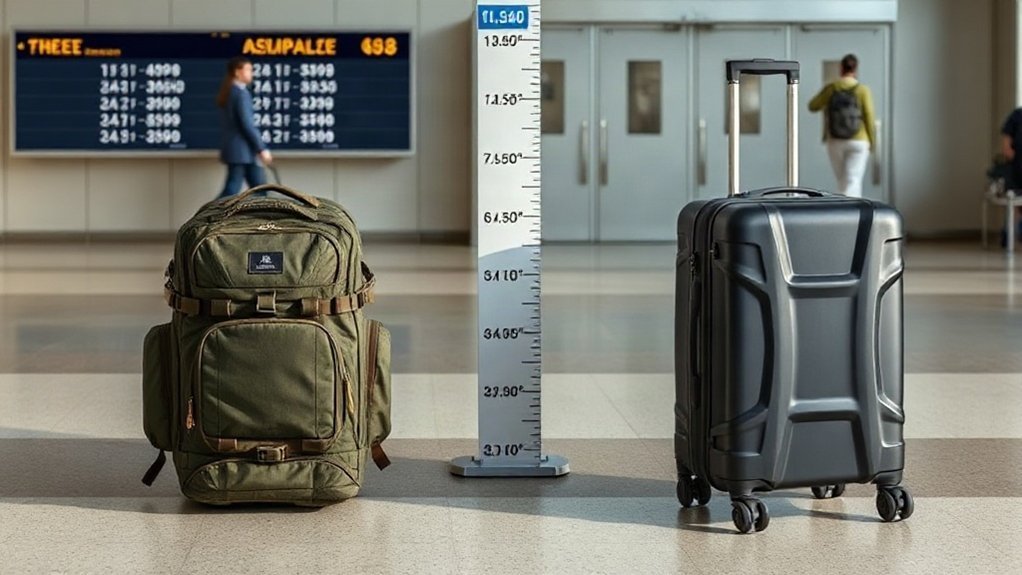
I’d carry a 3-day assault pack on most airlines only if its fully loaded size and weight meet the carrier’s current rules. Measure the packed pack, including MOLLE pouches, handles, and loose straps; 40 liters alone doesn’t guarantee a fit. Check whether your ticket allows an overhead-bin bag or only a smaller personal item, since limits vary by airline and route. Remove prohibited items before screening, and tighten or detach bulky gear. The details below can help you prepare.
Key Takeaways
- Many 3-day assault packs can pass as carry-ons, but fit depends on the airline and the pack’s fully loaded dimensions.
- Compare the loaded pack—including pouches, handles, and straps—with your airline’s carry-on size and weight limits.
- Tighten compression straps, secure loose straps, and remove bulky attachments to improve the chance of fitting.
- Test the pack in an airport sizing bin; a 40-liter capacity alone does not guarantee carry-on compliance.
- Check oversized packs, and remove prohibited items such as knives, firearms, ammunition, and tools before boarding.
Will Your 3-Day Assault Pack Fit as Carry-On?
Will your 3-day assault pack fit as carry-on? I’d start by checking its packed size against your airline’s rules. A common U.S. guideline is 22 × 14 × 9 inches, but allowances vary, and some international carriers also set weight limits. A 40 liter capacity doesn’t guarantee a fit; shape, loaded gear, and attachments matter.
I measure my pack fully loaded, including handles, loose straps, and pouches on the molle webbing. Then I tighten the compression straps and remove external pouches I don’t need. That can help the pack fit in an overhead bin or under a seat, giving you more freedom to travel with your gear. Gate-check risks are worth considering, since an airline may require you to check a pack that exceeds its carry-on allowance. If it exceeds your allowance, you may need to check it; pull valuables and secure loose straps first.
Measure Your Assault Pack Against Airline Limits
I check my airline’s carry-on size and weight limits first; a common U.S. size cap is 22 × 14 × 9 inches, but rules vary. I measure the fully packed assault pack, including handles, straps, and MOLLE pouches. If it’s close to the limit, I tighten compression straps and remove any unnecessary pouches.
Check Airline Size Limits
Before you head to the airport, compare your fully packed assault pack with your airline’s carry-on limits. I check the airline’s current website rather than assume a common U.S. allowance of 22 × 14 × 9 inches applies. Rules vary, and international carriers may impose stricter size or weight caps.
For 3-day assault packs, confirm whether your 72-hour bag qualifies as overhead-bin carry-on luggage or must meet personal-item limits. A full-size pack usually belongs overhead; only smaller assault packs may fit beneath a seat. I also check the stated weight allowance: some international airlines cap carry-ons at about 7–10 kg (15–22 lb). Compare your pack’s packed dimensions and weight with the specific carrier’s rules before departure. That quick check helps you keep your gear—and your freedom to move—through the airport.
Measure the Packed Pack
Once you’ve checked your airline’s rules, measure your assault pack as you’ll carry it. Load your go bag for the three day trip, tighten its compression straps, then measure external height, width, and depth. Count every protruding strap, handle, and attached MOLLE pouch; they all add to the pack’s overall size.
Compare those measurements with your carrier’s limit. A common U.S. carry-on guideline is 22 × 14 × 9 inches, but airlines set their own rules. A 2000 cubic inches capacity doesn’t guarantee your packed bag will fit, so check its actual dimensions. I also weigh the loaded pack because some carriers, especially international airlines, cap carry-ons at around 7–10 kg (15–22 lb). If you’re near a limit, remove unnecessary external pouches and measure again before heading to the airport.
Check Carry-On Weight and Airline Rules
Check your airline’s carry-on rules before packing, since size and weight limits vary by carrier and ticket. A common U.S. maximum is 22 × 14 × 9 inches, but I’d verify the allowance for your specific flight. Measure your 3-day assault pack fully loaded, including straps, handles, and external pouches; protruding gear counts toward pack size.
Check your airline’s carry-on limits, then measure and weigh your fully loaded pack, including protruding straps and pouches.
- Check the dimensions listed for your airline and fare.
- Weigh the loaded pack; airline weight limits range from none to about 7–10 kg.
- Remove unneeded pouches if they push the pack beyond the size allowance.
- Confirm restrictions before departure to avoid a forced gate check or fee.
Some European and Asian carriers commonly cap carry-ons at 10 kg. I check both dimensions and weight before I leave, so I can travel light and keep my gear with me. Military-style packs with external pouches may draw extra scrutiny at the gate if they make the bag appear oversized.
Remove Prohibited Items Before TSA Screening
Before screening, I empty every pocket and compartment in my 3-day assault pack so I don’t miss anything. I remove prohibited carry-on items, including knives, firearms, ammunition, oversized tools, large liquids, and self-defense sprays. I check TSA’s current prohibited-items list before I travel. Keeping the pack’s contents easy to inspect can help reduce delays during security screening.
Empty Every Compartment
Empty every pocket and compartment in your 3-day assault pack before TSA screening so forgotten items don’t slip through. I treat this check as a final gear audit, not a repeat of prohibited-item rules. Open the main cavity, admin panel, side pockets, and hidden sleeves; check beneath pouches and removable organizers. A clean, deliberate loadout makes your tactical carry-on easier to inspect and helps you move freely through the checkpoint.
- Shake out each empty pocket to reveal loose gear.
- Check seams and corners for small items that can snag or trigger questions.
- Keep electronics and your quart-size liquids bag accessible for inspection.
- Repack only what you need, so your bug out bag stays organized and ready.
I finish by scanning the pack once more before zipping it closed.
Remove Prohibited Items
Anything left in a pocket can turn a smooth screening into a delay, so I remove knives, firearms, ammunition, firearm parts, and prohibited tools from my 3-day assault pack. I empty every pocket and compartment, including small sleeves in my 11 tactical rush 24 patrol pack or rucksack. I also leave pepper spray and other self-defense sprays out of my carry-on. Check your field repair kit for blades or shafts longer than 7 inches; don’t pack those tools in carry-on luggage. I remove liquids in containers larger than 3.4 ounces (100 ml) and put permitted small liquids in a clear, quart-size bag. I keep that bag and my electronics easy to reach, so I can pull them out quickly if screening requires it. A few minutes of sorting helps my weekend pack travel lighter and keeps prohibited gear out of the cabin.
Check TSA Rules
TSA doesn’t ban tactical or 3-day assault packs outright; screening focuses on what you pack and carry-on limits. I treat my durable hunting daypack like any carry-on: check current TSA rules, then clear every pocket before I reach security.
- Remove knives, firearms, ammunition, firearm parts, and tools longer than 7 inches.
- Leave liquids over 3.4 ounces (100 ml) and pepper spray out of your carry-on.
- Keep electronics and your quart-sized liquids bag accessible for inspection.
- Secure or remove extra MOLLE attachments; inspect the admin pouch and hidden pockets.
I don’t assume a familiar bug out setup will pass unchanged. Loose gear, dense pouches, and webbing can prompt additional screening, so I pack only what I need and keep the layout easy to inspect. That preparation helps me move through screening with less hassle and keep my travel kit ready for the next leg.
Can MOLLE Pouches and Straps Affect Fit?
Although MOLLE webbing adds little bulk on its own, attached pouches and loose straps can push a 3-day pack beyond common 22 × 14 × 9-inch carry-on limits or snag in a sizing bin. I count molle pouches as part of the packed dimensions, so I remove anything I don’t need and secure every strap before measuring. Bulky attachments can also foul the fit in an overhead compartment. Check your airline’s specific airline carry-on limits; budget carriers may set smaller personal-item dimensions. I adjust the shoulder harness and padded waist belt so they lie flat, then test the loaded pack in a sizing bin if available. If I’ll need a pouch later but not during the flight, I pack it empty inside the main compartment to keep the exterior streamlined and preserve room to move. Keep attached pouches accessible for security screening, since officers may need to inspect them separately.
Should You Carry On or Check Your Pack?
Once I’ve streamlined and measured my loaded pack, I decide whether to carry it on or check it. I compare its full dimensions, weight, and contents with my airline’s current rules before I leave.
- Carry it on if it fits the carrier’s limits; 22 × 14 × 9 inches is common in the U.S., but policies vary.
- Measure MOLLE pouches, sleeping bag straps, and every loose attachment; they count toward size.
- Check weight rules, especially abroad, where some airlines cap carry-ons near 10 kg (22 lb).
- Check the pack if it’s oversized or holds prohibited tools. Secure straps, remove valuables, and cover it with a rain cover or duffel.
A drag handle and sturdy ykk zippers help during transit, but don’t make a pack waterproof. I keep fragile gear with me whenever possible. Metal hardware on a utility belt can trigger additional screening, so remove the belt or pack it separately if needed.
Frequently Asked Questions
Why Can’t You Wear a Crossbody on a Plane?
You can wear a crossbody on a plane; there’s no general TSA rule against it. I’d keep it secured and close so the strap doesn’t snag or block the aisle. During takeoff and landing, crew may ask you to remove it and stow it under the seat or overhead. Your airline may count it as your personal item, so I’d check size limits and whether your ticket includes another carry-on.
How Big Is a 3 Day Assault Pack?
A 3-day assault pack usually holds 30–50 liters—about the volume of a large hiking pack. I’d check the model’s actual dimensions, since capacity doesn’t tell you how tall or bulky it is. Measure the packed bag, including straps and MOLLE pouches; loaded gear can push it beyond airline limits. I’d cinch compression straps and remove external pouches when needed. Pack dimensions vary, so check your specific airline’s size and weight rules before heading out.
What Are the New Carry-On Rules for 2026?
There isn’t one universal carry-on rule for 2026; I’d check your airline’s current size, weight, and personal-item limits before packing. A common U.S. benchmark is 22 × 14 × 9 inches, while some international carriers set smaller dimensions or weight caps around 7–10 kg. Measure your loaded pack, including straps and MOLLE pouches. If it’s over the limit, you may need to check it; remove valuables first. Verify current screening rules, too.
Does a Backpack Count as Carry-On Luggage?
Yes, I count a backpack as carry-on luggage when it meets your airline’s size and weight limits. But check before you head to the gate: rules vary, and a packed bag can grow fast. I measure mine with straps and attached pouches included, then compare it with the carrier’s limit—often around 22 × 14 × 9 inches. If it must fit under the seat, your airline may classify it as a personal item instead.
Conclusion
I don’t assume a 3-day assault pack will pass as carry-on just because it looks compact. I measure it when fully packed, check my airline’s size and weight limits, and secure loose straps and MOLLE pouches. I also remove prohibited items before heading to security. If the pack exceeds the rules, I check it or switch bags. The final test comes at the gate, where a tight fit can turn into a last-minute surprise.
References
What Can I Bring?, https://www.tsa.gov/travel/security-screening/whatcanibring/all
PackSafe, https://www.faa.gov/hazmat/packsafe
Fly Rights, https://www.transportation.gov/airconsumer/fly-rights