Why Do Rescue Teams Carry Emergency Shelters on Every Call?
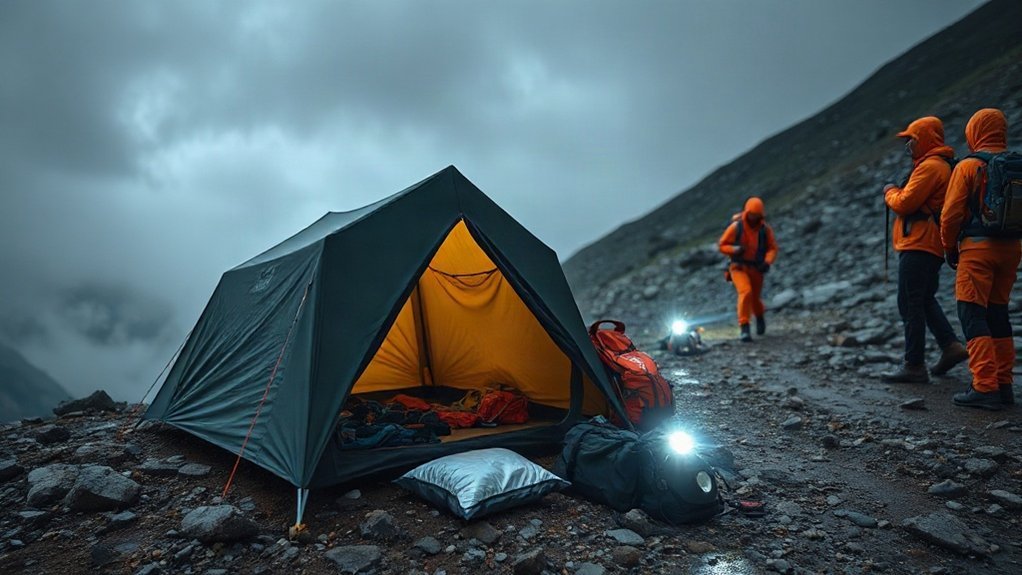
I carry emergency shelters as a last resort when fire, debris, or blocked routes make escape unsafe. They can provide brief protection, but no shelter guarantees survival or replaces evacuation. I choose equipment designed for the specific hazard, since a wildland fire shelter isn’t a home refuge or storm room. If a safe route remains open, I follow officials’ directions and leave early. Knowing when to shelter, how to deploy it, and when to get out matters just as much.
Key Takeaways
- Rescue teams carry emergency shelters as a contingency when dangerous conditions or blocked routes make evacuation impossible.
- Shelters provide temporary protection from specific hazards; teams choose equipment suited to the incident rather than relying on one universal design.
- Wildland fire shelters can reduce radiant heat briefly, but they cannot guarantee safe air or protect against prolonged flame exposure.
- Teams deploy shelters only when safer escape options are exhausted, following training and choosing a site that limits exposure to flames and fuels.
- Shelters do not replace evacuation plans; teams leave the refuge when officials identify a safe route.
Why Do Rescue Teams Carry Emergency Shelters?
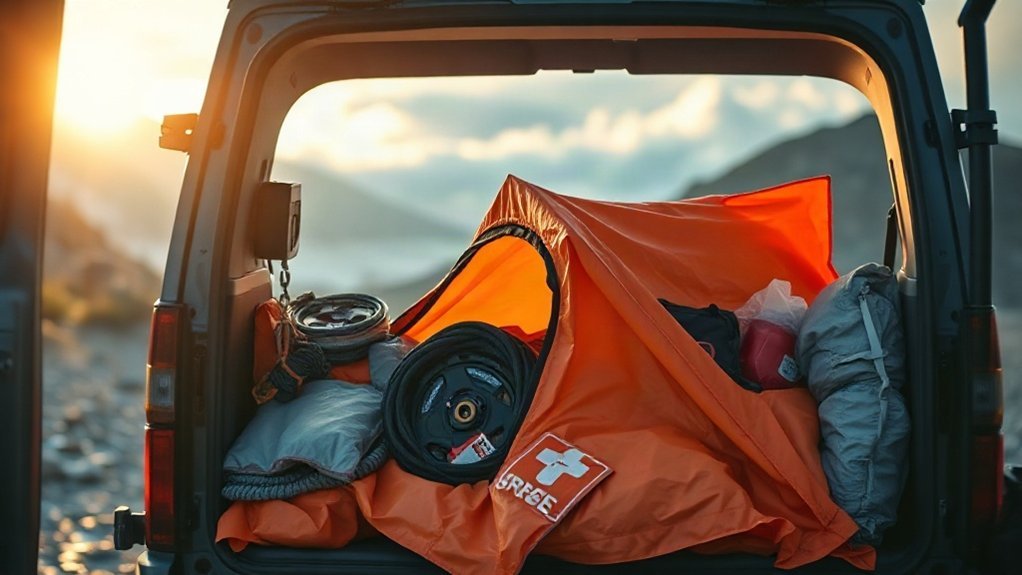
Rescue teams carry emergency shelters as a last-resort backup when blocked routes or dangerous conditions make evacuation impossible. I want you to understand their purpose: they provide a contingency when a person can’t reach safer ground, not a substitute for a sound escape plan.
In wildland fire, a portable shelter gives one firefighter limited protection from radiant heat and exposure. Its layered aluminized fiberglass and silica materials help reflect heat and trap breathable air, but they can’t withstand prolonged direct flame. Deployment takes roughly 30–60 seconds, so training and calm, practiced action matter.
For search and rescue teams, carrying emergency shelters supports readiness when conditions change faster than routes can be cleared. I’d still prioritize evacuation, safe positioning, and established procedures. A shelter offers no guarantee of survival; it’s a final protective measure after other escape options are exhausted. Treat it as one part of emergency planning, and keep your decisions focused on reaching safety whenever a viable route remains.
An emergency shelter can help retain body heat and block wind and precipitation, but ground insulation and dry clothing are essential for staying warm.
When Is a Shelter a Last Resort?
When is a wildland fire shelter a last resort? I treat this survival shelter as an emergency shelter only when danger is imminent and I’ve exhausted every safer escape option. I deploy it only if I can’t reach a safer location. It never replaces evacuation, sound tactics, or early decisions that preserve my freedom to move.
If I must deploy, I choose a spot that limits direct flame contact and stays clear of large fuels. I avoid boulders, rocks, and scree: gaps can funnel heated, toxic air toward me. I clear small vegetation and grass around the site, then focus on protecting my airway.
A shelter offers limited protection, not a guarantee of survival. Prolonged flame exposure can overwhelm it, and heat can severely injure my lungs. I don’t wait for the shelter to make a dangerous position safe. I use it only as a last resort when escape is no longer possible, and follow my training.
Which Emergency Shelter Fits Each Threat?
I match each shelter to its intended threat: a wildfire refuge, wind-rated safe room, and underground bunker serve different hazards. I’ll explain what each can withstand—and where its limits begin. If you have a clear evacuation route, take it; no shelter replaces leaving safely. For situations where no tent is available, bivy bags and tarp kits offer lightweight, fast protection.
Match Shelters to Threats
A shelter that protects against one hazard may fail in another, so match it to the threat. I treat an emergency shelter as a specific safety tool, not a universal refuge. For a firefighter caught in the open during a fast-moving wildfire, a wildland fire shelter offers last-resort protection; it isn’t for homes or extended stays.
Tornado and hurricane safe rooms resist extreme winds and flying debris, but that doesn’t make them suitable for wildfire heat, toxic gases, or breathable-air needs. Underground bunkers may benefit from soil insulation, yet they depend on drainage, ventilation, access, and discoverability. For residential burnover, choose a purpose-built refuge with tested heat protection, safe air, structural strength, and a reliable exit. I’d evacuate whenever a safe route is available; matching protection to the threat helps you make informed choices and act decisively.
Know Each Shelter’s Limits
Matching a shelter to a threat also means knowing what it cannot protect you from. I treat a wildland firefighter shelter as a last resort for one person caught outdoors. This emergency tent can reduce radiant heat briefly, but it won’t withstand prolonged flame contact or prevent every risk, including hypothermia.
Tornado and hurricane safe rooms resist wind and debris; they aren’t built for sustained wildfire heat or toxic gases. An underground bunker may benefit from soil insulation, but poor drainage, ventilation, or access can cause flooding or trap occupants.
If you’re considering a residential wildfire refuge, check that its design manages breathable air, heat, structural strength, and safe exit. I also verify what testing covers: a certified component doesn’t prove the complete shelter building protects you in the intended conditions. Choose tested systems, and keep an independent escape plan.
How Does a Wildland Fire Shelter Work?
When escape is no longer possible, a wildland fire shelter offers firefighters a last-resort refuge—not a way to ride out flames safely. I think of it as an emergency blanket shaped like a low half-cylinder, with rounded ends. Its layered aluminized cloth, fiberglass, and silica resemble a thermal blanket, but this shelter is purpose-built for rapid deployment.
| Feature | Function | Practical note |
|---|---|---|
| Reflective material | Reflects radiant heat | Deploy only as a last resort |
| Layered construction | Helps trap breathable air | Seal the shelter correctly |
| Low, rounded shape | Forms a compact refuge | Keep the opening close |
| Clear site | Reduces nearby heat | Avoid fuels, rocks, and boulders |
To use one, I’d choose ground away from large fuels, boulders, and rocks, then clear grass and small vegetation nearby. That preparation can reduce heat and help protect your airway. Don’t mistake the shelter for freedom to wait out a fire: it offers limited protection, and gaps can admit hot, toxic air. Prolonged flame contact can overwhelm it. Escape remains the priority; deploy only when no safer option remains.
What Can a Fire Shelter Protect Against?
Although a fire shelter can reduce radiant heat and trap breathable air when deployed correctly, it offers only limited protection from heat and smoke. I treat it as a last-resort tool, not a safe place to wait out a fire. Its layered aluminized cloth, fiberglass, and silica are durable for emergency deployment, but the shelter isn’t designed for routine use or extended occupancy.
A shelter may help me by:
- Reducing radiant heat exposure during brief, intense conditions.
- Trapping some breathable air, though it can’t guarantee safe air.
- Limiting heat transfer, but not stopping prolonged flame contact.
- Buying precious time when I deploy it correctly in a suitable spot.
Unlike a tarp, a purpose-built emergency shelter is quick to deploy when there’s little time to set up.
I’ll choose ground away from large fuels, rocks, and uncleared vegetation, which can intensify heat or damage the shelter. I won’t mistake it for a guarantee: toxic gases and extreme temperatures can still kill. Keep one in an emergency kit, but follow training and evacuation instructions; don’t rely on it to protect body heat indefinitely.
How Do Residential Wildfire Refuges Differ?
I distinguish residential wildfire refuges from firefighter shelters by their purpose: they’re engineered for home burnover, not brief protection for one person caught outdoors. I check whether a refuge can manage breathable air, heat, structural integrity, and a safe exit for its rated occupancy and exposure time. I also verify its siting requirements; a storm room or bunker isn’t automatically wildfire-safe.
Purpose and Design
Residential wildfire refuges protect household occupants through a burnover, while firefighter shelters are lightweight, one-person devices for emergencies in the open. I’d treat them as different safety tools, not substitutes. A firefighter shelter supports wilderness survival when escape fails: it’s portable and designed for quick setup, roughly 30–60 seconds, but not for home use or multi-hour occupancy.
Residential refuge design prioritizes household protection during longer exposure. Look for features such as:
- Welded-wire frames or flame-resistant precast concrete for structural strength.
- Insulated panels with non-combustible infill to slow heat transfer.
- Layered doors and sealed gaskets to limit heat and smoke.
- A stated protection duration suited to your plan; some models target up to 24 hours.
I’d verify capacity and protection claims with the manufacturer. Choose a refuge that fits your household and supports a planned, safe response.
Air, Heat, and Egress
When evacuation isn’t possible, a residential wildfire refuge must keep air breathable, reduce heat exposure, stay structurally intact, and let occupants exit safely after the burnover. Unlike a lightweight, one-person firefighter shelter, it’s built for longer occupancy; some models are designed to withstand heat exposure for up to 24 hours.
I’d check how a refuge manages air, not just whether it’s waterproof or windproof. A pressurized supply may support safe conditions: the FORT, for example, is specified for up to eight people for four hours, targeting oxygen at 18.5–23% and carbon dioxide below 1%. Sealed gaskets, protected penetrations, and secure doors help block heat and smoke. I’d verify performance claims against documented tests naming the standard, lab, and conditions. Egress matters: leave when conditions clear. This is disaster preparedness, not a reason to delay safe evacuation.
What Makes an Emergency Shelter Safe?
A shelter is safe only if it keeps air breathable, limits heat exposure, stays structurally sound, and lets you exit safely. I’d match it to the specific threat: a storm safe room, underground bunker, and wildland-fire shelter aren’t interchangeable. For wildfire refuge, engineered air supply matters; passive ventilation may not prevent dangerous carbon monoxide buildup.
> A shelter must match the threat, maintain breathable air, withstand heat, and allow safe escape.
Before relying on any shelter, I’d check four essentials:
- Threat-specific design: Confirm it was designed and tested for the hazard you face.
- Complete-system testing: Review documented results covering doors, seals, and penetrations—not just a label or individual component.
- Safe surroundings: Consider campsite selection, visibility, and insulation, while keeping access and exit routes clear.
- Breathable air and escape: Verify the air system and make certain you can leave safely.
Many emergency shelters, including bivy bags and foil blankets, fold down small enough to fit in a glovebox or under a seat as part of a compact car kit.
I’d evacuate whenever a route remains open. A shelter is a contingency when escape isn’t available, not a reason to delay leaving. That distinction protects your freedom to act while keeping safety first.
How Do Firefighters Deploy Fire Shelters?
I’d choose a site away from large fuels, rocks, and scree, where heated air is less likely to collect. I’d clear nearby grass and small debris, then position the shelter to reduce flame exposure and protect my airway. Since deployment may take only 30–60 seconds, I’d unfold it and get inside quickly—but only as a last resort. A ground sheet can also serve as a rain catch or windbreak in an emergency.
Choose a Deployment Site
Firefighters choose a deployment site only as a last resort, after escape routes are exhausted; evacuation remains the safest option. If you’re caught without a route out, remember that a fire shelter isn’t a tarp shelter, space blanket, or bivy sack. It’s emergency protection, not a guarantee against flames.
- Seek open space away from large fuels and direct flame contact; shelters can’t withstand prolonged flames.
- Avoid boulders, rocks, and scree. Gaps can funnel heated, toxic air toward you.
- Clear small vegetation and grass around the site to reduce nearby fuel and help protect your airway from heat and smoke.
- Deploy the shelter correctly and protect your airway. Proper setup can block radiant heat and trap breathable air.
Choose quickly, follow your training, and treat evacuation as your safest path whenever possible.
Clear Hazards and Debris
Once you’ve chosen a site, clear small vegetation and grass to reduce nearby fuel—but avoid boulders, rocks, and scree, where gaps can funnel hot, toxic air toward you. I also look for space from large fuels and direct flame contact. A shelter can block radiant heat, but it can’t withstand prolonged flames, so don’t mistake it for protection from every hazard.
Protect your airway and lungs while clearing and preparing; inhaled heat can cause severe injury. Keep movements purposeful: a fast-moving fire may leave only 30–60 seconds, and I treat the shelter as a last resort after escape options are exhausted. An emergency whistle, first aid kit, and fire starter belong in my broader emergency gear, but none replaces sound judgment, a clear site, or an escape plan.
Deploy and Enter Quickly
When escape routes fail, speed matters: I unfold my fire shelter, get inside, and seal the opening as much as possible to protect my airway from heat and smoke. I use it only as a last resort; it isn’t a tube tent or a substitute for escape.
- Choose open ground that limits direct flame contact. Clear small vegetation and grass; avoid large fuels, boulders, rocks, and scree.
- Unfold the shelter immediately. I may have only 30–60 seconds, so practice matters.
- Lie inside and keep the opening sealed as much as possible.
- Stay sheltered while the fire passes, understanding that prolonged flame contact can overwhelm protection.
A fire shelter can reduce radiant heat and trap breathable air when deployed correctly. Keep it accessible—not buried in a bug-out bag or 72-hour kit—and follow your crew’s training.
When Is Evacuation Safer Than Shelter?
If a safe route is open, evacuate early—leaving is generally safer than sheltering through a wildfire. I’d follow local officials’ orders and directions to the nearest temporary evacuation point or shelter. Don’t wait for conditions to worsen or treat a refuge as permission to delay. Getting out promptly protects your choices and reduces the chance that rescuers must enter a dangerous area to reach you.
Use a wildfire refuge only when you can’t exit safely. Heat, smoke, and toxic gases can still threaten you inside, and your presence may put first responders at additional risk. If refuge is your only option, choose one purpose-built for wildfire—not a general car emergency kit or a shelter meant for flood evacuation or cold-weather exposure. Follow its occupancy limits, air-supply instructions, and safe-egress guidance exactly. I’d leave as soon as officials identify a safe route. A refuge is a last-resort safeguard, not a substitute for timely evacuation.
How Can Families Plan for Shelter?
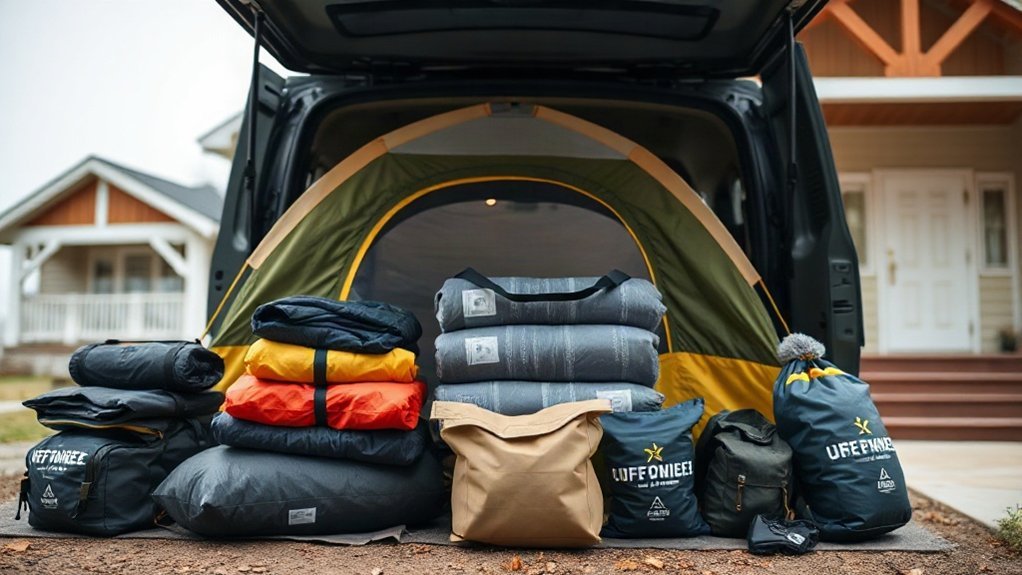
Because a wildfire refuge is a last resort, I’d plan for it without letting that plan delay evacuation. I’d leave when officials advise and use shelter only if a safe exit becomes unavailable. A lean-to or debris hut isn’t a reliable substitute for a purpose-built refuge, and a storm room or bunker isn’t automatically wildfire-safe.
- I’d choose a refuge designed for wildfire and sized for my family and expected stay. The FORT model holds up to eight people and provides four hours of breathable air when its cylinders are full.
- I’d site it with a 30-foot radius of cleared, non-combustible material, then berm its base with soil, fine gravel, or sand to close gaps.
- I’d set clear activation triggers and assign each person responsibilities, including transferring supplies and activating systems.
- I’d practice entering and sealing the door, and schedule certified inspections every six months.
For family camping, a shared shelter can provide room to sit and sleep together while making setup easier than pitching separate disposable bags.
A family-sized refuge supports a contingency plan; it never replaces timely evacuation.
Frequently Asked Questions
Why Do Homeless Shelters Kick People Out During the Day?
Many homeless shelters ask guests to leave during the day so staff can clean, inspect, and prepare sleeping areas for the next night. I’d also consider limited beds, staffing, funding, and operating hours; overnight facilities often aren’t equipped for all-day stays. Some shelters coordinate with drop-in centers, libraries, meal programs, or case managers, but options vary. If you’re affected, ask staff why the rule applies and where you can safely go; some shelters offer 24-hour access.
Why Didn’t the Hotshots Survive?
I can’t identify why those Hotshots died without knowing the incident; imagine a crew trapped as flames race toward them. A fire shelter may buy brief protection, but it can’t guarantee survival. It blocks radiant heat and traps breathable air only when deployed correctly, and prolonged flames, toxic gases, or extreme heat can overwhelm it. I’d treat shelters as a last resort: sound positioning, clear escape routes, and timely evacuation remain essential to survival.
What Does Burnover Mean?
A burnover happens when a wildfire overruns or surrounds firefighters, trapping them in extreme heat, flames, and smoke. I’d treat it as an immediate life-threatening emergency: fire behavior can shift fast, and escape routes may disappear. In severe crown fires, ground temperatures can exceed 1,500°F, while smoke and carbon monoxide can kill within minutes. Fire shelters offer last-resort protection only; I wouldn’t rely on one instead of evacuation, sound planning, and safe firefighting practices.
Why Can’t Homeless People Just Go to Shelters?
People experiencing homelessness can’t always simply go to shelters because nearby beds may be full, unavailable, or difficult to access. Some shelters restrict pets, forcing people to choose between a bed and staying with an animal. I’d first check local shelter availability and ask about eligibility, pet policies, and accessibility. During a disaster, follow local officials’ instructions and check for open sites; Red Cross shelters are free, welcome service animals, and don’t require identification.
Conclusion
I carry emergency shelters because conditions can change faster than a rescue plan. A shelter is a last resort, not a substitute for evacuation, sound judgment, or training. I choose the right type for the threat, check it before use, and follow deployment instructions. Fire shelters offer limited protection from radiant heat and embers—not direct flames or prolonged exposure. I want every reader to plan ahead, know escape routes, and treat shelter as a bridge to safety, never a guarantee.
References
National Wildfire Coordinating Group, NWCG Fire Shelter
National Wildfire Coordinating Group, Fire Shelter Deployment Procedures
U.S. Forest Service, Fire Safety