Are Water or Oil Knife Sharpening Stones Better for Home Use?
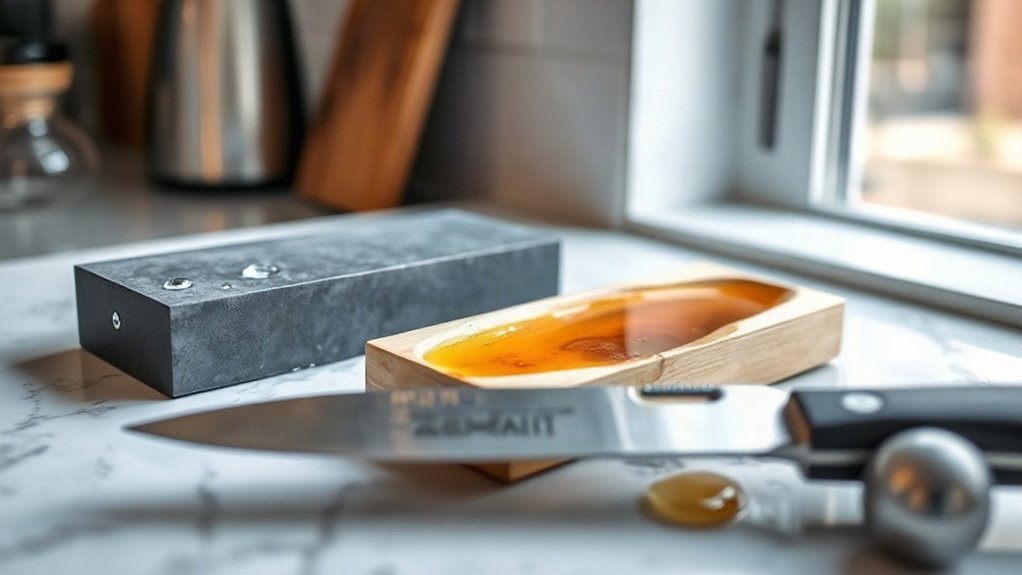
For home use, I’d choose a water stone if you sharpen near a sink and want faster cutting; I’d choose an oil stone if you prefer a portable setup with less water-related cleanup. Water stones need water and regular flattening, while oil stones cut more slowly but wear down less quickly. Match the stone to your workspace and sharpening routine, and follow its care instructions. A closer look at their upkeep and alternatives can help you decide.
Key Takeaways
- Water stones suit home cooks who sharpen near a sink and want faster cutting, but they require water and create slurry and cleanup.
- Oil stones suit portable or water-free setups, cut more slowly, and generally need less frequent maintenance.
- Choose water stones if you accept regular flattening and want a high-grit option for polishing a fine edge.
- Choose oil stones for a simpler routine, using the lubricant specified for the stone; Arkansas and India stones commonly require honing oil.
- For less soaking and flattening, consider diamond stones, which cost more but cut quickly and wipe clean.
Which Sharpening Stone Suits Home Use?
For home sharpening, choose a water stone if you have easy access to water and don’t mind handling slurry and flattening the stone periodically. I’d also consider your workspace access: a sink beside a heated sharpening area makes water stones convenient, while cold water and cleanup can feel like obstacles. Your maintenance preference matters, too. If you want a simple, portable setup without soaking or water-related mess, an oil stone may suit you better. It generally wears more slowly, though it cuts more slowly as well. Either type can work at home, so match the stone to your space and habits rather than treating one as universally better. Before adding lubricant, check the manufacturer’s instructions; some stones call for honing oil, while water stones should be used with water only.
Water Stones vs. Oil Stones: What’s the Difference?
Your workspace and maintenance habits can help you choose, but the stones also work differently. I find the main distinction is the binder: water stones use a softer one, while oil stones use a harder one. That affects cutting speed, upkeep, and how much freedom you have to sharpen.
| Feature | Water stones / Oil stones |
|---|---|
| Binder and pace | Softer; faster / Harder; slower |
| Lubricant | Water / Typically honing oil |
| Upkeep | Flatten regularly / Wears more slowly |
Water stones create a slurry of loose abrasive grit and water; I keep it on the stone while sharpening. Use water only on stones labeled for it, and follow the maker’s guidance for others. Arkansas stones, for example, commonly call for oil, which carries away swarf and helps prevent clogging or glazing. Choose water if it’s handy; choose oil for slower wear and a simpler water-free setup.
How Do Water Stones Work and Wear?
I keep water on the stone’s surface, where it mixes with loose abrasive to form a slurry that helps cut the blade and carry away metal particles. The stone’s soft binder lets it sharpen quickly, but it also wears down. I’ll explain why that means you need to flatten it regularly and how to wet different types of water stones.
Water and Slurry
Add water to a water stone, and its soft binder releases abrasive particles that form a sharpening slurry. I let that slurry stay on the surface; wiping or rinsing it away mid-session removes the material doing the sharpening. Good Slurry retention helps me keep the process steady without fuss. Water delivery depends on the stone: I soak many stones before use, while splash-and-go types need only a wet surface that I keep damp as I work. Water also carries away metal particles, so they’re less likely to lodge in the stone and scratch the blade. The soft binder wears down over time, so I flatten the stone regularly to maintain a usable surface. If I use a magnesium-bound stone, I never submerge it; I follow its care instructions instead.
How Water Stones Cut
As water stones sharpen, their soft binder releases abrasive particles—often aluminium oxide—that mix with water to form a slurry. That slurry helps the stone cut quickly, giving me control over how I refine an edge. With Abrasive particle action, loosened grains meet the blade and remove metal; water and slurry then carry the swarf away, reducing the chance that trapped debris will scratch the surface. I keep the slurry on the stone while I work, rather than wiping or rinsing it off mid-process.
Several cutting speed factors shape the feel: the abrasive, the slurry, and how steadily I guide the blade. The soft binder exposes fresh particles as I sharpen, so the surface wears during use. I can choose this responsive method when I want direct feedback and a fast cut.
Wear and Flattening
That fast, slurry-driven cut comes with a trade-off: water stones wear down faster than harder oil stones because their binder is relatively soft. During sharpening, water mixes with loose abrasive particles to create a slurry that removes blade material. I leave that slurry on the stone; rinsing or wiping it away takes the cutting grit with it.
As the stone wears, its face can become uneven, so I flatten it regularly to keep the surface true and sharpening predictable. Softer stones may need frequent flattening, interrupting your routine. You can use replacement flattening stones to restore a level face, but factor that maintenance into your choice. Water stones also call for attention to storage moisture concerns. If you value a low-maintenance setup, consider whether their fast cutting is worth the extra upkeep.
Why Are Oil Stones Convenient at Home?
Because I can move an oil stone to the nearest work surface without setting up a tub of water, it’s easy to sharpen a knife whenever the need arises. That portable setup gives me freedom to handle a quick touch-up in the kitchen or workshop, without planning around soaking or cleanup. I keep a simple coarse-and-fine pair on hand, so routine sharpening stays straightforward. A little mineral oil is an economical choice, and its lubricant benefits go beyond helping the blade glide: it carries away swarf and abrasive debris, keeping the stone clean and helping prevent glazing. I also appreciate the smooth, suction-like feel some users report and the good finish oil can provide. Oil stones wear slowly, though I accept that they may cut slowly on hard, thick irons.
Why Can’t You Use Water on India Stones?
India stones are pre-soaked in oil, so I use honing oil rather than water to lubricate them properly. Their Oil penetration means oil has already entered the stone’s pores, where it supports sharpening. Water won’t replace that oil or provide the lubrication the surface needs. Using water creates a lubrication mismatch: it doesn’t work as intended on a stone prepared for oil.
I choose my lubricant before I start sharpening. Once I’ve oiled an India stone, I stick with honing oil rather than switching to water. That simple choice lets me use the stone as designed and avoid expecting it to behave like a water stone. Water stones are made for water; India stones aren’t. If you want the freedom to use water, choose a stone designed for it.
How Does Your Workshop Affect Your Choice?
Your workshop setup can make one stone easier to use than another. With a heated workspace and nearby sink, I find water stones convenient: I can wet one without handling cold water. But soaking and regular flattening interrupt sharpening, and softer stones may wear unevenly.
| Workshop setup | My practical choice | Main trade-off |
|---|---|---|
| Heated; sink nearby | Water stone | May need soaking |
| Cold; no sink | Oil stone | Portable; no soaking |
| Any setup | Diamond stone | Higher cost |
In an unheated shop, I’d choose an oil stone rather than wrestle with freezing water. I can move it to any work surface, so my routine isn’t tied to a sink or tub. A diamond stone also skips soaking and flattening and wipes clean, but I’d weigh its higher price against an oil stone’s simpler fit. Your space can guide your choice without limiting where you sharpen.
When Are Diamond Stones Worth Considering?
If you want a simple, low-interruption setup, a diamond stone may be worth its higher cost. I’d consider one when you want fast cutting speed without soaking the stone or flattening it as it wears. That freedom can make routine sharpening feel more direct, especially when you’re working with modern tool steel. Add a little water if you’d like sharpening to feel easier and sound quieter.
Diamond stones don’t create the slurry you get with water stones, so I simply wipe away the swarf after use. Still, convenience has a price: compared with an oil stone, a diamond plate may be hard to justify if you don’t need its speed or low-maintenance surface. And if your priority is polishing a knife to a very fine edge, I’d choose a high-grit water stone instead.
Which Stone Fits Your Home Sharpening Routine?
To choose a stone for home sharpening, I’d start with your routine: water stones suit a warm workspace near a sink, while oil stones make a portable, low-fuss setup. Your Kitchen location matters: water and slurry help water stones cut quickly, but sharpening can get messy, and softer stones need regular flattening. If you’d rather sharpen wherever you have a clear work surface, an oil stone offers more freedom, though it may cut hard, thick blades more slowly.
Let sharpening frequency guide your setup, too. For routine touch-ups, I’d keep a simple coarse-and-fine pair and add a strop when I want a finer edge. Check the maker’s instructions before applying lubricant: water stones need water, while many Arkansas stones use honing oil. Choose based on water access, workspace warmth, portability, and how much maintenance you’ll accept.
Frequently Asked Questions
How Often Should I Sharpen My Kitchen Knives?
I’d sharpen your kitchen knives every few months if you cook regularly, but let performance guide your sharpening frequency. If a clean knife slips on a tomato or crushes herbs, it’s time to sharpen; heavy use may call for monthly attention, while occasional cooks can wait longer. Remember honing versus sharpening: I hone often to realign the edge, but sharpening removes metal and restores it. You’re free to adjust the schedule to your habits.
Can Sharpening Stones Damage a Knife’s Edge?
Yes, sharpening stones can damage a knife’s edge, but you can prevent most problems. An ounce of prevention is worth a pound of cure: I use light, even pressure and keep the stone properly lubricated. Too much force or a coarse stone can cause edge chipping, while powered sharpening—not a hand stone—poses the greater risk of blade overheating. You’re free to choose your sharpening style; I just recommend practicing slowly on an inexpensive knife first.
How Do I Know When a Stone Needs Flattening?
I know my stone needs flattening when its surface looks dished, rocks on a flat counter, or leaves a blade’s edge uneven. To check, I draw a pencil grid across the stone, then use a straightedge to spot low areas. If sharpening feels inconsistent, that’s another clue. I choose flattening methods that suit my setup, such as a diamond plate or flattening stone, so I can keep sharpening freely and confidently.
What Grit Should I Use to Sharpen a Dull Knife?
I’d start with a 400–800 grit stone for a dull knife, then refine the edge with 1,000–3,000 grit. For Choosing Grit for Chipped Blades, use 120–400 grit to remove damage, then progress upward. Matching Grit to Steel Type matters: tougher, wear-resistant steel may need a coarser abrasive, while simpler steel sharpens readily. Let your knife’s condition guide you; you don’t need a complicated setup to regain a useful, confident edge at home.
How Should I Store Sharpening Stones Between Uses?
Store sharpening stones clean, dry, and protected between uses. I rinse water stones, let them air-dry completely, then place them in a ventilated holder or wrap them in a clean cloth. For oil stones, I wipe away slurry and excess oil before storage. Keep each stone flat in a cool, dry spot, away from direct sunlight and temperature swings. Good stone storage helps prevent cracks, warping, and contamination, so you’re free to sharpen whenever needed.
Conclusion
For most home cooks, I recommend a water stone: it sharpens quickly, cuts with water, and is easy to clean. The tradeoff is that it wears and needs flattening, but occasional maintenance is manageable. If you want less fuss or sharpen only now and then, an oil stone may suit you better. I’d match the stone to your routine and workspace, not chase a universal winner. Either way, steady technique matters more than the stone you choose.