What Separates Utility Belts From a Normal Work Belt?
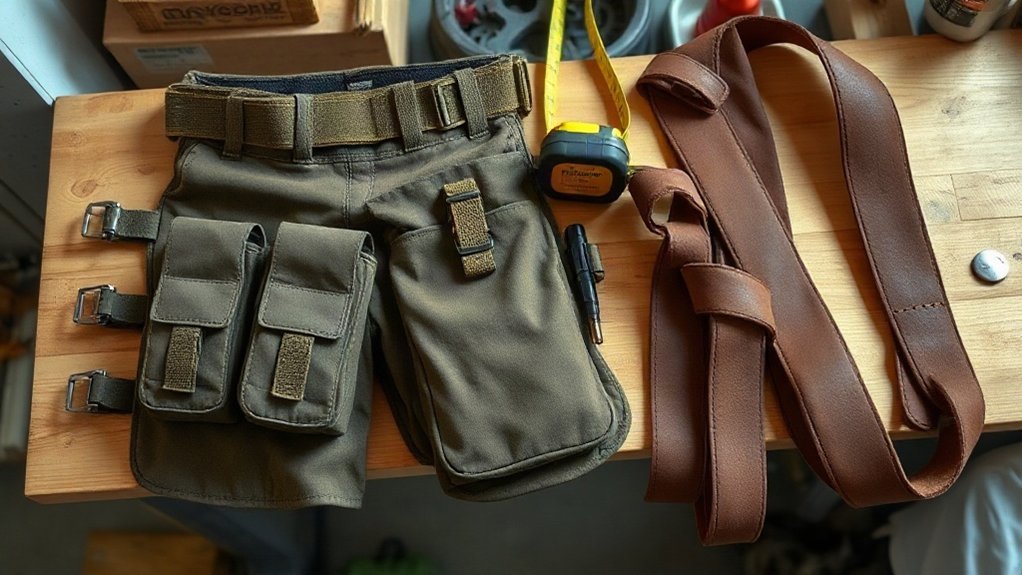
I distinguish a utility belt from a normal work belt by its purpose: a normal belt holds up trousers, while a utility belt organizes and carries tools for quick access. It may have multiple pockets, wide-mouth pouches for fasteners, and clips for items such as a tape measure. Reinforced construction helps support the load, and a consistent layout keeps frequently used tools within reach. I’ll also explain how fit, materials, and suspenders affect comfort on the job.
Key Takeaways
- A normal work belt mainly holds up trousers; a utility belt is built to carry and organize tools.
- Utility belts use pockets, pouches, and clips to keep tools and fasteners accessible.
- Multiple compartments help separate gear and support a consistent tool layout.
- Reinforced materials and load-bearing construction help utility belts withstand jobsite wear and tool weight.
- Adjustable fits, padding, and compatible suspenders can improve stability and comfort under heavier loads.
What Makes a Utility Belt Different From a Work Belt?
A utility belt carries and organizes tools, while a normal work belt mainly keeps your trousers up. I judge the difference by load capacity, fit, and structure. A utility belt uses multiple pockets, wide-mouth pouches, and clips to keep equipment accessible; the Tuff Gear Pro, for example, has 22 pockets. A work belt usually lacks that storage because it isn’t designed to carry a full tool load.
When I compare fit, I look for secure adjustment: the Tuff Gear Pro spans 29 to 42 inches and uses a double-tongue roller buckle. Padding, lumbar support, and suspenders’ D-rings can steady a loaded belt. Reinforced materials and added stiffness resist jobsite wear and help pockets hold their shape. Load-bearing construction helps a utility belt support tools more effectively than a normal work belt. Choose the setup that carries your tools without restricting your movement or independence.
When Should You Choose a Belt Over a Vest?
I’d choose a belt when I regularly carry more than about 5 pounds of tools; it can handle heavier loads by placing most of the weight on my hips. For loads near 20 pounds or more, I’d add padded suspenders with secure attachments to limit sag and reduce pressure on my hips and back. If I’m carrying only a few light tools and want more freedom from a loaded belt, I’d choose a vest. Look for reinforced construction and sturdy stitching to help a utility belt bear weight without crumpling.
Choose a Belt for Heavy Loads
When your tools regularly weigh more than about 5 pounds, choose a tool belt over a vest: it carries most of the load on your hips and can support heavier setups. I’d judge the choice by the full working load, not the belt’s empty weight. In one comparison, a loaded belt added 17 pounds to a 217-pound wearer, versus 5.5 pounds for a vest. That difference makes fit and support essential.
For heavy utility belts, look for a padded belt with D-rings for suspenders. Well-fitted suspenders can share weight with your shoulders and help stop the belt from sagging or shifting, leaving you more stable as you move. If your belt lacks D-rings, accessory loops may provide attachment points. Don’t use D-rings to hold a screw gun or drill; they’re not designed for that. A duty belt may suit lighter gear, but check its load capacity.
Choose a Vest for Lighter Loads
If your tools weigh about 5 pounds, a vest can keep them close without the bulk of a heavier belt setup. I’d choose a vest when you move often and carry a modest kit; it keeps essentials accessible while leaving your waist free. Check pocket placement and fit so tools don’t swing or restrict your reach.
When fasteners, a screw gun, or other equipment push the load beyond 20–25 pounds, I’d switch to a supportive tool belt with well-fitted suspenders. A webbing belt with a stiffened belt core can resist sag, while belt keepers help secure attachments. Confirm waist fit before loading it, then adjust the suspenders to share weight between hips and shoulders. The right choice depends on your actual load and job demands—not the gear’s label.
How Do Utility Belts Carry Tools and Fasteners?
A utility belt keeps tools and fasteners sorted in dedicated pockets and pouches, so you can reach them instead of searching through a loose pile. Unlike a normal work belt, it organizes a full loadout: wide-mouth pouches hold screws, anchors, and connectors, while a tape-measure clip keeps your measure ready to grab. A 22-pocket layout can separate hand tools from fasteners and make placement consistent, building muscle memory over time. I put frequently used tools on my dominant side and heavier ones near my hips to balance the load and speed access. Balanced placement can make a full day of carrying tools more comfortable. Reinforced webbing, including 2 inch webbing, can support more attachments than a basic belt. For heavier setups, D-rings let me add suspenders or a removable harness to stabilize the load and shift weight to my shoulders.
How Should a Utility Belt Fit and Adjust?
Once your tools and fasteners are organized, fit the utility belt low on your hips, where your body can carry its weight more comfortably than at your waist. Choose an adjustable size that fits over your work clothes; the Tuff Gear Pro Tool Belt, for example, adjusts from 29 to 42 inches. Measure around your hips over your work clothes to choose a belt size that allows comfortable adjustment.
Fasten it snugly and evenly, but leave enough room to bend, reach, and move freely. Compared with a standard riggers belt, a utility belt may use a double-tongue roller buckle to grip the strap and resist loosening. A hook and loop velcro inner belt can secure an outer belt, if the system supports both. If the belt shifts or sags, check whether it’s too loose or sitting too high. For a heavier setup, attach compatible suspenders to its D-rings to stabilize the fit.
How Does a Utility Belt Distribute Its Load?
Because a utility belt carries tools around your hips, it distributes weight across an area better suited to support it than a narrow waist strap. I find that a normal work belt concentrates pressure, while a broader utility or battle belt can spread tools and fasteners around the hips. Keep heavier items close to your body and balance their placement to limit strain on your hips and lower back. A snug, evenly adjusted fit helps stop the belt from shifting or sagging as you bend, climb, and move. On a tactical model, a MOLLE PALS grid lets you position compatible pouches where they balance your load and preserve access. A padded lumbar panel can ease pressure points. In one reported test, a tool-belt setup added 17 pounds, showing why thoughtful placement matters. Stiff webbing and supportive liner materials can also help a utility belt resist sagging and rolling over time.
When Do Suspenders Make a Utility Belt More Comfortable?
When should you add suspenders to a utility belt? I add them when a heavy tool load makes the belt sag, shift, or press unevenly on my hips. Above roughly five pounds, suspenders can improve comfort by sharing weight between shoulders and hips, reducing back strain, hip pain, and chafing. A padded shoulder spread and sternum strap help distribute support and keep the straps in place.
Compared with carrying everything on an edc belt or range belt, a supported setup can feel steadier and leave me freer to move. Before fitting suspenders, I check for compatible D-rings or add-on loops. D-rings may secure accessories, but they aren’t suitable for a screw gun or drill. Molle webbing and 1000d cordura don’t replace proper load support. Adjusting belt tension can also help keep a utility belt from sliding down.
Which Utility Belt Materials Handle Daily Jobsite Wear?
I find quality leather holds its shape under heavy loads and resists daily abrasion, though it can feel stiff until it breaks in. Reinforced nylon weighs less and flexes right away, but cheaper construction may sag or fray under tools. I check stitching, rivets, hardware, and bag attachments, since build quality matters as much as material. Like military-style backpacks, utility belts benefit from reinforced stitching that holds up under years of hard use.
Leather Durability
Although leather costs more upfront than many synthetic options, a quality utility belt holds its shape under load, keeping pockets open and tools and fasteners within reach. I find that support especially useful when I carry a dump pouch or magazine pouch; a plastic stiffener can add structure, but leather itself molds to my stance and habits after two to four weeks of daily wear.
- Lumber, ladders, concrete dust, and fasteners will scuff leather. I treat discoloration as normal jobsite wear, not failure.
- Conditioning helps leather resist incidental moisture, but I avoid extended rain and standing water.
- With years of professional use, quality leather may cost less per day than a cheaper hunting belt that needs frequent replacement.
That durability lets me work freely without sacrificing access or support.
Nylon Construction
Reinforced nylon utility belts feel lighter and more flexible than leather from day one, with no break-in period. For daily jobsite wear, I’d choose heavy-duty nylon; lighter weaves can fray, sag, or lose their shape under loaded pockets. That flexibility gives you freedom to move, but the belt must still support your tools.
I check stitching, rivets, hardware, reinforcements, and bag attachment points before buying. A cobra buckle or side release buckle should feel secure and match the load, not just look rugged. Brands such as 11 tactical and blue alpha gear offer useful comparisons, but inspect each model’s construction. Structured bags keep pockets open, so you can reach tools without searching. If a nylon belt sags, a hybrid design with leather reinforcement at high-wear points can help prevent pocket collapse.
Which Utility Belt Setup Fits Your Work and Load?
Start with fit: your utility belt should sit snugly on your hips over your work clothes, without slipping or restricting movement. I’d match its structure to your load and movement:
- For moderate gear and frequent bending, choose flexible nylon or a hybrid. Nylon weighs less and flexes immediately, preserving freedom of movement. Plan hip carry around a holster mount, tourniquet holder, and water bottle pouch without crowding access.
- For heavier daily loads, choose structured leather or reinforced construction to keep pockets open and tools stable. Leather takes two to four weeks to break in; reinforced nylon avoids that wait.
- Balance weight: keep heavier tools close to your hips and frequently used items on your dominant side. For long shifts, add a padded lumbar panel and D-ring harness; suspenders share load with your shoulders.
A snug, adjustable fit matters; the Tuff Gear Pro spans 29–42 inches.
Frequently Asked Questions
What Are the Three Types of Belts?
I’d group work belts into three practical types: standard work belts, tool belts, and suspender-supported tool belts. A standard belt mainly holds up your trousers and carries little extra weight. A tool belt adds pockets or pouches, with leather offering firm structure after breaking in and nylon or hybrid designs staying lighter and flexible. For heavier loads, suspenders stabilize the belt and shift some weight to your shoulders, improving comfort and control.
How to DIY a Utility Belt?
I’d DIY a utility belt by starting with a sturdy, adjustable work belt that fits snugly over your job clothes. Add compatible pouches, placing frequently used tools on your dominant side, heavier items near your hips, and fasteners apart from hand tools. Choose reinforced, structured materials to prevent sagging. For heavier loads, add a padded lumbar panel or suspenders. Load the belt, then bend, kneel, and walk; adjust anything that shifts or blocks access.
What’s the Difference Between a Tactical Belt and a Regular Belt?
A tactical belt supports attached gear and resists shifting under load; a regular belt mainly holds up your trousers. I’d choose reinforced webbing and a secure buckle when carrying equipment, since they improve durability and stability as you move. Some tactical designs also add accessory points, such as D-rings for a removable harness. Wear yours snugly at the hips, and check that its adjustable size range fits comfortably over your clothing and equipment.
What Is a Police Utility Belt Called?
A police utility belt is usually called a duty belt—or, more specifically, a police duty belt. I’d distinguish it from an ordinary work belt by what it carries: handcuffs, a radio, and other essential equipment, not just trousers. Its secure hip fit keeps gear accessible throughout a shift, giving you practical freedom of movement. When the load gets heavy, some officers add suspenders or a load-bearing vest to distribute weight across their shoulders.
Conclusion
A normal work belt keeps your trousers where they belong; a utility belt keeps your tools close, organized, and—if fitted well—off your spine’s complaint list. Choose based on the load, task, and time worn, then adjust the belt before blaming gravity. Add suspenders when weight pulls it down, and pick durable materials for daily wear. The right setup won’t make a hard job easy, but it can stop your pockets from staging a mutiny.
References
Tool Belts, https://www.osha.gov/etools/construction/falls/tool-belts
Tool Belts, https://www.cdc.gov/niosh/docs/2007-131/
Construction Safety: Tool Belts, https://www.ccohs.ca/oshanswers/safety_haz/construction/tool_belts.html