Can You Fly With a Full Bladder in Hydration-Compatible Backpacks?
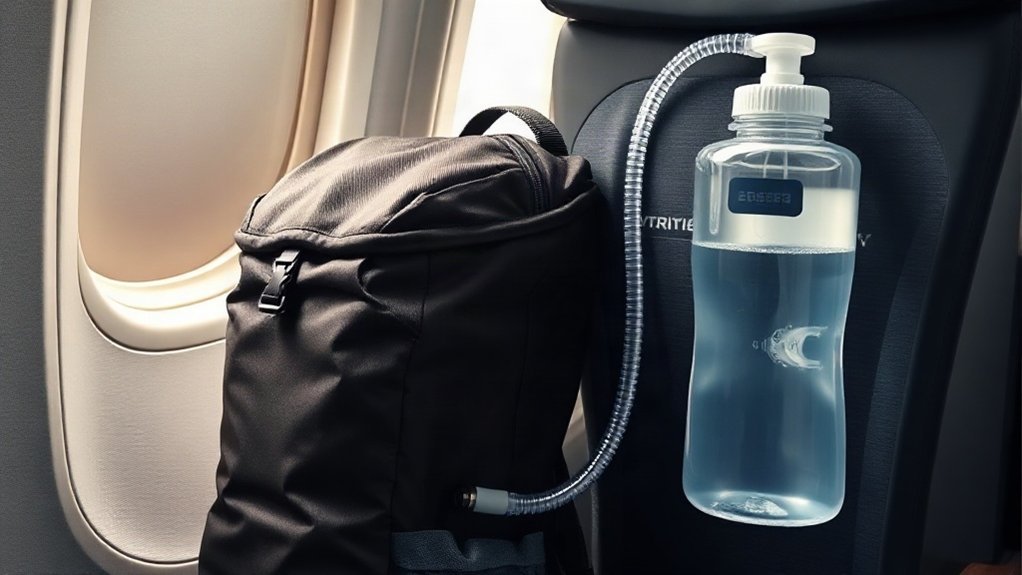
I wouldn’t assume you can fly with a full hydration bladder in a compatible backpack: liquid limits and screening procedures vary by airport and airline. I’d check current rules with both before traveling and pack the bladder empty unless they confirm a full reservoir is allowed. Keep it accessible for inspection, then refill after security where permitted. Empty and dry the bladder and hose after use to limit leaks and mold. The details below cover packing, screening, and refilling.
Key Takeaways
- Whether you can fly with a full hydration bladder depends on the airport and airline; check their current liquid and baggage rules.
- A full bladder may exceed airport liquid limits, so don’t assume it will pass security in your backpack.
- Security officers may ask you to remove the bladder and tube for inspection; keep them easy to access.
- To avoid carrying water through security, pack the bladder empty and refill after screening where permitted.
- If carrying it full is allowed, close the valve, check connections, and keep the bladder upright to reduce leak risk.
Can You Fly With a Full Hydration Bladder?
Can you fly with a full hydration bladder? I wouldn’t assume it’s allowed: requirements vary, and the available guidance doesn’t establish a universal rule. Before you travel, check current liquid requirements with your airline and airport security agency.
A hydration bladder may hold 1.5–3 liters, so a full 2 liter bladder or 3 liter bladder can mean carrying a substantial volume of water. If you want to avoid transporting that water through security, I’d pack the bladder empty and fill it later, where permitted. This lets you keep your water carry system without relying on assumptions about your route.
Hydration-compatible backpacks, including a camelbak, need practical care, too. After use, I’d clean the bladder and tube, then dry them thoroughly. A full bladder sealed during travel can be difficult to dry afterward, complicating cleaning. Security screening may involve checking the backpack and bladder, so keep them accessible.
What Will Security Do With Your Bladder?
At security, officers may ask you to remove your hydration bladder from your backpack for separate inspection. They may examine the reservoir and drink tube outside your hydration pack, so I keep both accessible. A full bladder may fall under airport liquid limits and screening rules; I don’t assume it can pass filled. Check your departure airport’s current requirements before traveling, because screening decisions can vary. If officers require an empty reservoir, I’m prepared to comply before screening and refill it afterward, where facilities permit. This lets me preserve access to hydration without relying on a general assumption about liquid allowances. Keep the bladder easy to reach, follow officers’ instructions, and allow time for inspection. Rules and procedures differ by airport, so checking ahead gives me a clearer basis for planning. Like other MOLLE backpacks, hydration-compatible packs may receive additional screening if their contents or layout make inspection difficult.
How Should You Empty the Bladder and Hose?
Before packing, I empty the bladder completely through its drinking tube or by opening the reservoir, then drain any water left in the hose. If my model has a quick release hose connector, I close its spigot and clear the remaining water before disconnecting it. I also check the insulated drink tube and hose port for trapped moisture.
I leave the reservoir and hose open to air-dry fully. For residue, I wash them with mild soapy water and use a cleaning brush kit where needed. A wide slide-top opening makes emptying, cleaning, and drying easier than a small screw cap. I hang the open bladder on a reservoir hanger to support airflow. Complete drying supports mold prevention. Regular cleaning helps keep a hydration bladder fresh between uses. I travel with the bladder dry; available guidance doesn’t confirm that flying with it full is suitable.
How Do You Pack a Hydration Bladder?
To pack a hydration bladder, I place it in the hydration sleeve or near the top of my backpack, close to my back for access and comfortable weight distribution. A dedicated sleeve helps, but my daypack doesn’t need one. I check that the hose exits from the bladder’s bottom so gravity supports flow, then thread it through the pack’s exit port and over my shoulder. I secure it to the chest strap or harness with a tube routing clip, keeping the bite valve accessible without restricting movement. A secure hose route helps prevent snags on straps and other gear.
Before packing, I close the hose shut-off valve if available; this reduces leak risk but doesn’t make the setup leak proof. I inspect the connection and keep the bladder upright. An insulated hose cover can limit temperature exposure, while a backpack rain cover protects the pack externally.
Where Can You Refill After Security?
Where can you refill after security? I empty my bladder before screening, then refill in the departure area. A full reservoir counts as a liquid container under airport restrictions. I check near restrooms and food courts for fountains or bottle-filling stations; if none appear, I ask a café to provide drinking water.
| Refill source | What I do | Check |
|---|---|---|
| Filling station | Refill directly | Water flows clearly |
| Drinking fountain | Fill carefully | Spout stays clean |
| Café or restaurant | Request drinking water | Confirm it’s potable |
Before source hydration, I inspect the hose and bite valve, especially after flavored drinks. For a running vest, mountain biking pack, or tactical hydration carrier, a separate bottle adds flexibility. I carry chlorine dioxide tablets as backup treatment when safe water isn’t readily available. During summer hydration, refill before departure; in winter, protect the hose from winter hose freeze. Insulated hose sleeves can help slow freezing in cold conditions.
Which Flight Rules Should You Check?
Refilling after security avoids carrying water through screening, but I still check current airline and security rules because they may differ. I don’t assume a full bladder is permitted: rules can vary by airport and carrier.
Refill after security, and check current airport and airline rules before assuming a full hydration bladder is allowed.
Before departure, I verify three points:
- Whether screening requires an empty bladder and whether I can carry water through security.
- Whether my pack and bladder meet carry-on size and weight limits, and whether a full bladder must travel in checked baggage.
- How to prevent leaks if I check it; I secure the valve and hose clip and protect the bladder from pressure or freezing.
Brand names such as Osprey, Platypus, and Geigerrig, plus 500D Cordura fabric or YKK zippers, don’t determine liquid rules. I check official guidance, then refill where permitted. Like other carry-ons, a hydration-compatible pack must fit airline size limits when packed.
Frequently Asked Questions
What Is the Best Backpack for Carrying a Hydration Bladder?
I’d choose the Osprey Manta 24 for longer hikes: its 2.5-liter reservoir, supportive hip belt, ventilated back panel, and multiple pockets help manage water and gear comfortably. For shorter day hikes, I’d pick the Osprey Skarab 18 or, if you’re 5-foot-8 or shorter, the Skimmer 16. I’d prioritize fit and trip length; if your existing pack has a reservoir sleeve and hose exit, you may not need another backpack.
Can I Bring a Hydration Pack on a Plane?
Yes—you can bring a hydration pack on a plane. “An ounce of prevention is worth a pound of cure,” so I recommend checking your airline and airport rules before departure. For carry-on screening, empty the bladder; its usual 1.5–3 liters exceeds the standard 100 mL (3.4 oz) liquid limit. After security, you can refill it and route the hose through the pack’s port. For a full bladder, use checked baggage and secure its cap and hose against leaks.
What Are the Disadvantages of Using a Hydration Pack?
I find hydration packs less convenient than bottles in several ways. You must clean the bladder and hose after each use and dry them thoroughly; narrow openings can trap moisture. In cold weather, an uninsulated hose may freeze before the reservoir. A full bladder adds weight and can be difficult to reload into a packed bag. Leaks or worn bite valves can interrupt access, so I carry a backup bottle. I avoid flavored drinks because residue lingers.
Can a Water Bladder Go in Any Backpack?
Yes, I can put a water bladder in almost any backpack, like fitting a flexible pouch into a travel kit. A dedicated sleeve and hose portal make placement and routing easier, but they’re not essential. I’d position the bladder near the top, close to my back, and secure it against shifting or punctures. I’d route the tube through a clean exit and clip it within reach, preserving convenient access wherever I go.
Conclusion
I don’t board with a full hydration bladder. I empty it before security, drain the hose, and pack the bladder dry so it won’t leak or slow screening. After the checkpoint, I refill it where drinking water is available, then keep it accessible for the flight. Rules can vary by airport and airline, so I check both before departure. That simple routine lets me carry water-ready gear without turning my backpack into a sloshing, unpredictable load.
References
Liquids, Aerosols, and Gels Rule, https://www.tsa.gov/travel/security-screening/liquids-rule
What Can I Bring?, https://www.tsa.gov/travel/security-screening/whatcanibring/all
Travel Tips: 3-1-1 Liquids Rule, https://www.faa.gov/travelers/fly_safe/handbook