Which Bivy Sacks Keep You Dry Without Blowing Your Budget?
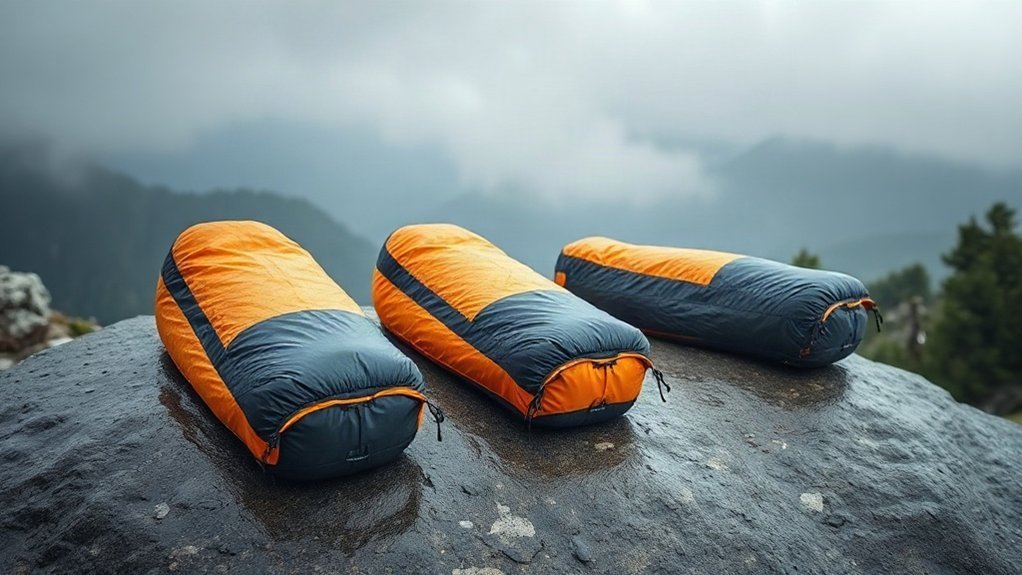
I’d choose the Alpkit Hunka at about $95 for budget-friendly protection from light rain, but its coated fabric can trap moisture. For sustained rain, I’d spend more on the $180 Rab Storm Bivy, which has a waterproof shell and floor. If the forecast is dry or buggy, the $105 Borah Ultralight saves weight and money under a tarp, though its top isn’t waterproof. Your weather, ventilation needs, and shelter setup determine the best value; I’ll compare those trade-offs below.
Key Takeaways
- The Alpkit Hunka ($95) offers affordable light-rain protection, but its coated fabric can trap moisture and cause condensation.
- The Rab Storm Bivy ($180) has a waterproof shell and floor for stronger rain coverage.
- The Outdoor Research Helium UL ($300) combines a waterproof-breathable membrane, mesh door, and head-end pole in a lighter, less costly option than the Alpine XT.
- For dry nights or use under a tarp, the Borah Ultralight ($105) is lightweight, but its top is not waterproof.
- For sustained rain or storms, a tent offers more dependable coverage; no bivy guarantees a dry night.
How Do You Choose a Bivy for Dry Sleep?
For dry sleep in rain, choose a bivy with a waterproof top and sealed floor; the Borah Ultralight’s breathable, non-waterproof top needs a tarp for reliable coverage. I’d match protection to the weather, not just the price tag. The budget Alpkit Hunka resists rain, but its coated fabric can trap moisture and cause condensation, so ventilation matters.
For stronger coverage without a full tent, consider the Rab Storm Bivy: its waterproof shell and floor weigh 547 grams and cost $180. The Outdoor Research Helium UL costs more at $300 and weighs 511 grams, but adds a waterproof-breathable membrane and mesh door. For demanding four-season trips, the Alpine XT offers a tougher shell for $375 and 594 grams.
Even weather-resistant bivy sacks can collect condensation on humid nights. I’d prioritize breathable materials and carry a tarp shelter when the bivy’s top isn’t waterproof. Opening the mesh panel or entry can improve airflow and reduce condensation. That combination lets you travel light while keeping rain from deciding where you sleep.
Which Bivies Suit Hot, Dry Nights?
For hot, dry nights, I’d prioritize breathable bug protection without paying for rain-ready features you won’t need. The 155 g Borah Ultralight costs $105, while the 215 g Katabatic Piñon costs $159 and offers a larger mesh panel, but its top isn’t waterproof. I’d consider the $86 SOL Escape for wind and dew, though none of these bivies matches a tent’s space, and condensation can still form. A bivy’s quick pitch and small packed size can make it appealing for fast, fair-weather trips.
Breathable Bug Protection
On hot, dry nights, I’d prioritize mesh airflow and bug coverage over a fully waterproof top. Choose a bivy that lets you sleep freely without paying for storm protection you won’t use. My practical shortlist:
- Katabatic Piñon: Its oversized mesh bug net improves ventilation and keeps insects out. At 215 g and $159, it’s roomy and airy, but the top isn’t waterproof.
- Borah Ultralight: A breathable ripstop top, waterproof floor, and 8/10 breathability rating make this 155 g, $105 option a strong value under a tarp.
- Outdoor Research Helium UL: The no-see-um mesh door protects against bugs, while its waterproof-breathable membrane adds weather coverage; it costs $300 and weighs 511 g.
Even breathable bivies can become condensation-prone in humidity, so I’d save these choices for reliably hot, dry conditions.
Lightweight Dry-Weather Picks
When rain isn’t in the forecast, I’d spend less on waterproofing and prioritize airflow. For a hot, dry trip, I’d choose the 155 g Borah Ultralight Bivy at $105. Its breathable ripstop top vents well, while the waterproof floor handles ground moisture; pair this bivy sack with a tarp for dependable rain cover.
If bugs are your main concern, the 215 g Katabatic Piñon ($159) adds an oversized mesh panel and bug protection, but its top isn’t waterproof. The 241 g SOL Escape costs $86 and packs small, offering reflective warmth against dew and light moisture—not a rain shelter.
I’d skip the coated Alpkit Hunka on humid nights: it resists rain better, but poor breathability can trap condensation. Even lightweight designs may feel damp in humidity, so favor airflow and carry only the cover your forecast requires.
Are Borah and Katabatic Bivies More Breathable?
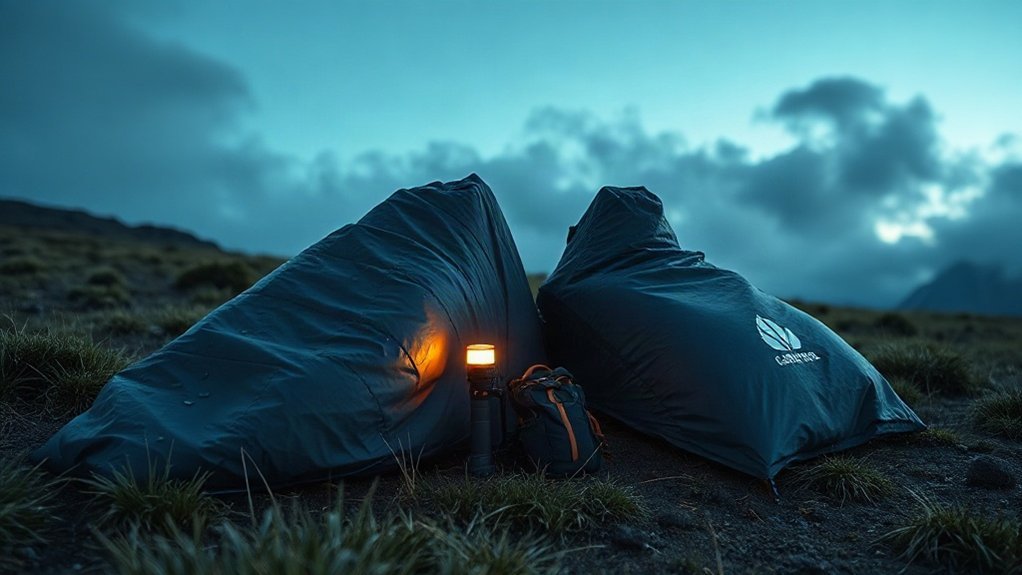
Yes—both bivies prioritize airflow, but they trade some rain protection for breathability. I’d choose between them based on your shelter setup and budget, not expect either to prevent every damp morning.
- Borah Ultralight Bivy: 8/10 for breathability, with a breathable ripstop top and waterproof floor. At about 155 g and $105, it’s a light, affordable choice for sleeping under a tarp.
- Katabatic Piñon: 9/10, thanks to an oversized mesh panel that boosts airflow and keeps bugs out. It weighs 215 g and costs $159; its top isn’t waterproof.
- Both: airflow helps manage moisture, but condensation can still build up on humid nights.
For ultralight backpacking, I’d pair either bivy with a tarp and leave room for ventilation. Keep the dew point in mind: moisture can collect even when you’ve chosen breathable fabric. Don’t assume a waterproof zipper, seam tape, or silnylon elsewhere in your kit will make these bivies full-shell shelters. The Piñon costs more for extra mesh airflow; Borah saves money and weight. A bivy can add warmth by blocking wind and trapping dead air, but your sleeping bag and pad matter more in freezing conditions.
Which Bivies Handle Light Rain?
I’d treat the $86 SOL Escape as protection from dew and brief moisture, not sustained rain. For the $105 Borah Ultralight, I’d add a tarp because its top isn’t waterproof. If you want a budget bivy with a waterproof shell, the roughly $95 Alpkit Hunka can handle light rain, though condensation may build up. To maintain water resistance, clean it with a technical fabric cleaner and renew its DWR coating as needed.
Water-Resistant Options
For dew or a brief, light shower, the $86 SOL Escape offers basic water resistance, but its emergency-grade fabric isn’t a rain shell. I’d treat it as a lightweight layer, not a guarantee against a wet night. A groundsheet and careful campsite selection help keep moisture manageable; remember, an event fabric or gore-tex membrane isn’t part of this bivy, so condensation can still build.
- At about $95, the Alpkit Hunka’s waterproof coating handles light rain better, but limited breathability may leave you damp inside.
- The $105 Borah Ultralight has a waterproof floor and breathable ripstop top; its top needs added rain protection.
- The $159 Katabatic Piñon breathes well, but its non-waterproof top suits fair weather.
For stronger weather protection, the $180 Rab Storm Bivy has a waterproof shell and floor, though it weighs 547 g.
When to Add a Tarp
A bivy’s light-rain limits determine whether you’ll need a tarp. I’d add overhead cover for a breathable-top Borah Ultralight, the nonwaterproof Katabatic Piñon, or the moisture-resistant SOL Escape; none replaces a rain shell. For rain without a separate tarp, I’d choose a waterproof-breathable MSR Pro Bivy or MLD Soul ProVent UL.
| Bivy | Light-rain plan |
|---|---|
| Borah Ultralight, 155 g | Add tarp |
| Katabatic Piñon, 215 g | Add tarp |
| SOL Escape, 241 g | Add tarp if rain’s possible |
| MSR Pro Bivy, 258 g | Consider without tarp |
A tarp gives freedom to wait out showers, but pegs and possibly poles add weight and pack size. I’d compare that load and bivy pitch time with a more weather-resistant bivy. Check your guy line and shelter setup before setting out.
When Is a Hooped Bivy Worth It?
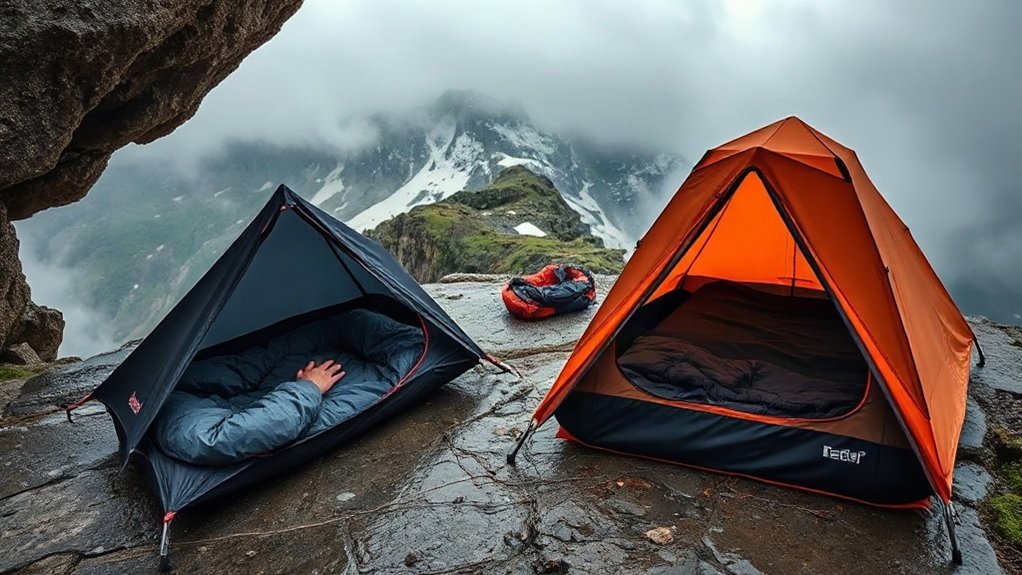
When wind and rain make a tarp feel like extra hassle, I’d consider a hooped bivy: its raised hood helps keep fabric off your face and adds shelter without a separate tarp. A hoop pole gives you room to move, though a hooped bivy isn’t a one-person tent. Rain can still get in, and condensation can dampen your sleeping bag, so I’d weigh the added comfort against the cost and durability you need. A bivy can be lighter than a tent because it combines rain protection and bug protection in one layer.
- For discreet trips in changeable weather, the Outdoor Research Helium UL offers a head-end pole and mesh door. At 511 g and $300, it’s a lighter, less costly option.
- For demanding four-season outings, the Alpine XT has a more robust shell, but its 594 g weight and $375 price make it overkill for a summer night.
- If the forecast looks dry, I’d choose a simpler bivy to save weight and money.
Pick the structure that earns its place in your pack; extra shelter can buy freedom when conditions turn, but it won’t guarantee a dry night.
Does a Tarp Make a Bivy Drier?
A tarp can keep rain off your bivy and help you stay drier, but it won’t stop condensation from dampening your sleeping bag. Without overhead cover, rain can soak you, and some bivy fabrics may let water seep through. I’d choose a tarp when the forecast looks unsettled and I want a simple, flexible shelter for solo camping.
That protection comes with trade-offs. Guidelines, pegs, and poles add weight and setup time, which can chip away at a bivy’s ultralight appeal. A two-pole bivy may provide overhead coverage without a separate tarp, though rain can still get in and trapped moisture can still reach your bag. For a budget setup, I’d compare the tarp’s cost and packed weight with the protection it offers. A tent footprint can serve as a light ground layer, but it won’t replace overhead cover. Pack the tarp in its stuff sack, and you’ll keep your minimalist kit ready for changing weather and open-air freedom. A bivy’s compact shelter needs no poles or trees, making it a lightweight option for solo campers.
When Is a Tent Better Than a Bivy?
For most campers, a tent is the better choice when comfort, privacy, and reliable weather protection matter. I’d choose one when I need space to stash gear, change clothes, cook under cover, or shelter a partner. At a campsite, a tent feels easier to live in; a bivy leaves me exposed, with belongings in view.
- For sustained rain or storms, a tent offers more dependable coverage against rain and seepage.
- On a cold night, I can settle in with a sleeping pad and camp quilt, then keep extra layers close.
- For family trips or shared shelter, a tent gives everyone room and privacy.
A tarp can help a bivy stay drier, but pegs, lines, and poles add weight and setup time. A tarp offers more shelter per ounce, but pitching it well takes skill and it lacks bug and splash protection. That tradeoff may work for thru-hiking or brief, hot, dry overnights, when I value minimal gear. An emergency blanket is useful backup, not a substitute for storm shelter. If I want freedom without gambling on weather, I’d budget for a tent.
Frequently Asked Questions
How to Prevent Condensation in a Bivy Sack?
To prevent condensation in a bivy sack, I choose a breathable model and keep its vents open whenever conditions allow. I’d look for mesh features, such as the Rab Storm’s entry vent or the Katabatic Piñon’s oversized panel, rather than paying for extra waterproofing alone. No bivy is condensation-proof, especially on humid nights. I also avoid sealing it tightly in warm, dry weather, protecting my sleeping bag from dampness and preserving its warmth.
What Is the Best Waterproof Bivvy Bag?
I’d choose the Rab Storm Bivy as the best waterproof bivvy bag for most trips: at $180, it gives you a waterproof shell and floor without a premium price. Its mesh entry vent also helps limit condensation. If you need a lighter option, consider the MLD Soul ProVent UL, but it starts at $345. For demanding four-season use, the tougher Alpine XT costs $375 and weighs more, so match your choice to your route.
Are Bivvy Bags 100% Waterproof?
No—I wouldn’t count on any bivy bag to stay 100% waterproof in every condition. A sealed floor can block wet ground, while rain may enter through the opening, fabric may seep, and your breath can create condensation inside. For stronger protection, I’d choose a waterproof-shell model like the Rab Storm or a waterproof-breathable option like the Outdoor Research Helium UL. A tarp adds coverage, but costs weight and setup time; severe weather calls for a full shelter.
Who Makes the Best Bivy Sack?
I’d pick Borah Gear for the best overall bivy sack if you’re watching weight and cost. Its Ultralight Bivy weighs about 155 g, costs $105, and pairs best with a tarp. For stronger bug protection and airflow, I’d consider Katabatic Gear’s Piñon, though its top isn’t waterproof. If you need a waterproof shell, Rab’s Storm Bivy offers more rain protection, but it weighs considerably more.
Conclusion
A bivy can turn a damp, chilly night into a simple, dry sleep—but no budget sack can replace sound shelter judgment. Choose breathable fabric for warm, dry trips, a weather-resistant model for passing showers, and a hooped design when space matters. Pair any bivy with a tarp when rain threatens; choose a tent when storms linger or comfort outweighs ounces. Spend for the conditions you face, not features you’ll rarely use. The best bargain is staying dry without carrying more than you need.
References
Outdoor Safety & Survival: Hypothermia, https://www.nps.gov/articles/000/hypothermia.htm
Ten Essentials, https://www.nps.gov/articles/10essentials.htm
Camping and Hiking: Be Prepared, https://www.cdc.gov/healthywater/drinking/travel/camping.html
1 comment