Are Bivy Sacks Lighter Than a Tent and Tarp Setup?
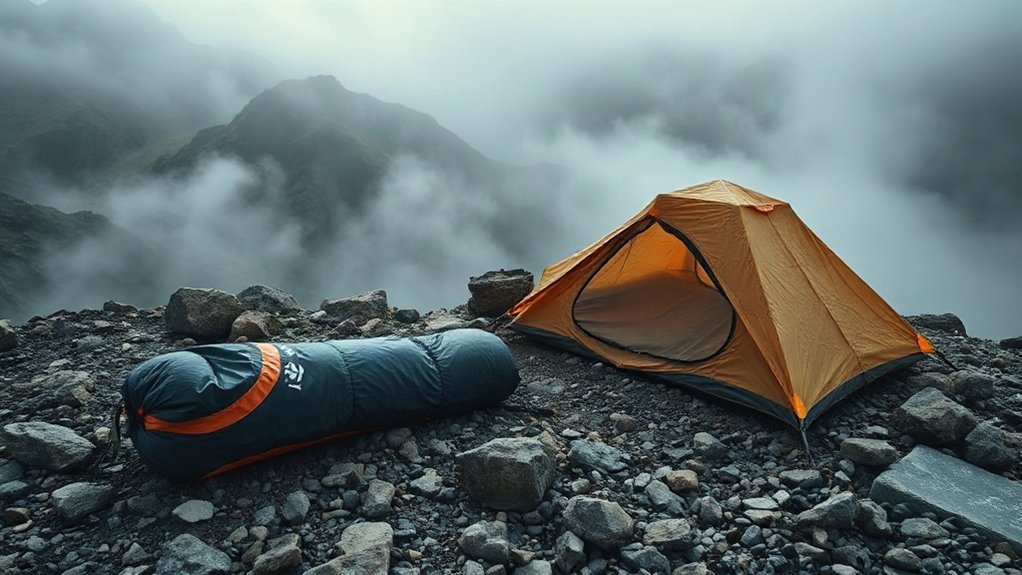
A bivy sack is often lighter than a tent, but it isn’t always lighter than a tarp setup. I compare complete packed weights: the Outdoor Research Helium Bivvy weighs about 16 ounces, while an REI Quarter Dome tarp weighs about 12 ounces before stakes. Stakes, poles, and ground protection can change the result, and a bivy still needs an air pad for insulation. Your best choice depends on the full kit, comfort, and conditions; I’ll explain the trade-offs below.
Key Takeaways
- A bivy sack can be lighter than a tent-and-tarp setup, but the complete packed systems must be compared.
- The Outdoor Research Helium Bivvy weighs about 16 ounces and needs no stakes or pole for basic use.
- The REI Quarter Dome tarp weighs about 12 ounces before stakes; stakes add weight and narrow the difference.
- Include required components such as stakes, poles, a groundsheet, and an air pad when comparing total weights.
- The lightest option depends on the specific gear: some tarps weigh about 5 ounces, while the bivy still needs an air pad for insulation.
Bivvy vs. Tarp: Which Weighs Less?
Which weighs less depends on the full setup. When I compare bivy sacks with a tarp shelter, I count the parts I’ll actually carry, not just the fabric. The Outdoor Research Helium Bivvy weighs about 16 ounces and needs no stakes or pole, so I can take it as a complete, simple shelter.
The REI Quarter Dome tarp weighs about 12 ounces without stakes, making it lighter than the bivvy alone. But I’ll need to add stakes to pitch it, which narrows the difference. Some lightweight tarps weigh around 5 ounces, though their stakes still add weight to the carried setup.
For a direct comparison, I’d check each shelter’s packed weight and include required pitching gear. If I want to move freely without carrying or placing stakes, a bivvy may suit me better. If I’m willing to carry stakes, a tarp can weigh less, especially when I choose a minimal design. Neither option is always lighter; the complete setup decides. A bivvy also pitches quickly, while a tent offers better condensation control and a dry place to sit out the rain.
What Does Each Shelter Weigh?
When I compare shelter weights, I look at the shelter itself and note what isn’t included. A hooped bivy can weigh less than a tent, while a tarp offers another light option. Here are useful reference weights:
| Shelter | Approximate weight | What to note |
|---|---|---|
| Outdoor Research Helium Bivvy | 16 oz | Bivy only |
| REI Quarter Dome tarp | 12 oz | Stakes excluded |
| Lightweight tarp | Around 5 oz | Model-dependent |
| Lanshan Pro 2 | Just over 2 lb | Trekking-pole tent |
| Big Agnes Tiger Wall UL 2 | Just over 2 lb | About 1–2 oz lighter |
These figures help me compare shelter choices, but they don’t necessarily represent a complete sleep system. I’d check whether a groundsheet, stakes, poles, or other components add weight before deciding. A one-person tent may weigh less than a two-person model, but size and design affect the comparison. For more freedom on the trail, I’d choose based on the packed weight I’ll actually carry, not the shelter’s headline number alone. Like tents, a bivy’s complete setup can weigh more once you account for the other gear needed for shelter and insulation.
How Easy Are They to Set Up?
Weight is only part of the shelter comparison; setup can matter just as much at the end of a long day. I find a bivy pitch straightforward: the Outdoor Research Helium Bivvy weighs about 16 ounces and opens without stakes or a pole. For better support, I recommend staking it and securing the pole loop, which adds headroom and helps keep the pole in place. If I’m using a quilt, I arrange my pad, quilt, and straps first, then slide them into the bivy.
A tarp takes more practice. I need to choose a suitable campsite and tension an A-frame carefully; when pitched taut, it provides sleeping space and side protection. A trekking-pole tent can also take extra adjustment, especially on saturated, muddy ground, where stakes may slip out.
A pre-tied ridgeline can make a tarp pitch quicker and simpler. For a quick pitch with minimal gear handling, I’d favor the bivy. If I want a tarp or tent, I’ll allow more time to secure the setup.
Which Shelter Feels More Comfortable?
I find a bivy the most confining, while a tarp feels roomier but leaves me more exposed; a tent gives me space, privacy, and better protection. With Moose, either two-person tent lets him sleep inside, and he can fit under a tarp but not in my bivy. I also weigh familiarity: I’ll carry a little extra if it means trusting my sleep setup. A tarp offers more shelter per ounce and can be pitched low and angled into the wind, but it requires skill and provides no bug or splash protection.
Room to Relax
Comfort matters most when you’re trying to settle in for the night. For solo camping, I compare how much space each shelter gives me to move, store gear, and settle beside Moose. A sleeping pad helps, but it can’t make a tight bivy feel roomy.
- A bivy keeps me close to the ground and limits movement. A two-pole bivy may offer more headroom, but I still have little space to relax.
- A tarp creates an open area where Moose can fit underneath, though its exposed sides may feel less sheltered.
- A tent gives me the most room. A two-person trekking-pole model can fit us both, with Moose resting on a separate quilt and gear in the vestibule.
I’ll carry a slightly heavier shelter if its familiar space helps me unwind.
Privacy and Protection
Space is only part of what makes a shelter comfortable; privacy and protection matter too. A bivy gives me close, enclosed cover, but its confined feel keeps me aware of nearby sounds and critters. I find it easier to manage in familiar places, where I trust my sleep system. A tarp feels open and versatile, which suits a freer setup, but exposed sides offer less shelter from animals, and there’s no gear enclosure. A tent gives me more privacy and protection through zippered doors and vestibules, keeping gear outside my sleeping area. When I camp with a dog, dog containment also matters: a tent provides a secure space where Moose can settle, while under a tarp he could wander or chase animals. I choose the shelter that feels dependable for the setting.
Comfort With Moose
When Moose comes along, I find a two-person tent more comfortable because he can settle inside with his harness off and a separate quilt. The added room lets us rest without keeping him tethered beside me all night. A tent footprint adds protection under the floor, while zip doors and a vestibule give me shelter and a place to stash gear outside our sleeping area.
- A tarp keeps weight down, and Moose can fit beneath it, but its open sides leave him free to wander or chase animals. I’d keep his leash on overnight.
- The Outdoor Research Helium Bivvy won’t fit Moose inside, so it’s not a shared shelter option.
- For trips together, I’d choose a trekking pole tent or freestanding Tiger Wall; both provide more containment. I’d also consider ventilation when choosing a tent for comfort.
How Much Weather Protection Do They Offer?
Because a bivy encloses you more fully, it shields you from the surrounding environment better than a tarp’s open sides do. I find that extra coverage useful when wind shifts or rain blows sideways. A waterproof bivy can help keep moisture off your sleep system, but check its fabric and seams before relying on it in sustained rain. The enclosed space can also trap moisture from your breath, so condensation may build up; ventilation matters. Opening the mesh panel or entry can improve airflow and help reduce condensation.
A tarp can shelter me from rain, but its protection depends on how I pitch it. A taut A-frame gives useful space and side coverage, though open ends leave me more exposed than a bivy. The Outdoor Research Helium Bivvy weighs about 16 ounces and needs no stakes or pole for setup. I can stake its pole loop to improve headroom and support. A bivy adds some insulation, but I still use an air pad to reduce heat loss to the ground.
What Gear Fits Under a Tarp?
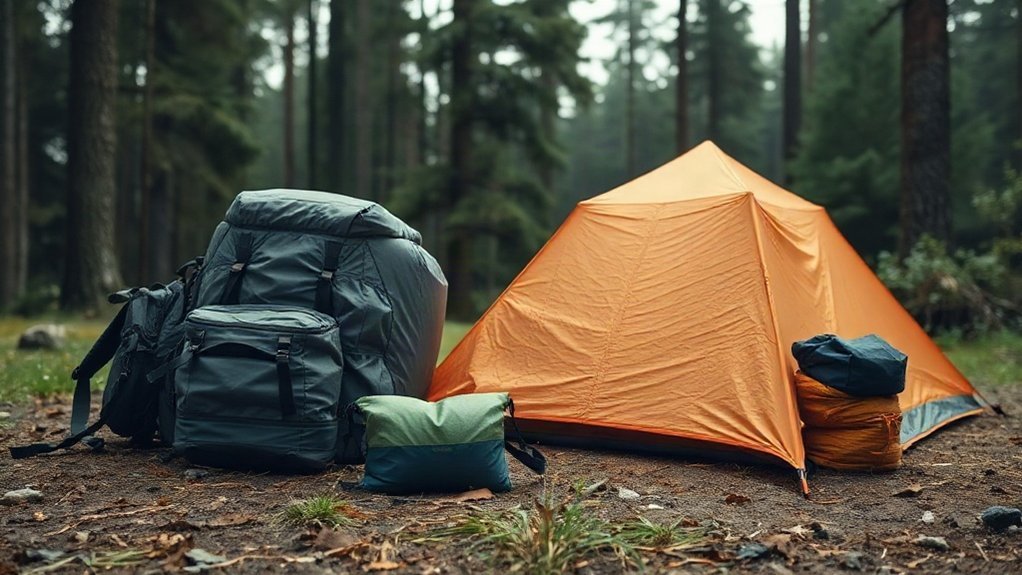
With an A-frame pitch, I can shelter myself, Moose, my sleeping gear, and other equipment beneath a tarp—unlike in the bivy, where Moose won’t fit. The open sides leave us and our gear exposed to animals and the elements, so I keep Moose’s leash on while we sleep. For two people and their gear, an 8-by-10-foot tarp is a minimum, while a 10-by-12-foot tarp offers more room for gear and storm pitching.
Shelter for You and Moose
A tarp can shelter both Moose and me, but its open sides leave us and our gear exposed. Moose fits beneath it, unlike inside my Outdoor Research Helium Bivvy. I’d choose an A-frame pitch for more room and side protection, then pull each guy line taut before sleeping.
- I can fit Moose, my sleeping setup, and essential gear under a suitably sized tarp.
- I’d bring a mesh bug net if insects are a concern, while checking the pack size and weight against my route.
- I’d keep Moose’s leash on overnight so he can’t wander off or chase animals.
For an enclosed option, I’d use a two-person tent. Moose can sleep inside on a separate quilt, without his harness or leash. The tarp gives me a lighter, open shelter; the tent offers a contained space for both of us when I want it.
Gear Exposure and Protection
Under an A-frame tarp, I can keep Moose, my sleeping setup, and essential gear together, but the open sides leave them exposed to wind, rain, and debris. The pitch gives me useful side protection and room to organize, yet it won’t enclose or secure everything like a tent. I keep items I need close by and store smaller gear in a stuff sack to limit exposure and make it easier to manage. For ultralight backpacking, that open design saves weight, but I have to accept less protection and stay alert to changing weather. Moose fits beneath the tarp, though I keep his leash on while sleeping so he can’t wander or chase animals. A breathable bivvy offers more coverage, but Moose won’t fit inside my Outdoor Research Helium Bivvy.
Can You Bring a Dog Along?
If you’re bringing a dog, a bivvy may be too cramped: Moose doesn’t fit inside my Outdoor Research Helium Bivvy. For thru-hiking, a minimalist shelter can simplify your kit, but sharing its tight interior with a dog isn’t practical. I’d consider how much room and control you need at camp before choosing. Bivvy sacks are strictly single-person shelters, so they leave no room for a dog.
- Bivvy: Moose can’t sleep inside mine, so he’d need to stay outside. That limits how closely I can keep him protected and settled.
- Tarp: Moose fits beneath one, but open sides leave room to wander or chase animals at night. I can keep his leash on while I sleep, though that restricts his movement.
- Two-person tent: I can give Moose a separate quilt, remove his harness, and let him off leash inside the zippered enclosure.
For trips with a dog, I find a tent generally offers more usable living space and containment. Check shelter durability and your dog’s sleeping needs before setting out.
When Does a Bivvy Make More Sense?

I’d choose a bivvy for fastpacking or low-impact trips when a quick, simple setup matters more than room to move. The 16-ounce Outdoor Research Helium can stand without stakes or a pole, though staking it adds support and headroom; I’d still use an air pad for ground insulation. Because a bivvy feels confining, I’d recommend it only if you’re comfortable sleeping close to unfamiliar surroundings—and not if you’re bringing Moose.
Fast, Minimal Setup
When speed and low weight matter more than room to move, a bivvy can be a practical choice for fastpacking or minimal-impact trips. I can skip a complicated pitch and settle in quickly, though I give up space and comfort. The Outdoor Research Helium Bivvy weighs about 16 ounces and needs no stakes or pole for basic setup. For a smoother night, I use these steps:
- Lay out my sleeping bag or quilt, pad, and straps before loading them into the bivvy.
- Add the hoop pole when I want more headroom.
- Stake the pole loop to support the pole and keep it from falling.
A 12-ounce tarp may weigh less before stakes, but I need more experience to pitch and adjust it. I choose the bivvy when simplicity matters most.
Fastpacking and Low Impact
For fastpacking, the Outdoor Research Helium Bivvy’s roughly 16-ounce weight and quick, stake-free setup can make it a practical choice when covering trail miles matters more than room to move. I’d consider it for a minimal-impact trip on the appalachian trail or pacific crest trail when I want a compact shelter and don’t need extra space. It encloses me and my sleep system, but I still carry an air pad for ground insulation.
| Shelter | Best fit | Trade-off |
|---|---|---|
| Bivvy | Fast, compact trips | Confined space |
| Tarp | Flexible camp setup | Open sides |
| Silnylon tarp | Lightweight coverage | Needs more setup |
I can pitch the bivvy without stakes or a pole; staking its pole loop adds headroom and stability. I’d choose a tarp when bringing Moose: he fits beneath it, not inside the bivvy.
When Familiarity Matters
A bivvy makes the most sense when I know the place and want a quick, simple setup; the roughly 16-ounce Outdoor Research Helium needs no stakes or pole, though staking it adds support and headroom.
Familiarity can matter more than saving a little weight. I’d choose a shelter I trust over an unfamiliar bivvy if close quarters or nearby sounds might unsettle me. For a known route, a bivvy can keep my bug-out bag light and support fast mountaineering trips.
- Before sliding in, I arrange my pad, quilt, and straps; I still use an air pad for ground insulation.
- I consider whether I’ll sleep comfortably in the bivvy on a cold night.
- I bring Moose only with a tarp: he fits beneath it, not inside the bivvy.
That choice preserves freedom without forcing a shelter that doesn’t suit the trip.
When Is a Tarp the Better Choice?

Choose a tarp when low weight and versatility matter more than full enclosure. The REI Quarter Dome tarp weighs about 12 ounces before stakes, and some options weigh around 5 ounces. I’d consider one when every ounce counts and I want a shelter that can serve several purposes: shade during a break, rain cover at camp, or protection overhead while I sleep.
An A-frame pitch creates sleeping space and some side protection, but I need to pitch it taut for reliable coverage. A tarp’s open sides leave me and my gear exposed to animals and the surrounding environment, so I’d choose it only when I’m comfortable with that trade-off. If I’m new to tarp camping, I’d practice setup before a trip; pitching takes more experience than using a bivvy. Terms such as gore-tex membrane, event fabric, and waterproof zipper describe other shelter components, but they don’t change a tarp’s main advantages: low weight and flexible use.
How Do Tents Compare as Alternatives?
When I want more room and privacy than a bivvy offers, I consider a tent, especially for trips with a dog. A tent’s zip door and vestibule give me a private place to sleep and keep gear outside. That extra space makes changing layers, using a headlamp, or settling in with a camp quilt easier than in a bivvy.
A tent’s zip door and vestibule offer more privacy and room for sleeping, changing layers, and keeping gear outside.
- Budget: The trekking-pole Lanshan Pro 2 weighs just over 2 lb and costs under $200. It can fit me and Moose, but pitching it on saturated, muddy ground can be difficult.
- Convenience: The freestanding Big Agnes Tiger Wall Ultralight Two-Person also weighs just over 2 lb, but costs around $500 or more. I can move it after setup, which simplifies camp placement.
- Trade-offs: Freestanding tents are generally easier to manage. Some ultralight models weigh under 1 lb, but cost $600–$800. For snow camping, I’d check suitability and conditions before choosing either tent.
Frequently Asked Questions
Do Bivy Sacks Cause Condensation Inside?
Yes, bivy sacks can develop condensation inside, especially when you breathe into the shelter, camp in humid conditions, or block airflow. I reduce moisture by keeping the face opening clear, choosing a breathable model, and avoiding damp campsites. A waterproof-breathable fabric helps, but it can’t eliminate condensation entirely. If you wake to moisture, air out your sleeping bag and bivy when possible. Good ventilation makes bivy camping more comfortable without limiting your freedom to travel light.
Can a Bivy Sack Be Used Without a Sleeping Bag?
Yes, you can use a bivy sack without a sleeping bag, but it won’t provide much warmth. I think of a bivy as a raincoat for your sleep system: it shields you from wind and moisture, but doesn’t replace insulation. On a mild night, a bivy alone may be enough; in colder conditions, add warm clothing or an insulated quilt. I’d check the forecast and test your setup before relying on it outdoors.
How Do You Clean and Store a Bivy Sack?
I clean my bivy sack by brushing off dirt, then washing it according to the care label, usually with lukewarm water and a mild, technical-gear cleaner. I avoid bleach, fabric softener, and harsh detergents, which can damage waterproof coatings. I rinse it thoroughly and air-dry it completely, away from direct heat. Before storing it, I check for damage. I keep it loosely packed in a cool, dry place, not compressed in its stuff sack.
Are Bivy Sacks Suitable for Winter Camping?
Yes—a bivy sack can suit winter camping, but it’s no magic fortress against the cold. I’d choose a model rated for the expected conditions, with a waterproof, breathable shell and enough room for my sleeping bag. I’d pair it with an insulated sleeping pad, warm layers, and a suitable sleeping bag, then check the forecast and campsite exposure. In severe weather or deep snow, I’d prefer a tent for more protection and space.
Do Bivy Sacks Protect Against Insects?
Yes, a bivy sack can protect you from insects if it has intact mesh panels and you close its openings securely. I’d check that the bug net covers your face and that zippers seal fully; small gaps can let mosquitoes or ticks in. Some models offer little or no insect protection, so inspect the design before buying. For added freedom to sleep outdoors, pair your bivy with repellent and choose a clear, dry campsite.
Conclusion
A bivy sack is usually lighter than a tent-and-tarp setup, but weight isn’t the only factor I consider. On a dry, calm overnight hike, I’d choose a bivy to save space and pack weight. For a rainy trip with a dog, I’d take a tarp or tent for room and better coverage. I match shelter to conditions, comfort needs, and the forecast. That way, I carry only what I need without sacrificing protection when the weather turns.
References
Bivy Sacks, https://www.rei.com/learn/expert-advice/bivy-sacks.html
How to Choose a Backpacking Tent, https://www.rei.com/learn/expert-advice/backpacking-tent.html
How to Choose a Backpacking Tarp, https://www.rei.com/learn/expert-advice/backpacking-tarp.html
1 comment