How Can You Choose Affordable Knife Sharpening Stones Without Sacrificing Quality?
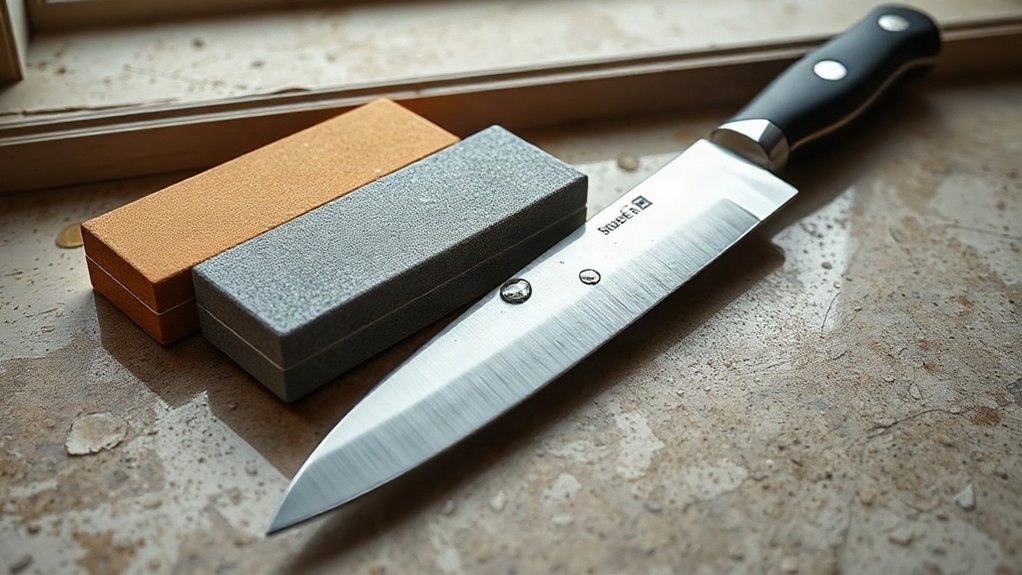
I’d start with two plated diamond stones: a 220–320-grit option for repairs and dull edges, then an 800–1,200-grit stone to refine the apex. They cut quickly, need no soaking, resist dishing, and handle any steel. For high-carbide super steels, I’d choose bonded diamond for finer sharpening; other blades may suit a 2,000-grit ceramic stone. Buy only what your knives need, then add a 6-micron strop if useful. I’ll explain how to match each choice to your sharpening needs.
Key Takeaways
- Choose a two-stone plated diamond kit: 220–320 grit for repairs and dull edges, then 800–1,200 grit for refining.
- Match the abrasive to the steel; diamond handles high-carbide steels, while a 2,000-grit ceramic stone suits many other blades.
- Compare durability and upkeep, not price alone; plated diamonds resist dishing and need no soaking, unlike some cheaper stones.
- Start with a quality compact kit, then add stones only when needed; a 1 × 6-inch bonded diamond stone typically costs $70–$100.
- For extra refinement, add affordable 6- and 1-micron diamond strops instead of buying a large collection of stones.
Start With Two Diamond Sharpening Stones
I’d start with two plated diamond stones: a coarse stone around 220–320 grit to shape a dull edge and raise a burr, then a fine stone around 800–1,200 grit to refine it. Use the coarse stone until the edge feels sharp, making sure you’ve reached the apex along its full length before moving on. Then refine the edge with the fine stone; grit labels can vary by manufacturer.
This compact pair gives you a practical, affordable setup without locking you into a complicated routine. Plated stones work on any steel, cut quickly, need no water, and resist dishing. That Diamond plate durability means less fuss and more freedom to sharpen wherever you work. Focus on steady sharpening angle control, and add diamond strops later if you want to refine the edge further.
Match Diamond Grit to the Sharpening Job
I use a 220–320-grit diamond stone to repair a dull edge, shape the blade, and raise a burr. Once the knife feels sharp, I switch to an 800–1,200-grit stone to refine the edge. I’ll cover how to match each grit to the job, since labels can vary by manufacturer.
Coarse Grit for Repairs
When a blade is badly dull or needs reprofiling, I reach for a 220–320-grit plated diamond stone to restore the edge quickly. This coarse grit suits blade reprofiling, chipped edge repair, and reaching the apex without wasting time. I work until I raise a burr along the full edge, then check that the blade feels sharp before changing stones. Plated diamond cuts any steel, needs no soaking, and resists dishing, so I can handle repairs with less mess and fuss. It’s especially useful on hard, high-carbide super steels that ceramic abrasives may struggle to grind. For an affordable, dependable option, I’d consider a 1 × 6-inch bonded diamond stone, typically $70–$100. Cheaper bonded stones may wear quickly, costing you time and freedom to sharpen when you need.
Fine Grit for Refinement
Once a 220–320-grit stone has raised a burr and reached the apex, I switch to an 800–1,200-grit plated diamond stone to refine the edge. Diamond cuts every steel, including high-carbide super steels that ceramic abrasives can struggle to finish. If I’m sharpening those steels beyond 1,000 grit, I choose bonded diamond; a 3,000-grit stone makes a practical next step. For most other blades, I can use a 2,000-grit Shapton Kuromaku ceramic stone for a finer finish without soaking. I don’t buy finer stones automatically: 3–6-micron diamond stropping supports apex burr removal and controlled edge polishing, while a 1-micron strop can add polish. I match refinement to my cutting needs, so you can spend less and keep your sharpening setup simple, portable, and ready for the work ahead.
Choose a Stone for Your Knife Steel
Choose a sharpening stone that matches your knife steel: ceramic splash-and-go stones suit most standard steels for finer work, and the Shapton Kuromaku 2,000-grit is a solid option. I check steel compatibility before buying; the right abrasive helps me refine an edge without paying for features my knife doesn’t need.
- For standard steels, I’d start with a coarse and a fine plated diamond stone, then add ceramic only when I want a smoother finish.
- For modern high-carbide or super steels, I choose diamond abrasives. They cut hard carbides more effectively than ceramic and can refine the bevel and apex.
- If I need finer than 1,000 grit on high-carbide steel, I choose bonded diamond to preserve edge geometry.
A quality 1 × 6-inch bonded diamond stone usually costs $70–$100; larger stones may reach $200 or more. This lets me build a setup around my steel and budget.
Avoid Soaking Stones That Wear and Dish
After matching the abrasive to your steel, consider how much upkeep the stone needs. Cheap aluminum oxide soaking stones and silicon carbide oil stones can tie you to prep and cleanup. They need soaking or oil, make a mess, and wear or dish quickly because they’re soft. That poor Stone durability can cost you time and freedom.
A dished stone makes it harder to hold a steady sharpening angle. Its soft surface may let the knife overangle, undoing your work in one pass. You’ll also need regular surface flattening to keep the stone level. Many aluminum oxide models pair 1,000- and 6,000-grit faces, a combination that’s often too fine for beginners. I’d consider a plated diamond stone instead: it needs no soaking or water, won’t dish, and cuts quickly without the mess.
Build a Small, Affordable Sharpening Kit
I’d start with a 220–320-grit diamond stone to restore a dull edge, then move to an 800–1,200-grit stone once the knife feels sharp. Diamond stones cut quickly, need no soaking, and resist dishing. Before buying more stones, I’d add 6- and 1-micron diamond strops to remove the burr and refine the edge.
Start With Two Stones
You can build an effective sharpening kit with just two stones: start with a coarse 220–320-grit stone to profile a dull edge, raise a burr, and sharpen the full edge, then move to an 800–1,200-grit stone to refine it. I move on only when the knife feels sharp; grit labels can vary by manufacturer, so judge results, not numbers alone.
- Choose plated diamond stones: they cut many steels quickly, need no soaking, and resist dishing.
- Keep your sharpening angle steady on both stones for a consistent edge.
- Follow each maker’s stone care guidance to protect your investment.
This compact pair handles most sharpening needs without tying you to a large collection. You’re free to keep your kit simple, practical, and affordable as your skills grow.
Add Diamond Strops Later
Once you have your two diamond stones, add strops only when you want more refinement. I’d start with 220–320 grit and 800–1,200 grit stones, then choose a 3–6-micron diamond strop. Six microns offers a versatile everyday option, helping refine the apex and remove lingering burrs. This simple burr removal technique improves an edge without requiring more stones.
| Addition | Purpose |
|---|---|
| 6-micron strop | Everyday refinement |
| 1-micron strop | Finer polish |
| ¼-micron strop | Optional steel-specific finish |
| 1/10-micron strop | Optional extra refinement |
If you want hair-whittling sharpness, add a roughly 1-micron strop next. Some stainless steels may benefit from still finer abrasives, but you can sharpen any knife with 1 micron. This diamond strop progression lets you build a capable, affordable kit at your own pace; two stones plus 6- and 1-micron strops suit most people.
Add Strops or Finishing Stones When Needed
After a coarse and fine diamond stone, I add a 3–6-micron diamond strop to clear remaining burrs and refine the edge; 6 microns makes a versatile everyday choice. This step supports burr removal and apex refinement without locking you into an expensive stone collection.
A 3–6-micron diamond strop helps remove burrs and refine the apex, with 6 microns making a versatile everyday choice.
- If I want greater sharpness, I follow with a strop around 1 micron; it can help many steels reach hair-whittling sharpness.
- Some stainless steels may benefit from a ¼- or 1/10-micron strop after that, though 1 micron can still leave a sharp edge.
- I buy finer stones only when my cutting needs call for a smoother bevel. For most steels, a Shapton Kuromaku 2,000-grit ceramic splash-and-go is practical. For high-carbide super steels, I choose bonded diamond finer than 1,000 grit.
Frequently Asked Questions
What Are the Best Budget Sharpening Stones?
I’d choose the $15 Amazon Basics whetstone for a proven low-cost buy; testing showed a 207.25% sharpness increase. For a fuller beginner kit, I’d pick the King Whetstone Starter Set, typically $42–$53, with 1,000- and 6,000-grit sides, a nonslip base, and an angle guide. These Affordable whetstone brands offer accessible options, while plated diamond pairs make durable sharpening stones. I’d avoid flimsy soaking stones and choose what best fits your budget and sharpening style.
Are Cheap Whetstones Okay?
Yes, cheap whetstones can work: one $15 stone outperformed pricier options in sharpness testing. I’d judge a budget stone by its cutting results, not its price, and check its budget stone durability before buying. For affordable sharpening consistency, I’d choose a stable base and useful grit range; a dull knife may need a coarser stone first. You’ll have more control if you avoid stones that wear quickly or feel messy to use.
Should I Use 400 Grit or 1000 Grit Whetstones First?
I’d start with 400 grit if your knife’s very dull, chipped, or needs edge restoration; it removes metal quickly. For a merely dull blade, I’d begin with 1,000 grit, which works more slowly. With either choice, I’d sharpen until the entire edge feels sharp before moving finer. Then I’d follow a coarse stone with a finer one to smooth and polish the edge. This grit progression gives you control without limiting your options.
What Factors Should I Consider When Choosing a Sharpening Stone?
I’d choose a sharpening stone by matching its grit to your knife’s condition: coarse grits repair damaged edges, while medium grits refine them. Consider Stone material and steel compatibility; diamond cuts quickly across steels, while ceramic suits most knives. Check Stone size for comfortable, stable strokes, plus a nonslip base or angle guide if you want easier control. I’d also weigh maintenance and tested performance, since higher prices don’t always deliver better results.
Conclusion
I choose sharpening stones by prioritizing reliable performance over a crowded kit. Two diamond stones—one coarse, one fine—can handle most routine repairs and touch-ups without soaking or frequent flattening. That simplicity matters: a knife’s edge forms where the two bevels meet, so consistent sharpening beats buying every grit. Start with stones suited to your steel, then add a strop or finishing stone only if you need a keener polish. You’ll save money and keep your knives ready for dinner.