What Grit Size Should You Choose for Knife Sharpening Stones?
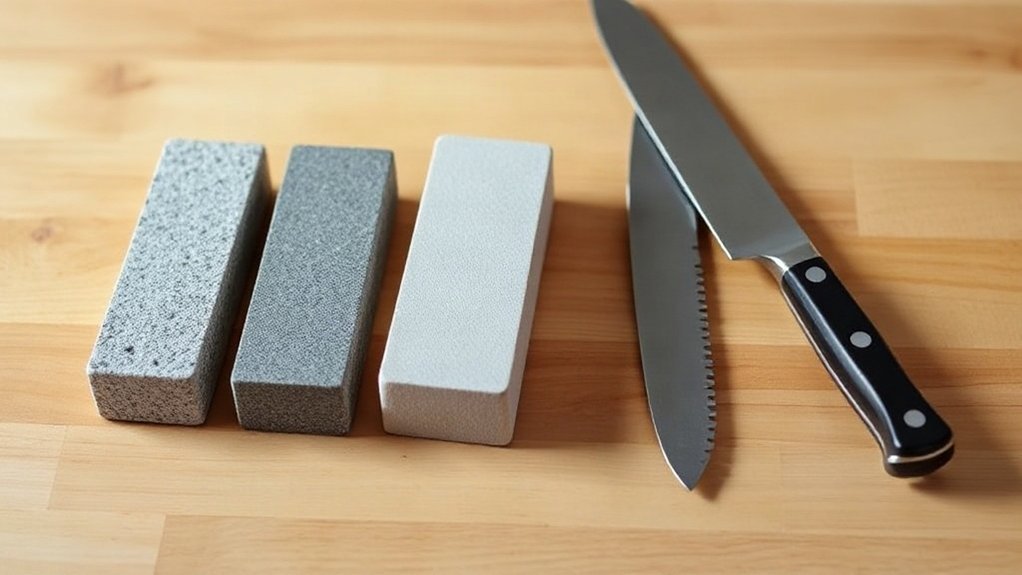
I choose sharpening grit based on your knife’s condition and the edge you want. For chips or major repairs, start with 150–400 grit; use 800–1,000 grit for routine sharpening and a practical working edge. If you want a smoother finish, follow with 1,500–2,000 grit, then 3,000–5,000 grit or higher. You don’t need the finest stone for everyday cutting. I’ll explain how to match a grit progression to your knife and its intended use.
Key Takeaways
- Choose 200–400 grit for chipped, damaged, or very dull edges; use 150–220 grit for major repairs.
- For routine sharpening, choose 800–1,000 grit; this range suits most kitchen knives and can provide a practical working edge.
- Refine a medium-grit edge with 1,500–2,000 grit, or use 3,000–5,000 grit for a smoother, more polished finish.
- Use 6,000–8,000 grit only when you want a finer polish; high grit is optional for everyday cutting.
- Match grit to the knife’s condition and intended use, and stop once the edge performs well.
What Grit Should You Use for a Knife?
What grit should you use for a knife? I match the stone to the edge’s condition, so you can choose the repair you need and get back to work. For most dull knives, I start with a medium-coarse 220–300-grit stone. If the blade has chips or needs heavy reshaping, I reach for a stone below 220 grit.
For routine sharpening, I use an 800–1,000-grit stone; it can create a practical edge on its own. Then I refine with 1,500–2,000 grit, or polish further with 3,000–5,000 grit. A 6,000–8,000-grit stone adds a highly polished finish, but it won’t repair damage efficiently. My three-stone setup is 300, 1,000, and 5,000 grit. Choosing sharpening angle and sharpening steel type also matters, but start by evaluating your knife.
How Do Sharpening Grit Numbers Work?
Once you’ve chosen a stone for your knife, its grit number tells you how coarse or fine the surface is: lower numbers remove metal faster, while higher numbers refine and polish the edge.
| Grit range | Surface | Typical use |
|---|---|---|
| 200–600 | Coarse | Fast metal removal |
| 800–2,000 | Medium | Routine sharpening |
| 3,000+ | Fine | Honing and polishing |
I use these ranges as a guide, not a strict rule. Grit rating standards can vary between manufacturers, so two stones with the same number may feel different. That’s because abrasive particle sizing and labeling aren’t perfectly uniform across brands. Before buying, I’d check a comparison chart to see how a stone’s rating relates to others. This lets you choose freely, without relying on a number alone, and match the stone’s surface to the sharpening task you have in mind.
Choose Coarse Grit for Chips and Repairs
When I repair chips or nicks, I choose a coarse stone to remove damaged metal quickly. For major repairs, I use 150–220 grit; for less severe damage, I prefer 220–400 grit. I’ll explain how to choose the right grit and move on to refining the edge.
Repairing Chips and Nicks
For chips, nicks, or heavy reshaping, start with a coarse stone around 150–400 grit; the lower the grit, the faster it removes metal. I match the stone to chip severity: for most repairs, I begin around 220–300 grit, while substantial damage may call for a stone below 220. A 200–400-grit stone can grind past damaged steel and establish a fresh edge; 500–600 grit works when damage is minor or I’m continuing to reshape. My repair technique is to work the damaged section until the edge is even, then refine it with an 800–1,000-grit stone. If I want a smoother finish, I follow with 3,000–5,000 grit. I keep coarse stones for repairs, not routine touch-ups, so I don’t remove unnecessary metal or shorten my knife’s life.
Choosing a Coarse Grit
I choose a coarse stone—roughly 150–400 grit—for chipped, nicked, or extremely dull knives that need repair or reshaping. A 200–400-grit stone removes metal quickly, helping me establish a new edge, but it leaves conspicuous scratches. For smaller chips or less severe damage, I prefer a medium-coarse stone around 220–300 grit; it removes material with more control and helps me avoid unnecessary reshaping.
I keep coarse stone pressure light and maintain sharpening stroke consistency, so I can guide the repair without grinding away more steel than needed. Once the damage is gone, I move to a finer stone, such as 800–1,000 grit, to refine the edge. I save coarse grits for repairs, not routine maintenance: rapid metal removal can shorten a knife’s lifespan. This choice lets me restore a blade while preserving steel for future sharpening.
Use Medium Grit for Everyday Sharpening
For routine sharpening, I recommend a medium-grit stone of about 800–2,000 grit. For Everyday edge maintenance, choose 800–1,000 grit when your knife needs a refresh. It removes metal efficiently while preserving more of the blade than a coarse stone. With a 1,000-grit stone, you can create a practical working edge on its own, so you don’t always need another stone.
Choose 1,500–2,000 grit when you want a more refined edge for precise slicing, such as cutting vegetables or filleting fish. My medium stone technique is simple: match the grit to the job and sharpen with control, so you can maintain your tools without overcomplicating the process. If your blade has chips or feels severely dull, start with a coarser stone instead of relying on medium grit alone.
Pick Fine Grit for a Smoother Edge
When I want a smoother cutting edge, I finish with a fine stone around 3,000 grit or higher. A 3,000–5,000-grit stone refines the edge after medium-grit sharpening, while 6,000–8,000 grit adds a finer polish. Fine stones remove little metal and work slowly, so I use them to finish—not repair or reshape—a blade.
Fine-Grit Finish
After a medium-grit stone sharpens the blade, I use a 3,000–5,000-grit stone to smooth and refine its edge. This fine finish removes little material, so I don’t rely on it to repair chips or reshape a dull blade. I move from the medium stone to fine grit, then use light strokes for burr removal. That final step helps me leave a clean, polished edge without giving up control of the process.
When I want a finer polish for precise cuts, I may choose a 6,000–8,000-grit stone, especially for a high-quality chef’s knife. Across the broader scale, stones from 2,000 to 6,000 grit create an extremely fine finish that reflects more light. Choose the level that suits your blade and edge retention needs.
Smoother Cutting Edges
A fine stone around 3,000–5,000 grit can make a medium-grit edge feel smoother in the cut. I use it to refine, not rebuild, an edge: fine stones remove little material and work too slowly for chips or reshaping. If your blade needs repair, start with a working grit around 1,000–3,000, then move to finer stones. That progression gives you control and a polished finish without wasting time.
A smoother edge can offer reduced drag as you slice and may improve Food release, especially with ingredients that cling to the blade. For a more polished result, I’d consider 6,000–8,000 grit on a high-quality chef’s knife or specialized blade. Finish with light strokes to clear the burr; too much pressure can roughen the refined edge and undo your careful work.
Progress From Repair to Polish
To move an edge from damaged to polished, start with a coarse stone around 150–400 grit to remove chips or reshape the bevel, then raise a burr. Lower grits cut faster but leave deeper scratches, so I move through a sharpening progression rather than jumping straight to polish.
> Start with a 150–400 grit stone to remove chips, reshape the bevel, and raise a burr before progressing to finer grits.
- At 800–1,000 grit, I refine the edge to practical working sharpness.
- At 1,500–2,000 grit, I refine further; 3,000–5,000 grit smooths the edge and reduces cutting resistance.
- At 6,000–8,000 grit, I create a polished edge; 6,000–10,000 can approach a mirror finish.
With each finer stone, I use lighter strokes to refine the edge and support burr removal. I can stop when the finish suits my goal; polishing is a choice, not a requirement for freedom at the cutting board.
Choose Grit by Knife Condition and Use
The right grit depends on both your knife’s condition and the edge you want. I use matching grit to knife condition as my starting point, then consider sharpening for cutting style. This gives you control without wasting effort.
| Knife condition | Grit | Best use |
|---|---|---|
| Chips or heavy damage | 200–400 | Remove metal and reshape |
| Very dull, intact edge | 220–300 | Restore the edge |
| Routine kitchen upkeep | 800–1,000 | Balance refinement and removal |
| Precise slicing or filleting | 1,500–3,000 | Sharpen for fine cuts |
If your knife needs reshaping, I begin coarse; for a merely tired edge, I choose medium-coarse. Most kitchen knives suit 800–1,000 grit. For precise work, I follow with 1,500–3,000 grit. You can choose a progression that fits your knife and tasks.
Use Higher Grit for a Smoother Finish
Once your knife has a sound working edge, move to a higher grit for a smoother finish. I use finer stones to refine the edge, not to rescue a dull or chipped blade. Their smaller abrasive particles remove less metal, so they work best after coarser sharpening.
- Choose 1,000–2,000 grit to refine a practical working edge.
- Try 3,000–5,000 grit for a smoother feel and a cleaner edge polish.
- Use 6,000–8,000 grit for a final polish; 6,000–10,000 grit can leave the edge visibly polished.
Let your needs guide your stone progression. You don’t have to chase the highest grit: a sharp 1,000-grit edge may be all you need for everyday cutting. I’d stop when the knife performs well, then move higher only if you want a finer finish. That keeps sharpening efficient and leaves you free to choose the balance that suits your knife and your work.
Frequently Asked Questions
What Grit Should I Use on My Knife Sharpening Stone?
For routine sharpening, I’d use a 1,000-grit stone; it can give your knife a dependable working edge by itself. If your blade’s chipped or very dull, start with 220–400 grit, then move to 1,000. For a finer finish, continue your grit progression to 3,000–5,000 grit, or 6,000–8,000 for extra polish. I’d also keep consistent sharpening angles, and treat grit ratings as approximate because brands vary.
Is 400 Grit and 600 Grit Enough to Sharpen Pocket Knives?
Yes, I find 400 and 600 grit enough to sharpen most pocket knives with a dull, mostly intact edge. I start with 400 grit to restore the bevel, then use 600 grit to refine it. This leaves a toothy edge that handles everyday cutting well. For damaged edge repair, I’d choose a coarser stone first. If you want a smoother finish, I’d follow with 1,000 grit or finer, depending on your pocket knife steel.
Should I Use 400 Grit or 1000 Grit Whetstones First?
I’d start with 400 grit if your knife is chipped, very dull, or needs reshaping; its faster cutting action repairs damage. For a moderately dull blade, I’d choose 1,000 grit to restore a usable edge while preserving more steel. Choosing the right grit for dull blades means matching the stone to the knife’s condition. If I begin with 400, I follow with 1,000. How sharpening angle affects results matters too: keep your angle consistent for a clean edge.
Is 1000 Grit Enough for Knife Sharpening?
Yes, 1,000 grit is enough to sharpen most dull kitchen knives and create a practical working edge. I use it for routine touch-ups because it sharpens efficiently without removing too much steel. The 1000 grit edge limitations show when a blade has chips or needs reshaping; start with 200–400 grit, then refine. For a smoother finish, add 3,000–5,000 grit. Your sharpening frequency factors include knife use, steel, and cutting habits, so choose a schedule that fits you.
Conclusion
I choose grit by matching the stone to the blade’s condition and the edge I want. For chips or major repairs, I start coarse; for routine sharpening, I reach for medium grit; and for a smoother, refined edge, I finish fine. I move through grits step by step, like climbing a ladder, rather than jumping straight to polish. With the right progression, I can restore a tired knife or tune a working edge without wasting effort—or removing more steel than necessary.