How Do You Choose Knife Sharpening Stones for Different Blade Types?
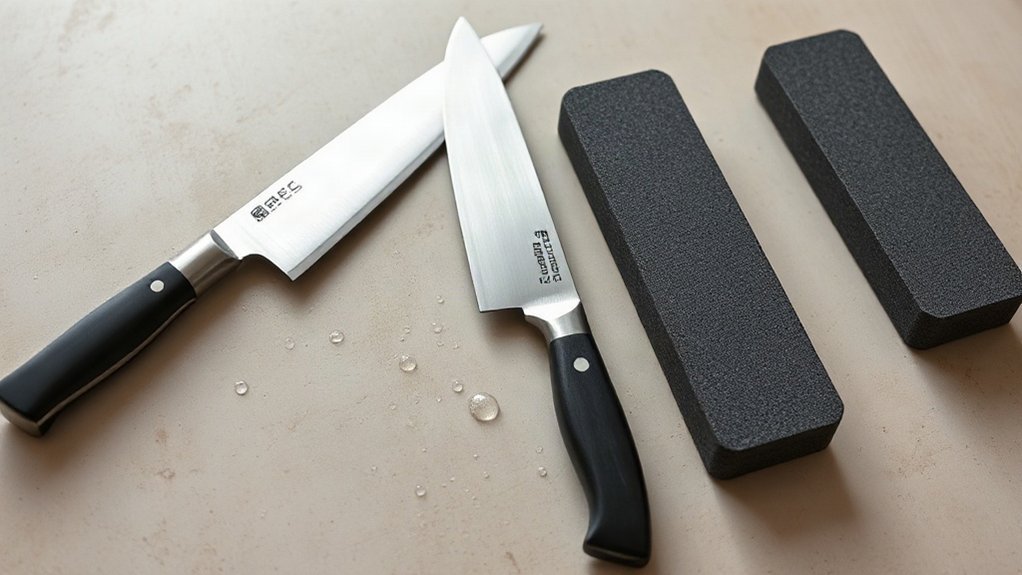
I choose a sharpening stone by matching its length to the blade, its grit to the edge’s condition, and its material to the steel and maintenance I’m willing to do. For a dull or chipped knife, I start coarse, then move to 1,000 grit and finer stones to refine the edge. Water stones cut quickly but need flattening; diamond stones suit hard steel and repairs, while ceramic and oil stones offer convenient upkeep. I’ll explain how to choose a setup that fits your needs.
Key Takeaways
- Match stone length to the knife blade; about 2 inches wide suits most knives, while wider blades need enough width to support the full edge.
- For pocket or portable knives, choose a compact 3- to 6-inch stone; check blade profile and handle clearance.
- Start with 1,000 grit for a dull but undamaged blade; use 300–800 grit for chips or heavy repair, then refine at 1,000 grit.
- Choose 5,000 grit or higher to polish a sound edge; avoid fine stones for repairs because they remove metal slowly.
- Match material to the blade and upkeep: diamond suits hard steel, ceramic is splash-and-go, water stones cut quickly, and oil stones support long-term care.
Match a Sharpening Stone to Your Blade
Choose a stone that matches both your blade’s dimensions and its condition. For a knife, I recommend a stone at least as long as the blade; a 9-inch chef’s knife is easier to control on a stone at least 9 inches long and about 2 inches wide. For chisels and plane blades, prioritize width: a 2⅝-inch plane blade needs a stone at least 2¾ inches wide. Match the stone’s surface to your blade profile, and hold a steady edge angle as you sharpen. If you’re working with hard knife steel, a diamond stone can cut quickly and also flatten water stones. For a dull or chipped edge, start with a coarse stone, up to about 800 grit, then refine it. A 1,000-grit stone can create a usable edge; finer grits can polish it further.
Choose Sharpening Stone Grit by Blade Condition
Because the right grit depends on the blade’s condition, start with a coarse stone of up to about 800 grit to restore a very dull edge or remove chips; a 300-grit stone speeds up that heavy work. After reshaping, I move from coarse grit to a 1,000-grit stone, using light strokes to refine the working edge and remove the burr. If your blade is dull but undamaged, skip the repair step and begin at 1,000 grit; it can create a usable edge on its own. For a sound edge, I add a 5,000-grit-or-higher stone to refine it and reduce cutting resistance. Don’t assume finer is better: fine grit removes metal slowly, so repairing chips or heavy dullness can take many times longer. Choose the grit that frees you to work efficiently.
Pick Sharpening Stone Size for Your Blade
I match a sharpening stone’s length to my knife; a 9-inch chef’s knife is easiest to sharpen on a stone at least 9 inches long. For knives, I focus more on length than width, and a stone about 2 inches wide usually works well. For chisels and plane blades, I choose a stone at least as wide as the blade.
Match Stone Length to Blades
When you match a sharpening stone to a knife, length matters more than width. I recommend choosing a stone at least as long as your blade; it gives you room for smooth, comfortable strokes without constantly repositioning the knife. For a 9-inch chef’s knife, I’d pick a stone at least 9 inches long. Common full-size stones measure 8 inches, while 10- to 12-inch options offer more sharpening surface and greater freedom of movement.
Your sharpening posture also matters: a suitable length helps you keep a steady angle and work naturally. Don’t let blade flexibility distract you from choosing a stone that supports controlled strokes. If you need a portable setup, a 6-inch stone is compact, and 3- or 4-inch pocket stones fit a toolbox or tackle box for sharpening on the go.
Choose Width for Tools
For chisels and plane irons, width matters more than it does for knives: choose a stone at least as wide as the blade so it supports the full edge. I check the working surface, not just the stone’s overall dimensions, because support width helps maintain tool stability while I sharpen.
| Tool or stone | Width guidance |
|---|---|
| 2⅝-inch plane blade | Choose at least 2¾ inches |
| 9-inch chef’s knife | About 2 inches; prioritize length |
| 8-inch stones | Surfaces range from 2⅝ to 2¾ inches |
For knives, length usually matters more: a stone at least as long as the blade gives you room to work. I’d choose a wider option for broad tools, but you can select a compact stone when portability matters more than workspace.
Choose a Starter Stone Set for Your Budget
Start with a coarse stone to restore a dull edge quickly and a finer one to refine it. For a starter set, I’d choose the best option you can comfortably afford, then add stones only when your sharpening needs grow. Smart budget planning keeps you from paying for duplicate grits.
Start with a coarse stone, refine with a finer one, and add grits as your sharpening needs grow to avoid unnecessary costs.
- For simple, low-maintenance sharpening, I’d consider an 8-inch coarse/fine DuoSharp Plus diamond stone. Its continuous-grit area helps me reach fine points.
- To spend less on an oil-stone setup, I’d pair one or two India stones with an Arkansas stone.
- The Norton IM200S bundles Coarse Crystolon, Medium India, and Soft Arkansas stones in an oil-retaining housing.
- If you choose water stones, remember to budget for flattening. The Double-Sided 8 Sharpening Supplies set includes four grits, from 220 to 8000, plus a flattening stone.
I’d build gradually, keeping your choices flexible and avoiding extras you don’t need.
Compare Stone Materials for Your Sharpening Needs
I compare water, ceramic, diamond, oil, and natural stones by sharpening speed, upkeep, and finish. To match a stone to your blade, I consider its steel hardness and how much maintenance you’re willing to do. Each material has trade-offs, so I’ll help you choose what suits your needs.
Compare Stone Materials
Choosing the right stone material depends on your blade, budget, and sharpening routine. I compare how each stone works so you can choose the setup that gives you more freedom and less hassle.
- Water stones: They cut quickly and often cost less. Many need about 10 minutes of soaking and frequent flattening as they wear and dish.
- Ceramic stones: A splash of water gets them ready. They last longer than water stones, but usually cost more.
- Diamond stones: They cut quickly, stay flat, handle hard steel, and flatten water stones. Their coating can wear, and they may leave deep scratches.
- Oil and natural stones: Oil stones are affordable and practical, but slower. Natural stones offer a distinctive feel and finish, though they vary and can challenge beginners.
I weigh Stone maintenance and abrasive consistency against cost before choosing.
Match Stone to Blade
Match the stone to both your blade’s steel and its size. For hard steel, I’d choose diamond: it cuts fast and handles tough alloys, but it can leave deep scratches and wears over time. I use water stones when I want quick sharpening and polishing grits up to 8,000; just remember they need flattening and may need a 10-minute soak. Ceramic stones need only a splash of water, last longer, and suit hard professional knives, though they cost more. For a practical, lower-cost start, I’d pair an India stone with a Soft Arkansas stone, accepting slower work.
Then consider your blade profile and handle clearance. I choose a stone at least as long as a knife blade, so I can sharpen smoothly without cramped strokes. For chisels or plane blades, I match the stone’s width to the blade.
Use Diamond Stones for Fast Repairs and Hard Steel
When you need a quick repair or have very hard steel, I reach for a diamond stone: it removes metal fast and tackles steels that can be slow to sharpen on softer stones. It gives you room to restore an edge without being tied to a slow, fussy process.
- I start with coarse grit to repair chips or reshape a damaged edge.
- I switch to finer grit to refine the edge and smooth the grind.
- I use light pressure; sharpening pressure control helps prevent deep scratches and limits diamond coating wear.
- I value a stone that stays flat and can flatten water stones, too.
Choose diamond when speed and hard steel matter most. You’ll get a practical, low-maintenance tool that helps you get back to cutting with less delay.
Choose Oil Stones for a Simple, Affordable Setup
If you want a simple, affordable setup, I’d choose oil stones: they’re easy to use and practical, though they sharpen more slowly than other stones. They give you a straightforward way to maintain many blades without spending much or relying on complicated equipment. For a starter kit, I’d pair one or two India stones with an Arkansas stone. If you want everything together, the Norton IM200S includes Coarse Crystolon, Medium India, and Soft Arkansas stones, each 8 × 2 inches, in an oil-retaining housing. For more room to work, consider the Norton IM313CIS, with three 11½ × 2½-inch stones. Oil-stone grit ratings can be confusing, so I’d consult a guide to sharpening-stone materials before choosing grades. Plan for long term care, including sensible oil storage, and you’ll keep your setup ready for independent upkeep.
Pick Water or Ceramic Stones for Refining Edges
For fast sharpening and fine polishing, I’d choose water stones, soaking traditional ones for about 10 minutes before use. They give you control over edge polishing, while ceramic stones offer a splash-and-go option that lasts longer, especially for hard or professional knives.
Water stones offer precise polishing after a brief soak, while durable ceramic stones let you sharpen right away.
- I’d start with 1,000 grit for a dependable working edge.
- I’d move to 5,000 grit or higher to refine it and reduce cutting resistance.
- For chips or a very dull blade, I’d begin around 300 grit; fine stones remove metal too slowly for repairs.
- I’d flatten water stones regularly as part of stone maintenance, since uneven wear creates hollows and makes consistent sharpening harder.
Choose the setup that fits your pace: soak and sharpen, or grab a durable ceramic stone and get straight to work.
Frequently Asked Questions
Should I Use 400 Grit or 1000 Grit Whetstones First?
I’d choose 400 grit first if your knife is very dull, chipped, or needs reshaping; it removes metal faster. For a somewhat dull knife that just needs routine sharpening, I’d start with 1,000 grit, which can create a usable edge on its own. Choosing a starting grit means Matching grit to blade condition, not blade type. If you begin with 400, follow with 1,000 to refine the scratches and improve the edge.
What Are the Three Most Common Types of Sharpening Stones?
The three most common sharpening stones are water stones, oil stones, and diamond stones. I’d also consider ceramic stones, which offer a durable, low-maintenance option. Water stones sharpen quickly but need water and regular flattening. Oil stones use oil, cost less, and work more slowly. Diamond stones cut fast, handle hard steel, and can flatten water stones, though their surfaces may wear. Choose whichever best fits your blades, budget, and sharpening routine.
Which Is Better for Sharpening Knives, a Whetstone or a Diamond Stone?
Neither stone is universally better; I’d choose based on your priorities. I prefer diamond for fast sharpening, easy upkeep, and blade material compatibility, especially with very hard steel. A whetstone, including water and oil stones, gives me finer polishing and a traditional feel, but water stones need flattening and often soaking. For edge retention comparison, remember that the stone doesn’t determine how long an edge lasts; steel, sharpening angle, and use matter more.
What Is the Difference Between a 1000 Grit and a 3000 Grit Sharpening Stone?
A 1,000-grit stone removes metal faster, so I use it to sharpen a dull blade and create a usable edge. How 1000 grit stones shape a working edge comes down to efficient sharpening, even on its own. A 3,000-grit stone works more slowly, refining that edge rather than quickly restoring it. When 3000 grit stones improve edge refinement, I use one after 1,000 grit for a smoother finish. You can choose either—or both.
Conclusion
I choose sharpening stones by matching grit, size, and material to the blade’s steel and condition. For a dull knife, I start coarse; for routine care, I reach for a medium stone, then refine the edge as needed. I also consider my budget and setup: diamond stones repair quickly, oil stones keep things simple, and water or ceramic stones polish well. With the right stone, sharpening feels less like a chore and more like giving a trusted knife its second wind.