Which Knife Sharpening Stones Are Best for Beginners?
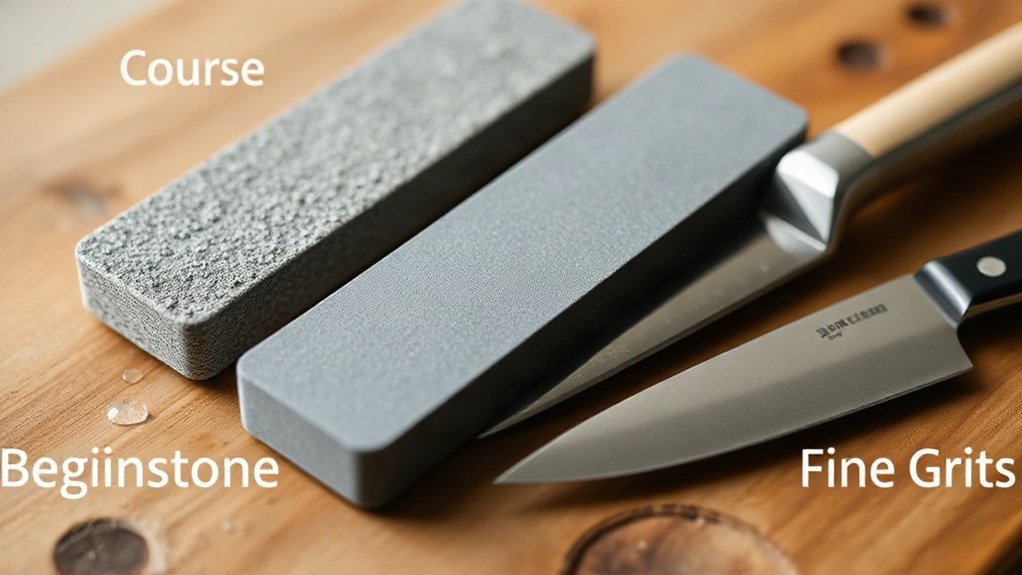
I recommend a coarse and fine diamond stone set for most beginners: start around 220–320 grit to restore a dull edge, then move to 800–1,200 grit to refine it. Diamond stones cut quickly, suit hard steels, need no soaking, and won’t dish. Choose a stone at least as long as your blade; for a 9-inch chef’s knife, look for one at least 9 inches long and about 2 inches wide. I’ll cover other stone types and useful upgrades next.
Key Takeaways
- Start with a coarse 220–320-grit stone to reshape a dull edge and raise a burr, then refine it with an 800–1,200-grit stone.
- Beginner-friendly diamond stones cut quickly, need no soaking, resist dishing, and work well with hard steels.
- Choose a stone at least as long as your blade; an 8-inch stone suits many kitchen knives.
- Avoid soft stones that dish or wear quickly, since uneven surfaces make it harder to maintain a consistent sharpening angle.
- Add 6- and 1-micron diamond strops for extra refinement, but a sharp edge does not require endless upgrades.
Choose Your First Sharpening Stones
Start with a coarse and a fine stone: use 220–320 grit to reshape a dull edge and raise a burr, then 800–1,200 grit to refine it. That pair gives you control without locking you into a complicated setup. Plated diamond stones make a practical first choice: they cut quickly, handle hard steels, won’t dish, and need no soaking. Get your edge sharp on the coarse stone before switching; the finer stone removes metal too slowly for efficient reshaping.
Choose a stone long enough for your knife. An 8-inch stone suits many kitchen knives, while a knife around 9 inches is easier to sharpen on a stone at least that long. If you prefer water stones, choose a set with a flattening stone. Learn Sharpening angle basics and burr detection methods to guide your practice and sharpen independently.
Start With Coarse and Fine Diamond Stones
For a simple, low-maintenance setup, I recommend a coarse plated diamond stone around 220–320 grit and a fine one around 800–1,200 grit. The coarse stone quickly reshapes a dull edge, helps establish the apex, and lets you establish burr along the full edge. Keep working until the entire edge is apexed and feels sharp; the fine stone can’t rescue an edge that isn’t sharp yet.
Then use the fine stone to refine apex and leave a smoother, keen edge. Grit labels vary by manufacturer, so treat these ranges as guides. Diamond stones handle hard steels, don’t dish out, and need no soaking or water, freeing you from much of the upkeep other stones require. If you want extra polish, follow with 6-micron and 1-micron diamond strops to remove burr remnants and further refine the edge.
Match Stone Size to Your Blades
Once you’ve chosen your stones, match their size to the blades you’ll sharpen. For knives, I prioritize length over width: a stone at least as long as the blade gives you room to sharpen smoothly, without awkward repositioning. That blade length fit makes practice easier and keeps you in control.
For a 9-inch chef’s knife, I’d choose a stone at least 9 inches long and about 2 inches wide. Many full-size stones measure 8 inches, while 10- to 12-inch options offer extra working room. A 6-inch stone feels compact, but it won’t suit every blade. If you value pocket portability, stones under 6 inches—often 3 or 4 inches—can travel easily for quick touch-ups.
For chisels and plane blades, I also check width: a 2⅝-inch blade needs a stone at least 2¾ inches wide.
Compare Diamond, Oil, and Water Stones
Which stone suits a beginner best depends on how much upkeep you’re willing to do. I’d choose diamond for freedom and speed: it handles hard steels, needs no soaking, won’t dish, and can flatten water stones. Start with 220–320 grit for shaping, then 800–1,200 grit to refine.
| Stone | Cutting speed | Maintenance needs |
|---|---|---|
| Diamond | Fast | Low; no soaking |
| Oil | Slow | Simple; use oil |
| Water | Fast | Flatten regularly |
Oil stones are easy and affordable, though slower. Pair an India stone with Soft Arkansas; Norton’s IM200S combines three 8 × 2-inch stones, while the IM313CIS offers larger 11½ × 2½-inch stones. Water stones cut quickly and polish finely, but need flattening. The Double-Sided 8 set covers 220–8,000 grit and includes a flattening stone. I’d weigh cutting speed against maintenance needs before choosing.
Add 6- and 1-Micron Diamond Strops
After you’ve sharpened with coarse and fine diamond stones, add a 6-micron diamond strop to remove lingering burrs and refine the edge. I use it as a practical next step before buying finer stones: it’s a versatile grit that gives you more control over your sharpening routine.
- 6 microns: Clears remaining burrs and begins apex refinement.
- 1 micron: Refines the apex further and can produce hair-whittling results on many steels.
- Together: These strops, paired with coarse and fine diamond stones, suit most people.
You can stop there and enjoy a capable edge without chasing endless upgrades. If you’re sharpening some stainless steels and want hair-whittling sharpness, try a finer ¼- or ⅒-micron strop after the 1-micron pass. Let your results—not a rigid progression—guide your choices, so you’re free to tailor the edge to your needs.
Avoid Cheap Stones That Dish Quickly
A coarse and fine diamond setup plus a strop can cover most sharpening needs, but a cheap stone may make the job harder. I’d avoid soft aluminum oxide soaking stones and silicon carbide oil stones, even though they can sharpen a knife. Their weak Wear resistance lets them dish quickly, while poor surface stability leads to uneven wear. You’ll need to flatten them often, and a changing surface can make it harder to hold a consistent angle. Their softness also lets you overangle the blade easily, undoing your sharpening work in one pass.
Some aluminum oxide stones pair 1,000- and 6,000-grit faces. That range may sound versatile, but it’s too fine for many beginners: start with a coarse stone to shape and apex a dull edge, then refine it. A durable setup gives you more freedom and fewer interruptions.
Frequently Asked Questions
Should I Use 400 Grit or 1000 Grit Whetstones First?
Use a 400-grit stone first if your knife’s dull or damaged; it removes metal faster and helps rebuild the edge. Starting with a 400 Grit Stone, I’d sharpen until I raise a burr along the entire edge and the knife feels sharp. Then I’d move to a finer stone if I want a smoother finish. Choosing 1000 Grit for Routine Sharpening makes sense when your knife’s already sharp and needs only refinement.
Is Diamond or Ceramic Better for Sharpening?
I’d choose Diamond Stones for fast, low-maintenance sharpening, especially if you use hard, high-carbide steel. They cut those carbides effectively, don’t dish out, and need little upkeep. Ceramic Stones suit finer work on most steels; splash them with water, and you’re ready. However, they can take longer on super steels. For finer-than-1,000-grit sharpening on high-carbide blades, I’d use bonded diamond rather than ceramic, so you can sharpen freely without fighting stubborn steel.
Should a Knife Sharpening Stone Be Wet or Dry?
A sharpening stone doesn’t always need water; I’d match its use to the stone type. Don’t worry about complicated prep: plated diamond stones work dry, while ceramic splash-and-go stones need only a little water. Never soak those ceramics. With older aluminum oxide soaking stones, follow the maker’s guidance for Soak time; oil stones need oil instead. I’d choose your lubrication choice freely, and keep a flattening stone handy for water stones.
How to Pick a Sharpening Stone?
I’d pick a sharpening stone by matching it to your blades, budget, and tolerance for maintenance. For most knives, I’d start with a 220–320-grit stone for repairs and an 800–1,200-grit stone for refining; skip duplicate grits you won’t use. Choosing stone size means selecting a stone at least as long as your knife blade. Matching stone hardness matters too: diamond stones suit hard steel and need little upkeep, while water stones require flattening.
Conclusion
I’d start with a coarse and fine diamond stone, sized to fit my blades, then add 6- and 1-micron strops when I’m ready. Oil and water stones can work, too, but cheap stones that dish quickly turn sharpening into an expensive lesson in false economy. I’d rather buy one reliable setup than collect bargain slabs like evidence of my optimism. A sharp knife rewards patience; a warped stone rewards only the seller.