How Can You Choose Lightweight Multitools for Hiking and Backpacking?
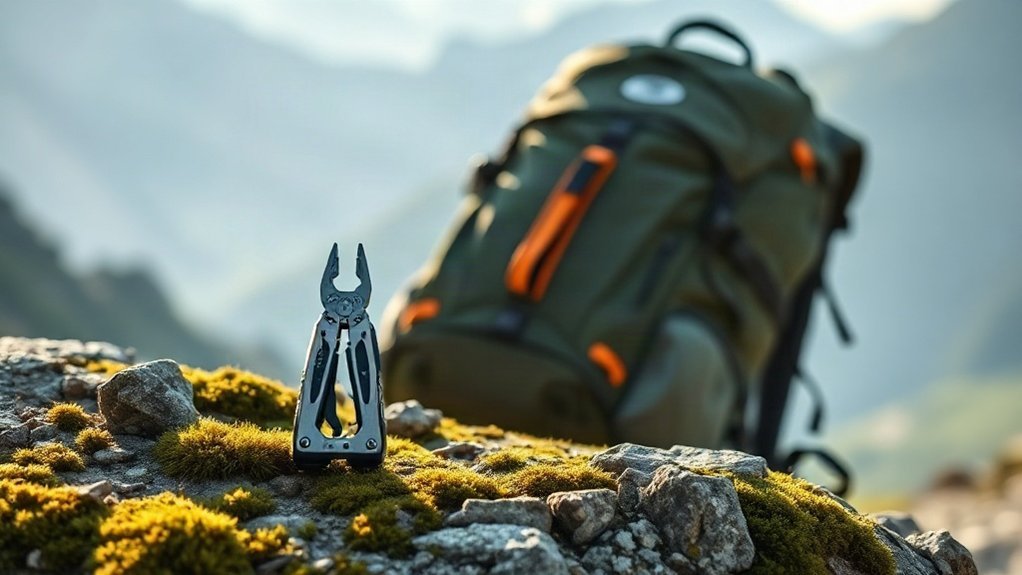
I choose a hiking multitool by matching its weight and repair features to the jobs I expect on the trail. For a light day hike, I’d carry a 2.2-ounce Victorinox Tinker for cutting, cordage, and basic adjustments. For backpacking repairs that need pliers, I’d consider the 8.5-ounce Leatherman Wave. I also check tool access, locking, carry comfort, and durability, then skip extras I won’t use. A closer look at these choices can help me find the right fit.
Key Takeaways
- Match tool functions to expected tasks: choose blades, screwdrivers, and a reamer for simple day-hike needs; add pliers for repairs.
- Balance capability against weight: the Tinker weighs 2.2 ounces, while pliers-equipped options such as the Wave weigh 8.5 ounces.
- Consider how often you’ll use extra features; bulky tools with many functions may be unnecessary for light hikes.
- Check that tools are easy to access and operate with your usual hand, including when wearing gloves; verify locking mechanisms.
- Choose a comfortable carry method, check local regulations, and maintain the multitool before departure.
Choose a Hiking Multitool for Your Trip
Choose a multitool that fits your trip and the tasks you expect to handle. For a day hike, I’d carry the 2.2-ounce Swiss Army Tinker, whose 12 functions cover common needs with two blades, screwdrivers, a can opener, and a reamer. If I’m heading out overnight or expect gear repairs, I might accept the 8.5-ounce Leatherman Wave for its broader capabilities. I’d choose extra tools only when I’ll use them: the 6.5-ounce Swiss Champ packs 33 functions, but can feel excessive on a short outing. Need pliers on a budget? The 9.7-ounce Bibury BI2038B offers 22 tools, though its pliers suit light work. Before you go, check legal regulations, set a maintenance schedule, and keep your tool accessible for quick fixes or trail snacks.
Compare Multitools for Day Hikes
For a light day hike, I’d favor the 2.2-ounce Victorinox Tinker: its 12 functions cover basics like cutting, opening cans, and tightening screws without adding much weight. Its two blades, screwdrivers, can opener, and reamer give you useful options without weighing down your pack.
In a Tinker versus Huntsman comparison, I’d choose the 4-ounce Huntsman if I wanted scissors, a saw, and camp-kitchen tools. It’s bulkier, though, and has no pliers. For Swiss Champ suitability, consider whether 33 functions, including a mini saw and magnifying glass, justify 6.5 ounces on a short outing. I’d take the 8.5-ounce Leatherman Wave only if repairs were part of the day’s plan. The 9.7-ounce Bibury offers pliers on a budget, but its whistle and flint are awkward, and it lacks a Phillips screwdriver.
Pick a Hiking Multitool for Backpacking Repairs
For backpacking repairs, I match tools to likely fixes: screwdrivers help with gear adjustments, while pliers grip and twist stubborn parts. I balance that capability against weight, choosing a compact tool like the 2.2-ounce Tinker for basic repairs or a pliers-equipped model for tougher jobs. What your group expects to fix should guide which extra functions are worth carrying.
Match Tools to Repairs
When I choose a multitool for backpacking repairs, I match its tools to the fixes I’m likely to face: screwdrivers handle gear adjustments, while pliers and wire cutters are better for tougher jobs like twisting or cutting wire. For a simple screw adjustment on a day hike, I might carry the 2.2-ounce Swiss Army Tinker. It has screwdrivers, a reamer, and two blades, but no pliers. If I expect wire twisting or higher-torque repairs, I’d choose a pliers-equipped tool instead. The 8.5-ounce Leatherman Wave adds strong pliers, replaceable wire cutters, locking blades, a file, and a saw. For changing repair needs, the 8.8-ounce Roxon Flex lets me swap tools for biking, fishing, or camping. I won’t trust tiny tools with demanding fixes; a capable tool helps keep me moving freely.
Balance Weight and Versatility
I balance weight against repair needs rather than packing every function available. For weight efficiency, I choose a tool that solves likely problems without weighing down my pack. This functional balance keeps me moving freely while preserving repair options.
| Multitool | Best fit |
|---|---|
| Victorinox Tinker, 2.2 oz | Light tasks; no pliers |
| Swiss Champ, 6.5 oz | Many functions; may be excessive |
| Leatherman Wave, 8.5 oz | Sturdier repairs with strong pliers |
| Bibury BI2038B, 9.7 oz | Budget, light-duty plier repairs |
For a simple day hike, I’d carry the Tinker for cordage and packaging. For backpacking repairs, I’d favor the Wave’s replaceable cutters, locking blades, file, and saw. The Bibury costs less, but its pliers suit light work. On group trips, I’d carry one beefier pliers-equipped tool instead of several overlapping light ones; small tools may lack repair torque.
Match Tool Weight to Your Hiking Needs
I match a multitool’s weight to the tasks you’re likely to face, not the number of functions it packs. For a day hike, a 2.2-ounce Tinker may cover simple needs, while overnight repairs can justify a heavier model with pliers. I’ll help you balance essential tools against the weight and versatility you want to carry.
Prioritize Essential Tools
Choose a multitool based on the repairs and trail tasks you actually expect, not the number of features on its package. I choose tools that support my route, safety priorities, and emergency signaling without weighing down the freedom to roam.
| Trail need | Tool choice |
|---|---|
| Food, cord, basic adjustments | 2.2-ounce Tinker |
| Frequent overnight repairs | 8.5-ounce Wave |
| Occasional day-hike tasks | Skip the 6.5-ounce Champ |
| Light-duty plier work | 9.7-ounce Bibury |
For simple outings, the Tinker’s 12 functions may cover essentials. I’d carry the Wave when pliers, locking blades, a file, and a saw solve likely repairs; its weight is substantial. The Champ’s 33 functions can exceed a day hiker’s needs. If repairs require pliers, I’d bring one capable tool, not overlapping items. Small pliers may lack torque for demanding fixes, so I’d match capability to the task.
Balance Weight And Versatility
Once you’ve matched a multitool to likely trail tasks, weigh its versatility against what you’ll carry. For light day hikes, I’d choose the 2.2-ounce Swiss Army Tinker: its 12 functions handle packaging and cordage without weighing down your pack. If you expect repairs that need pliers, I’d consider the 8.5-ounce Leatherman Wave, with 18 tools, strong pliers, locking blades, a file, and a saw. Its added capability makes sense when you’ll use it.
I’d skip the 6.5-ounce Swiss Champ unless its 33 functions justify the bulk. The roughly 9.7-ounce Bibury offers 22 tools at a budget price, but its pliers suit light work, and some features are awkward. Set your weight budget around real needs; feature tradeoffs matter. I’d also share one pliers-equipped tool or carry a small knife for simple cutting.
Choose Pliers or a Swiss Army Knife
For light hikes and basic tasks, a 2.2-ounce Swiss Army knife like the 12-function Tinker can handle food packaging, cordage, and gear adjustments without weighing you down. I’d choose it when knife versatility and low weight matter more than repair strength, so you can roam freely with less gear.
If your trip could demand gripping or twisting, consider your leverage needs. Small tools may lack the leverage for tough field fixes. The 8.5-ounce Leatherman Wave offers strong pliers and locking tools for overnight repairs, but it weighs substantially more. For a lighter option, the 2.7-ounce Nextool F12 pairs pliers with scissors; its limited screwdriver selection may constrain some repairs. In a group, I might carry one capable pliers multitool to share. Hiking solo, I’d favor the lighter Swiss Army knife when basic tasks are enough.
Pick Tools You’ll Actually Use on Trail
On trail, I’d start with the tasks I actually expect: a 2.2-ounce Tinker handles packaging, cordage, and minor gear adjustments without carrying features I rarely use. Its 12 functions cover common fixes while keeping my pack light and my options open.
I’d weigh Personal Priorities against realistic Trail Scenarios. If I rarely need pliers, scissors, or a saw, I’d skip the 6.5-ounce Swiss Champ and its 33 tools; that’s a lot of weight for a day hike. For repairs that often call for pliers, I might carry the 8.5-ounce Leatherman Wave, with strong pliers, a file, and a saw. Hiking with a group? I’d coordinate repair gear so we don’t duplicate tools. One capable pliers-equipped multitool can free everyone else to carry less.
Check Tool Access and Locking
When I’m using a multitool with gloves or in a hurry, I check whether I can reach and open its tools easily. I want to handle trail tasks independently, without asking someone else to unfold a tool. The Tinker’s implements open directly, while some Wave and Bibury tools can be awkward to access. Outside-accessible tools can save time: the Wave+ offers one-handed access to its blades, saw, and file.
I also check locking mechanisms before I buy. The Wave+’s accessible tools lock and release with a push button, while the Rambler’s blade doesn’t lock. Among lighter choices, the 2.7-ounce Nextool F12 has two locking tools; the 1.8-ounce Leatherman Micra has a non-locking blade. Try opening tools with your usual hand: the Armbar Drive supports one-handed use but may feel awkward for left-handed users.
Find a Tool That’s Tough and Easy to Carry
How much weight can you comfortably carry for the repairs you expect to make? I match my multitool’s heft to the freedom I want on the trail: enough strength for real fixes, without carrying gear I won’t use. Handle Materials affect grip and comfort, while Weather Resistance helps a tool withstand rain and damp pack conditions.
Match a multitool’s weight to the repairs you expect, prioritizing a comfortable grip, weather resistance, and useful strength over extras.
- For day hikes, the 2.2-ounce Victorinox Tinker packs 12 useful functions into a compact frame.
- Need pliers for gear repairs? The 8.5-ounce Leatherman Wave brings durable pliers, locking blades, a saw, and a file.
- The 6.5-ounce Victorinox Swiss Champ offers 33 functions, but its bulk may feel excessive on a light hike.
- The roughly 9.7-ounce Bibury BI2038B costs less and has 22 tools, though its pliers feel less refined than the Wave’s.
I choose durability and useful functions over extras.
Carry Your Multitool Within Easy Reach
A lightweight multitool helps only if you can reach it quickly, so I choose a pocket, belt, or pack pocket based on the hike and the repairs I expect. The right Carry location gives me quick retrieval without slowing my stride or weighing me down. For a light day hike, I might carry the 2.2-ounce Swiss Army Tinker in a pocket, keeping basic tools close with little added weight. If I need pliers for tougher jobs, a belt sheath can work, but I’ll account for the 12-ounce Leatherman Surge’s bulk. Before leaving, I check that my setup is ready: the Wave+ has limited stock carry options, and its pocket clip is sold separately. On group trips, I keep one pliers-equipped tool accessible so we can share repairs and keep moving freely.
Frequently Asked Questions
Are Multitools Allowed in Carry-On Luggage When Flying to a Hiking Destination?
Usually, I can’t bring a multitool with a blade in my carry-on; airport security screening will likely confiscate it. Airline blade restrictions vary, so I check the departure airport’s security rules and my airline’s guidance before packing. If my tool has no blade, I still verify that its features are permitted. To keep my gear and travel plans free of hassles, I pack restricted tools in checked baggage or leave them behind and rent one at my destination.
How Should You Clean and Dry a Multitool After Exposure to Rain or Mud?
I clean my multitool after rain or mud like I’m freeing a trail companion from a storm: rinse it thoroughly, then open every tool and hinge. For Rinsing mud thoroughly, use clean water and a soft brush to reach crevices; avoid forcing grit deeper. I dry each surface completely with a cloth, then let it air-dry open. Finish by lubricating pivots properly with a drop of tool-safe oil, and wipe away excess before storing.
What’s the Best Way to Prevent Rust on a Hiking Multitool?
I prevent rust by drying my multitool completely, then applying a thin coat of protective oil to its metal surfaces and pivot joints. For routine rust prevention, I wipe away dirt and moisture after each trip, especially before storing the tool. I choose protective oil selection carefully: a manufacturer-recommended, water-displacing lubricant works well, while food-safe oil suits tools that might touch food. I carry a small cloth and oil so I can maintain freedom on the trail.
Should You Carry a Multitool if Your Backpacking Group Already Has One?
Yes, I’d carry a multitool if the extra weight feels worth the independence. One tool shines in the group’s pack; another stays close in yours. Consider group gear overlap, then weigh whether shared tool backup matters when you split up, arrive late, or face a broken strap. I’d choose a compact model with only useful features, so you keep freedom to act without hauling needless metal through every mile.
How Can You Safely Dispose of a Damaged or Unwanted Multitool?
I safely dispose of an unwanted multitool by closing and securing every blade, then wrapping it in sturdy cardboard so sharp edges can’t injure anyone. For a damaged tool, I check with my local waste facility before placing it in household trash. Recycling options may include a scrap-metal center or a retailer’s take-back program; I call ahead to confirm acceptance. I never leave a multitool outdoors or put it loose in a recycling bin.
Conclusion
I choose a hiking multitool by matching its weight to my route, its tools to my likely repairs, and its size to my pack. For a day hike, I keep it simple; for backpacking, I look for durable pliers or a useful Swiss Army knife. I check that each tool opens easily and locks securely, then carry the multitool where I can reach it fast. The best choice isn’t the biggest—it’s the one I’ll bring, use, and trust.