Which Machetes and Kukris Are Easier to Carry on Long Outdoor Trips?
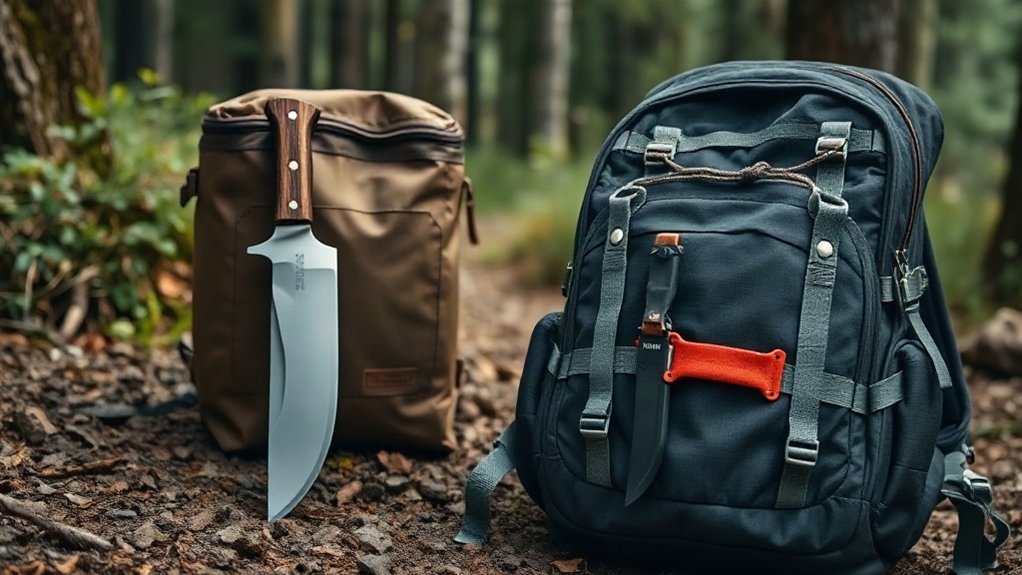
I’d carry a lightweight, slim machete—typically 14–18 inches and around 300–500 g—when I expect sustained brush clearing; its long reach clears vegetation efficiently. For repeated chopping of small limbs and camp wood, I’d choose a compact 10–14-inch kukri, though its forward-heavy balance can feel tiring over long trips. On maintained trails, I’d usually skip both and pack a small knife or saw. The terrain, likely chores, and a secure, comfortable sheath make the difference; below, I’ll explain how to choose.
Key Takeaways
- Lightweight machetes around 300–500 g are easier to carry when sustained brush clearing is likely.
- Working kukris weighing 400–600 g suit repeated small-wood chopping but add more pack weight.
- For maintained trails, a 4–6-inch knife or small saw is usually easier to carry than either large blade.
- Compare sheath security and comfort; a well-fitted sheath helps prevent shifting and protects the blade during travel.
- If neither tool has a clear job, leave it behind to save weight, space, and effort on long trips.
Do You Need a Chopping Tool on Trail?
On established long-distance trails like the PCT, you probably don’t need a machete or kukri: the path is usually clear, and fallen trees are often too large to chop around. I’d leave a full-size chopper at home and keep my pack light, especially on the southern PCT, where extra water can matter more.
For ordinary camp and trail chores, a 4–6-inch fixed blade or locking folder usually gives me all the cutting ability I need. A pocketknife with a small saw, such as a Victorinox Farmer or One Hand Trekker, can handle occasional cuts without weighing me down with a large tool. These lightweight alternatives preserve room for the gear that supports your freedom to roam.
I’d treat Trail necessity as route-specific: consider a machete or kukri only if you expect substantial brush clearing or repeated wood processing. For routine backpacking, I’d choose simpler tools and spend less effort carrying weight I’m unlikely to use.
How Do Machete and Kukri Specs Compare?
If you’re weighing a machete against a kukri for a trip that calls for a chopper, compare more than blade length. I’d look at blade thickness, weight, balance, and steel composition before choosing a tool that fits your route and workload.
Typical machetes run 14–24 inches overall, with blades around 2–3 mm thick. Kukri blades are usually shorter, at 10–14 inches, but thicker—often 5–10 mm at the base. That extra steel supports a sturdy chopping profile. Common kukri steels include 5160 spring steel and 1095 carbon steel; machetes often use 1055 or 1075 carbon steel.
Weight and balance vary by model. A typical kukri weighs about 400–600 g, while a quality machete usually weighs 350–500 g. Kukris concentrate mass at the curved belly, with balance commonly 4–6 inches ahead of the bolster. Machetes generally balance farther forward, around 6–10 inches. I’d compare specific models, not labels alone.
Why Is a Machete Easier to Carry?
A machete can be easier to carry because its long blade is relatively thin and often weighs less than a working kukri. A typical blade runs 14–24 inches long but measures only 2–3 mm thick, giving you useful reach without a bulky chopping profile. Many models weigh about 300–500 g, compared with roughly 400–600 g for working kukris, though designs vary.
That Slim blade profile also supports efficient sheathing: I can secure the long edge and tip in a suitable sheath, then carry the tool without a broad, heavy package. Check the whole setup, not blade weight alone; the sheath, handle, and retention all affect comfort and security. A machete’s straight reach can help me clear grass, vines, and light brush while keeping movement practical.
Still, freedom on a long hike means carrying only what you’ll use. On maintained trails like the PCT, vegetation may make a machete unnecessary extra weight.
Why Does a Kukri Feel Heavier?
I find a kukri can feel heavier because its curved belly concentrates mass toward the blade’s front. That forward-heavy balance pulls on your hand more than an evenly balanced machete. It also builds chopping momentum, so you can deliver a powerful cut with a shorter swing.
Forward-Heavy Balance
Because a kukri’s forward-curving blade carries more mass toward its belly, it can feel heavier than its scale weight suggests. I notice that forward pull whenever I lift or redirect one. Its center of gravity often sits 4–6 inches ahead of the bolster, giving the blade chopping momentum and strong cuts with a shorter swing. That power can suit camp chores, but I need more effort to control and stop the blade than I would with a neutrally balanced tool.
On a long trip, repeated handling may bring wrist fatigue, even when the kukri weighs only 400–600 grams. I’d check the handle grip and balance before choosing, not rely on scale weight alone. If you value freedom of movement and fast sweeping cuts, a less forward-heavy machete may feel easier to manage.
Blade Mass Distribution
Although a kukri may weigh about the same as a machete, it often feels heavier because more of its mass sits near the forward-curving cutting belly. I notice that this concentrated weight changes how the tool rests in my hand, even when its scale reading looks comparable. The balance point helps explain why:
- A kukri’s center of gravity usually sits 4–6 inches ahead of the bolster, so the blade feels nose-heavy.
- An 18-inch machete’s balance point is roughly 6–10 inches forward, while its longer, thinner blade spreads mass along its length.
- Working kukris commonly weigh 400–600 grams; quality machetes often weigh 350–500 grams.
For long trips, I’d compare actual carry weight, edge geometry, and handle ergonomics before choosing. That helps me travel light and stay free to move.
Chopping Momentum
Balance affects more than how a kukri rests in your hand; it shapes each swing. Its curved blade concentrates mass in the forward belly, often shifting the center of gravity 4–6 inches ahead of the bolster. I feel that leverage as extra chopping momentum: a kukri can deliver a forceful cut with a shorter swing, improving swing efficiency and impact transfer.
| Tool | What I notice |
|---|---|
| Kukri | Forward balance; strong chops |
| Machete | Longer reach; fast sweeps |
| Kukri weight | Typically 400–600 g |
| Machete weight | Often 350–500 g |
Even when weights overlap, a kukri can feel substantially heavier. I’d choose its momentum for branches or small wood, but its forward pull makes precise work less nimble. Keep your swing controlled, and you’ll stay in command of your tool—and your route.
How Do Reach and Balance Affect Comfort?
On long clearing jobs, reach and balance can determine how quickly your arm tires. I choose a blade for the ground I need to cover, not just its heft. A machete’s 14–24-inch blade reaches through grass and vines, so I take fewer steps across open brush. Its center of gravity, usually 6–10 inches ahead of the bolster, supports a long, fast swing, though it can feel awkward in tight camp spaces.
For comfort, I weigh three trade-offs:
- Reach: A machete clears wider areas with less repositioning.
- Balance: A kukri’s center of gravity sits about 4–6 inches ahead of the bolster, helping its curved belly deliver chopping force.
- Control: That forward-heavy kukri needs a shorter, deliberate swing; managing its momentum helps limit wrist fatigue.
Swing ergonomics matter on a long trip: I match the tool to the work, gaining freedom of movement without fighting the blade.
Which Sheath Carries Best on a Backpack?
When I’m carrying a blade for miles, I want a sheath that holds it securely, covers the edge, and adds little bulk or weight. Good Sheath retention matters: a long machete shouldn’t shift or work loose as I walk, and its sheath should cover the blade and tip completely. For a kukri, I look for a sheath shaped to its forward curve, so it seats firmly and draws without snagging.
Comfort can make the difference on a long trail. Condor’s swiveling sheaths have been noted as comfortable to carry, while a leather sheath is a better choice for carrying a Woodman’s Pal; its nylon sheath suits storage more than trail use. I also check the fit and carry position before setting out, so the sheath won’t hinder movement or feel like needless baggage.
For moisture protection, I keep the sheath clean and dry. Trapped moisture or grit can damage the blade or edge, so I inspect both after wet stretches and clear away debris.
Which Blade Suits Your Trail Terrain?
If your route follows narrow, maintained trails like the PCT, I’d leave the machete and kukri at home: a small knife handles likely tasks, while fallen trees are usually too large to cut through. On Rocky footpaths and alpine switchbacks, I’d favor a lightweight 4–6-inch knife; carrying less leaves me freer to move.
For rougher routes, I match the blade to the growth I expect:
- Grass, vines, cane, or light brush: I choose a thin machete when I’ll clear vegetation repeatedly. Its reach makes sweeping cuts efficient, especially in tropical or subtropical terrain.
- Small limbs or light-to-medium wood: I choose a thicker, forward-heavy kukri. Its curved, weighted blade gives me compact chopping power, though it’s less efficient across broad patches of brush.
- Heavy wood or little trail work: I carry neither large blade. An axe handles heavy processing better; when chores are unlikely, a small knife saves weight.
I let the terrain, not habit, decide what earns space in my pack.
When Does a Kukri Earn Its Weight?
I’d consider a kukri when you expect repeated chopping of limbs, kindling, or camp wood; its forward-heavy blade packs more chopping power than a lighter machete. At roughly 400–600 g, it earns its weight only if those camp tasks are likely. For long miles on maintained trails with little cutting, I’d leave it behind.
Compact Chopping Power
A kukri earns its extra weight when I expect to chop small limbs, kindling, or camp wood repeatedly—not just clear the occasional trail snag. Its forward-curving belly puts mass near the edge, so I can deliver useful force with compact swings instead of a machete’s longer arc.
- On seasoned wood, that forward-heavy balance can make each controlled blow count.
- A typical 10–14-inch blade weighs roughly 400–600 grams (14–21 ounces), a real load to carry.
- Its shorter reach clears grass and broad brush more slowly, so I’d choose it for chopping rather than quick trail clearing.
For light camp chores, a kukri can stand in for a hatchet and help me travel independently. But I wouldn’t mistake it for an axe: heavy wood demands a heavier tool.
Weight-Worthy Camp Tasks
A kukri earns its 400–600 grams when I expect to chop small limbs, prepare kindling, or notch shelter poles repeatedly. Its forward-weighted blade gives me more compact chopping power than a typical machete, making frequent camp chores feel less like a burden. For firewood preparation and light-to-medium woodwork, that extra heft can buy a calmer evening and a sturdier shelter.
| Camp task | Kukri’s value | What I gain |
|---|---|---|
| Kindling | High | Warmth |
| Pole notching | High | Shelter |
| Heavy logs | Low | Better with an axe |
I wouldn’t carry one just in case. For mostly vegetation clearing, a machete’s reach and sweeping cuts serve me better; a compact knife handles fine work. On a PCT-style hike, I’d walk around fallen trees and spend that weight on extra water instead. My freedom comes from matching the tool to work I’ll actually do.
When Is a Machete the Better Choice?
When your route demands hours of cutting through grass, vines, cane, or light brush, a machete is often the better choice. Its long reach lets me make fast, repeated sweeping cuts, opening a path without constant chopping. For Soft vegetation clearing and rapid trail cutting, that rhythm can help you move freely through jungle, swamp, and other lush terrain.
I look to a machete when the work calls for reach rather than concentrated impact:
- A typical 14–24-inch blade clears a wider strip with each stroke than a kukri, helping me keep pace on overgrown trails.
- For campsite-edge maintenance, a relatively thin, light machete feels more efficient than a forward-heavy kukri during repeated swings.
- It handles green growth and light camp chores, but I don’t rely on it for seasoned hardwood or heavy wood processing.
When the route is thick with soft vegetation, a machete can keep your progress steady and your options open.
How Should You Choose for a Long Trip?
I’d first match the tool to your route: a maintained trail like the PCT may not need a chopping blade. Then I’d weigh its carry weight against the work it can do, from clearing brush to chopping kindling. If you’ll cut only occasionally, I’d pack a lightweight knife and save the weight for essentials like water.
Match the Trail Conditions
Match the blade to the work your route demands, not to the idea of being prepared for everything. I judge trail maintenance by brush density and the chores I’ll actually face. That choice keeps my pack suited to the route, not weighed down by imagined needs.
- On a maintained, narrow PCT-style trail, I’d skip both blades. I can walk around fallen trees, and extra water serves me better than a heavy tool.
- For regular cuts through grass, vines, cane, or light brush, I’d choose a machete. Its reach helps me sweep efficiently across tropical or subtropical growth.
- For mixed terrain, small limbs, and occasional wood chores, I’d take a kukri. Its forward-weighted belly chops compactly, though it clears broad vegetation less efficiently.
If clearing isn’t routine, I’d carry a 4–6-inch knife. Neither blade replaces an axe for heavy wood.
Balance Weight and Utility
Once you’ve matched a blade to the trail’s chores, weigh its usefulness against the load it adds. I’d judge each tool by how often you’ll use it, not by how capable it looks. On the PCT, clearing is uncommon, so a heavy blade may slow your freedom without earning its place.
Working kukris typically weigh 400–600 g; quality machetes often weigh 350–500 g. Compare individual models: length and weight distribution affect how a blade feels on the move. A 14–24-inch machete can make repeated grass, vine, and light-brush cuts more efficient. I’d choose a kukri for compact chopping and camp wood, but its forward-heavy balance can feel demanding, and it won’t clear broad vegetation as well.
These utility tradeoffs matter. If neither tool has a clear job, I’d carry a small knife and use the saved weight for extra water.
Pack Only What You Need
For a long-distance hike like the PCT, I’d leave both a machete and kukri at home: maintained trails rarely need chopping, and fallen trees are usually too large to cut. Choose your blade by the work you’ll actually do, not the freedom of carrying more.
- For routine camp cutting, I’d pack a lightweight fixed blade or locking folder with a 4–6-inch blade.
- I’d choose a machete only for sustained grass, vine, or brush clearing; a kukri suits compact chopping and wood preparation.
- I’d compare any large blade’s weight and sheath comfort with essential gear. On the southern PCT, extra water may serve me better than a heavy chopper.
That choice brings weight savings and leaves me freer to cover miles comfortably. A tool earns its place only when its likely use justifies its load.
Frequently Asked Questions
Can I Carry a Machete While Hiking?
Yes, you can carry a machete while hiking, but I’d check local carry laws and trail access rules before setting out. On a maintained trail, I usually leave mine behind: you can often walk around fallen trees, and the extra weight adds up. If you expect heavy brush, I’d choose a suitable machete and secure it in a sheath covering the edge and tip. For routine chores, I’d carry a small knife instead.
Is a Kukri or Machete Better?
Neither tool wins every job—apparently, even blades demand freedom from one-size-fits-all thinking. I’d choose a kukri for wood-heavy camps: its forward-heavy shape chops kindling and small limbs efficiently. I’d pick a machete for overgrown trails, where its longer blade clears soft vegetation with quick, sweeping cuts. Compare kukri weight and machete balance, then check grip security and sheath design. Let your terrain and chores—not a blade’s name—make the decision for you.
What Is the Best Knife to Carry While Hiking?
I’d carry a lightweight 4–6-inch locking knife or fixed blade for most hikes. Among lightweight hiking knives, I favor a sturdy model with a secure clip or sheath, comfortable grip, and simple field maintenance. For compact trail knives, the Victorinox Farmer or One Hand Trekker adds a small saw without much weight. You’ll handle camp chores freely without hauling a machete or kukri unless your route demands regular chopping or brush clearing.
What Is the Best Outdoor Machete?
I’d choose a lightweight, straight-blade machete around 18 inches for versatile outdoor clearing; blades often span 14–24 inches. For long, free-ranging trips, I’d favor easy reach without unnecessary weight. Among Best Blade Materials, carbon steel sharpens readily, while stainless steel resists rust. I’d also check Machete Handle Comfort: a secure, ergonomic grip helps during repeated swings. Pick a thicker, forward-weighted panga only if you’ll tackle heavier brush or light wood.
Conclusion
I wouldn’t carry either blade just because it looks reassuring: on a long trip, every ounce counts, and many trails don’t need a chopping tool. If your route does, I’d choose a lighter machete for frequent brush clearing or a kukri when compact power matters more than pack weight. Check local rules, sheath security, and your actual terrain before deciding. The best choice isn’t the toughest-looking blade; it’s the one you can carry safely without resenting every mile.