Which Folding Tactical Knives Are Best for Camping and Hiking?
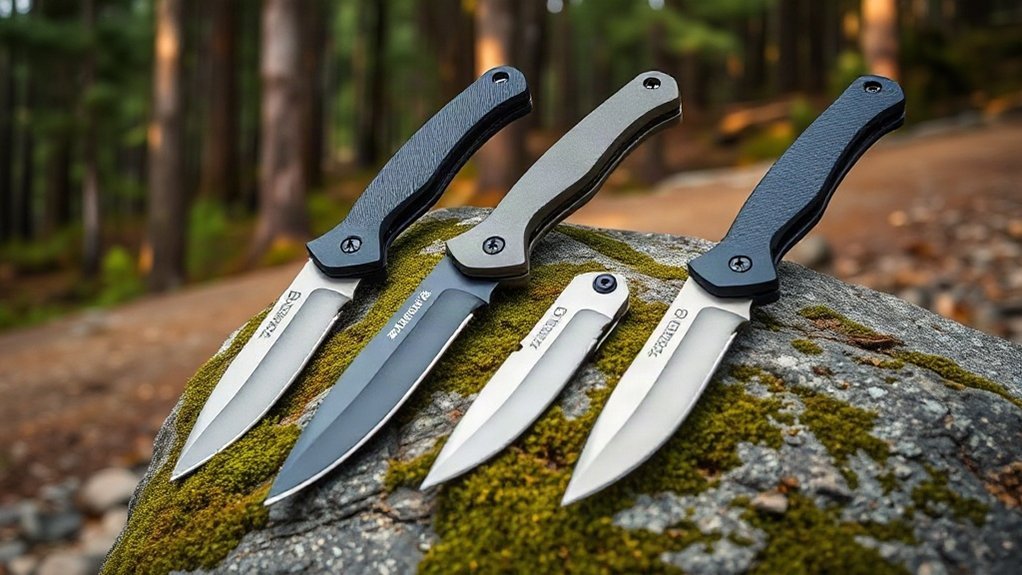
I’d choose a camping knife by expected tasks, not tactical looks. For lightweight camp chores, the 1.85-ounce Benchmade Bugout is easy to pack; for wet trips, I’d favor the corrosion-resistant Spyderco Native 5 Salt. The Kershaw Leek opens quickly, but its fine tip needs care, while the 7.5-ounce Leatherman Signal adds useful repair tools. For heavier wood processing, I’d pack a suitable fixed blade instead. I’ll compare their trade-offs to help you find the right fit.
Key Takeaways
- Best lightweight all-rounder: The Benchmade Bugout weighs 1.85 ounces and suits routine camp chores, food preparation, and light cutting—not heavy wood processing.
- Best for wet conditions: The Spyderco Native 5 Salt pairs a corrosion-resistant LC200N blade with a textured handle for a secure grip when damp.
- Best longer folding blade: The 3.5-inch Cold Steel Air Lite offers extra reach for camp chores and weighs 3.2 ounces.
- Best for ultralight carry: The 1.2-ounce SOG Ultra XR saves weight, though its narrow handle may tire the hand during extended use.
- Best for camp repairs: The 7.5-ounce Leatherman Signal adds pliers, a saw, wire cutters, and a bit driver; choose a fixed blade for heavier wood processing.
Which Hiking Knife Fits Your Trip?
Choose a hiking knife based on the jobs you expect it to handle. I match mine to the work, weather, and gear I want to carry, so you can stay ready without giving up freedom on the trail.
For lightweight backpacking and everyday camp tasks, I’d pick the 1.85-ounce Benchmade Bugout. Its 3.24-inch blade and one-handed AXIS lock make routine cutting straightforward. In wet or humid conditions, the 2.4-ounce Spyderco Native 5 Salt offers a corrosion-resistant LC200N blade and linerless handle. If you want a longer folding blade, consider the Cold Steel Air Lite: it has a 3.5-inch blade and secure Tri-Ad lock.
I’d choose the 7.5-ounce Leatherman Signal only when its pliers, saw, firestarter, and other tools replace gear I’d otherwise pack. Folders handle light cutting and pack small; heavier wood processing calls for a suitably sized fixed blade and sheath. A knife can support trail navigation tasks and emergency signaling, but choose one for the specific jobs you’ll face—not as a substitute for sound judgment.
How Much Blade and Weight Do You Need?
I match blade length to the chores I expect, and around 3 inches handles most camp tasks without excess bulk. I balance utility against weight, since a longer blade can add capability but also makes a knife heavier and harder to pack. Consider your actual needs: a slim folder may suit simple cuts, while demanding work calls for a larger grip.
Match Blade Length to Tasks
For camp chores and food prep, a 2.8–3-inch blade is often enough without adding much weight: the 2.95-inch Spyderco Native 5 Salt weighs 2.4 ounces, while the 2.8-inch SOG Ultra XR weighs just 1.2.
I’d choose this range for slicing, rope cutting, and other controlled tasks. When I expect heavier cuts or want extra reach, a 3.2–3.5-inch blade may suit me better. The 3.24-inch Benchmade Bugout weighs 1.85 ounces and folds to 4.22 inches; the 3.5-inch Cold Steel Air Lite weighs 3.2 ounces and folds to 4.5 inches. Check closed length, too, if pack space matters. For precise work, the 2.16-inch CRKT Folts Minimalist weighs about 1.8 ounces without its sheath. A 3-inch Kershaw Leek slices well, but I’d protect its fine tip from misuse.
Balance Weight and Utility
When every ounce counts, I match a folder’s weight and blade length to the camp chores I expect. The 1.85-ounce Benchmade Bugout gives me a 3.24-inch blade; the 3.2-ounce Cold Steel Air Lite stretches to 3.5 inches. I’d choose the lightest knife that clears my utility threshold, not carry extra steel by habit.
For routine cuts, the 2.4-ounce Spyderco Native 5 Salt’s 2.95-inch blade may suffice, though its finger choil shortens usable edge. The 1.2-ounce SOG Ultra XR saves more weight, but its narrow handle may tire my hand. A 3-ounce Kershaw Leek slices well, yet its fine tip needs care. If I want pliers, a saw, and a firestarter, I can accept the 7.5-ounce Leatherman Signal. That’s weight efficiency guided by real needs.
Consider Packed Size
Packed size matters as much as weight once your knife goes into a pocket or pack. I match blade length and closed dimensions to the chores I expect, so I can move freely without carrying more than I need. For light backpacking, the 1.85-ounce Benchmade Bugout offers a 3.24-inch blade and closes to 4.22 inches. Need more edge? The Cold Steel Air Lite gives you 3.5 inches, but weighs 3.2 ounces and closes to 4.5 inches. The 3-ounce Kershaw Leek is compact at 4 inches closed, though its fine tip suits slicing, not rough work. The 2.4-ounce Spyderco Native 5 Salt also closes to 4 inches; its choil shortens usable edge. Check Pocket dimensions and sheath compatibility, then choose a light folder for camp chores, not heavy wood processing.
Benchmade Bugout: Is Ultralight Carry Worth It?
Could an ultralight knife still handle camp chores? I’d consider the Benchmade Bugout 535 when every ounce in my pack matters. At just 1.85 ounces, it gives me a practical way to cut weight without giving up a capable folding blade. Those Ultralight carry benefits stand out on long hikes, where freedom from unnecessary bulk can make a real difference.
The 3.24-inch CPM S30V drop-point blade handles routine camp cutting, while the AXIS lock and thumb studs make one-handed use straightforward. Closed, it measures 4.22 inches, and its slim 0.42-inch handle packs easily; the pocket clip also suits everyday carry.
There’s a trade-off: the premium price may sting, and Grivory handle flex under a hard grip can reduce confidence. I’d stick to light work with this knife, not heavy use or wood processing. If you want a sturdier tool for demanding chores, I’d choose something more robust. For routine tasks, though, the weight savings may be worth it.
Spyderco Native 5 Salt: A Pick for Wet Trips
If wet trails are on your itinerary, I’d consider the Native 5 Salt for its corrosion-resistant LC200N blade, which needs less frequent cleaning and oiling. Its textured FRN handle and forward choil support control, though the choil shortens the usable edge. I also like its four-position clip for flexible carry.
Corrosion-Resistant LC200N Steel
When rain or river spray keeps your knife wet, the green, plain-edge Spyderco Native 5 Salt (C41PGR5) stands out for its corrosion-resistant LC200N blade. I’d choose it when camp cleanup is inconvenient and I want freedom to keep moving without frequent oiling.
- Salt chemistry can challenge ordinary blade steel, while LC200N resists the corrosion mechanisms that threaten knives around water.
- Its 2.95-inch blade handles food prep and everyday camp chores.
- The full-flat grind and plain edge make slicing straightforward.
- At 2.4 ounces, it adds little weight to a hiking kit.
A thumb hole opens the blade, and a back lock supports secure use. Note that this is the green LC200N model, not the yellow MagnaCut version. The forward finger choil shortens the usable cutting edge, a trade-off I’d consider before packing.
Grip, Choil, and Carry Options
For wet trips, I’d choose the green PlainEdge LC200N Native 5 Salt (C41PGR5) for its textured, linerless FRN handle, which helps maintain a secure grip in damp conditions. Handle texture matters when rain or river spray makes gear slippery, giving you confidence to move freely.
| Feature | Trail benefit |
|---|---|
| Forward finger choil | Closer, controlled grip |
| 2.95-inch blade, 2.4 ounces | Compact carry |
| Four-position pocket clip | Multiple carry orientations |
The choil control helps me guide the blade for careful tasks, though it shortens the usable cutting edge. Consider that trade-off if you’ll make longer cuts. The four-position clip lets you choose a carry setup that suits your clothing and access preferences. LC200N’s high corrosion resistance also means less worry about cleaning and oiling when damp conditions keep you moving.
Kershaw Leek: Is Assisted Opening Right for You?
Is one-handed opening worth adding to your camping carry? I’d say yes if you value quick access and freedom to keep your other hand free. The Kershaw Leek’s SpeedSafe assisted action pairs with a flipper tab or ambidextrous thumb studs, so you can open it swiftly with either hand. A secondary tip lock helps prevent Pocket opening in your pack or pocket.
- At 3 ounces, it won’t weigh down a day hike.
- Its 4-inch closed length packs neatly with camp gear.
- The 3-inch, thin 14C28N stainless-steel Wharncliffe blade slices efficiently.
- The fine tip needs care; don’t pry or twist with it.
Assisted opening isn’t for everyone, and I’d check local rules before carrying. The right-hand pocket clip also limits your carry choices, so it may not suit every setup. If you want a compact folder that opens fast and slices well, the Leek earns a look; if you prefer manual opening or flexible clip placement, consider another option.
Cold Steel Air Lite: When Do You Need a Longer Blade?
The Kershaw Leek favors quick, nimble slicing; the Cold Steel Air Lite suits camp tasks that benefit from a longer blade. I’d choose its 3.5-inch AUS-10A blade when extra Cutting reach helps prepare food, trim cord, or handle other camp chores. That’s the longest blade among the knives compared here.
| Feature | Options or measure | Camp relevance |
|---|---|---|
| Blade geometry | Drop-point or tanto | Choose the shape that suits your cuts |
| Handle | OD Green or black G10 | Slim, 0.35-inch width aids carry |
| Size and lock | 3.2 oz; 4.5 in closed; Tri-Ad | Secure design, added pack space |
The Tri-Ad lock’s stop pin distributes force between the lock bar and blade tang. Still, I’d weigh its confident lock against the 1.85-ounce Benchmade Bugout: the Air Lite is heavier and takes more room. Its slim handle keeps it easy to carry, but your freedom on the trail depends on matching blade length to real tasks—not carrying more than you need.
Leatherman Signal: Do You Need a Multitool?
I’d consider the Leatherman Signal if its pliers, saw, and firestarter could replace gear you’d otherwise carry. At 7.5 ounces, it adds useful camp tools but weighs more than a dedicated knife. If you don’t need those extras, I’d choose a lighter knife instead.
Outdoor Tools
If you want more than a blade on the trail, the 7.5-ounce Leatherman Signal packs pliers, a saw, replaceable hard-wire cutters, and a 2D bit driver alongside its 2.73-inch locking blade. I like that the blade and saw open without unfolding the pliers, so quick camp jobs don’t slow you down. Its outdoor extras add real independence:
- Ferrocerium firestarter and whistle for emergency fire starting and signaling.
- Hammer for Tent stake hammering, plus wrenches for simple adjustments.
- Diamond-coated sharpener to touch up the blade in camp.
- Sprung carabiner clip for convenient attachment.
The Signal can cover food prep, fire-starting, and stake pounding, though its short, partly serrated blade isn’t ideal for every meal. Check whether your package includes a sheath or bit kit. If you value versatile trail repairs, I’d consider it; if you mainly need a clean-cutting blade, choose a dedicated knife.
Weight Trade-Off
Although the Leatherman Signal weighs 7.5 ounces without a pouch—far more than a 1.85-ounce Benchmade Bugout or 2.4-ounce Spyderco Native 5 Salt—I’d consider that weight worthwhile only if you’ll use its pliers, wire cutters, saw, and bit driver for camp tasks and repairs. The Signal also gives you locking tools and a replaceable wire cutter, handy when you need to fix gear far from a trailhead. Its ferrocerium firestarter, whistle, diamond-coated sharpener, and hammer may provide gear replacement for items you’d otherwise pack, easing the Multitool weight trade-off. I’d weigh those benefits against your actual needs, not the tool’s feature count. If the extra functions earn their place in your pack, the Signal supports self-reliance; if not, carrying them limits your freedom to travel light.
Dedicated Knife Alternative
Do you need a multitool, or would a dedicated knife serve you better? I’d choose the Leatherman Signal when its extra tools earn their place in my pack. At 7.5 ounces, it’s heavier than a dedicated folding knife, but it can replace separate gear for camp chores and field repairs.
- Pliers, replaceable hard-wire cutters, drivers, an awl, and a saw handle fixes.
- A ferrocerium firestarter and whistle help me start a fire or signal.
- A diamond-coated sharpener and hammer tackle blade upkeep and tent stakes.
- The locking 2.73-inch 420HC blade and saw open without unfolding the pliers.
For food prep, its short, partly serrated blade feels less convenient. If I mainly cut, I’d favor a Dedicated blade for single task efficiency and lighter carry. That leaves me freer to travel light.
ESEE Izula: When Does a Fixed Blade Make Sense?
When does a fixed blade make sense on the trail? I’d choose the ESEE Izula when you want a simple, sturdy tool for camp chores or light carving, without a folding mechanism to manage. Its 2.875-inch coated 1095 blade and 6.25-inch overall length keep it compact; the knife itself weighs just 2 ounces. It isn’t built for heavy wood processing, so I’d bring a larger tool for that work.
The skeletonized steel handle lets you tailor the feel with micarta customization or a paracord wrap. However, the supplied molded sheath adds weight and bulk, which may offset the knife’s light carry. If corrosion resistance matters more, consider the S35VN version; I’d still clean and dry either blade after use. The Izula II gives you an extra half-inch of handle and measures 6.75 inches overall. For neck carry, follow ESEE’s breakaway-lanyard instructions. That way, you can choose a fixed blade while keeping your kit suited to the trail.
How Do Locks, Grips, Steel, and Edges Compare?
After weighing a fixed blade against a folder, I compare how each knife locks, feels in hand, and cuts. For trail safety, I favor a secure lock over a non-locking folder, but designs differ:
- The Bugout’s AXIS lock supports one-handed use; the Air Lite’s Tri-Ad lock uses a stop pin to share force between lock bar and blade tang, adding confidence in lock strength.
- The Tenacious offers a large grip for demanding work. The Bel Air’s metal handle may slip when wet, while the Bugout’s lightweight handles can flex under a hard grip.
- Bugout S30V balances corrosion resistance, toughness, and edge retention. Air Lite AUS-10A is another option; Bel Air MagnaCut held its edge through months of heavy use, though it’s harder to sharpen at home.
- For edge versatility, I like the Bugout’s drop point. The 3-inch Leek slices well, but its fine Wharncliffe tip can break if misused. Air Lite’s 3.5-inch blade offers reach; the Native 5 Salt’s choil improves grip but shortens usable edge.
How Can You Carry Safely Without Extra Weight?
To carry safely without adding bulk, I choose a compact folder with a dependable lock and a secure grip, then weigh its closed length and carry hardware. A locking blade helps me handle trail tasks with confidence, so I avoid non-locking folders. I also check that the handle feels steady in my hand; a light knife isn’t useful if it’s awkward to control.
For Secure Carry, I use a Pocket Clip or an attachment on a pack I already bring. That keeps the knife accessible without adding a separate sheath. Fixed blades require sheaths, which can add weight and bulk.
I compare options by both weight and comfort. The 1.85-ounce Benchmade Bugout measures 4.22 inches closed, while the 1.2-ounce SOG Ultra XR trims weight further. Its narrow handle and large clip may bother me, though, so I’d test the fit before choosing it. A 7.5-ounce Leatherman Signal replaces several tools, but I’d carry it only if I need that versatility.
Frequently Asked Questions
What Is the Best Knife for Camping and Hiking?
I’d choose the Spyderco Native 5 Salt as the best all-around camping and hiking knife. Its 2.95-inch LC200N blade resists corrosion, while the back lock and textured grip give me confidence during camp chores. I’d also weigh blade materials and handle ergonomics against your needs: pick the lightweight Benchmade Bugout if every ounce matters, or the Cold Steel Air Lite if you want a longer blade and sturdy lock. Stay free to choose what fits your trail.
What Are Some Good Foldable Knives for Camping?
For camping, I’d choose the Benchmade Bugout for its 1.85-ounce weight, 3.24-inch S30V blade, and easy one-handed AXIS lock. The Spyderco Native 5 Salt suits wet trips, while the Kershaw Leek offers assisted opening and pack-friendly security. These Lightweight Folding Knives let you travel freely without hauling excess gear. For Budget Camping Knives, compare reliable locks and blade size against your tasks. I wouldn’t rely on any folder for processing substantial wood.
What Knife Do Navy SEALS Really Use?
I can’t verify a single knife that Navy SEALs really use. The information available here doesn’t identify an officially issued model or confirm what individual SEALs choose, so I wouldn’t present any camping knife as standard gear. For reliable Navy SEAL knife selection criteria, I’d look for credible military sources and distinguish documented policy from personal preference. That also helps readers avoid military knife myths and make independent, informed choices without relying on unsupported claims.
What Is the Best Knife for All-Around Camping?
I’d choose the Spyderco Native 5 Salt as the best all-around camping knife. Its 2.95-inch LC200N blade resists corrosion, while the secure back lock and textured handle help me work confidently outdoors. When choosing knife steel, I value rust resistance for unpredictable weather; when evaluating handle ergonomics, I look for a grip that stays controlled during varied tasks. You’ll get a dependable, versatile tool without carrying unnecessary bulk.
Conclusion
I’ve learned that the best hiking knife is the one I’ll actually carry—not the enormous “survival” blade that needs its own backpack. For featherweight trips, I’d choose the Bugout; for wet trails, the Salt; and for camp chores, perhaps the Signal or an Izula. I’ll check the lock, grip, and local rules before setting out. After all, the trail already supplies enough surprises; I don’t need my pocket knife auditioning for a disaster movie.