What Blade Steel Should You Choose for Durable Bushcraft Knives?
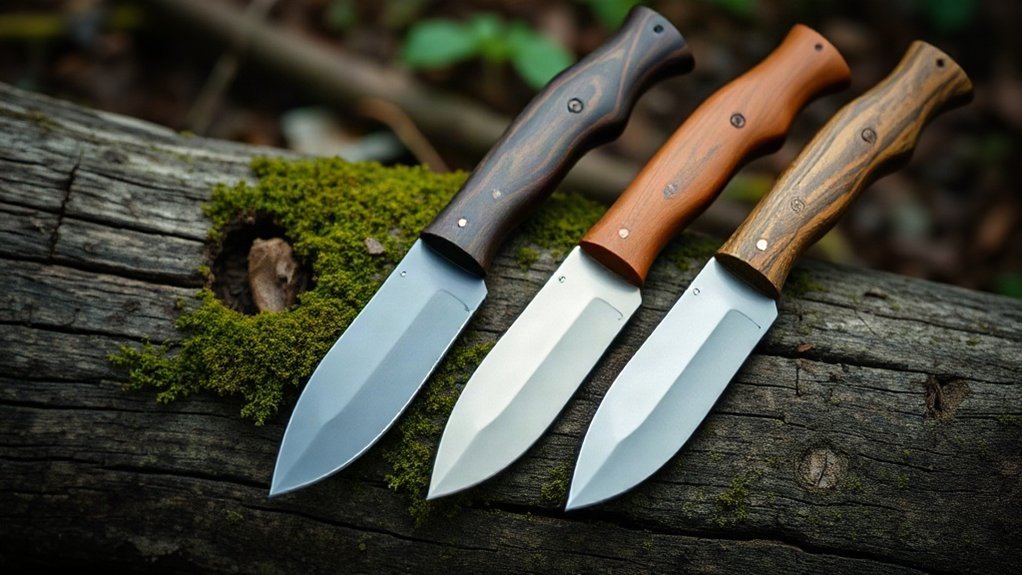
I recommend CPM-MagnaCut for a durable all-around bushcraft knife because it balances toughness, edge retention, and corrosion resistance. If you expect hard impacts or heavy batoning, choose CPM-3V for greater toughness, but protect it from rust. For easy field sharpening, 1095 is a practical option if you can keep it dry and oiled. Your knife’s heat treatment and blade geometry matter as much as its steel, and I’ll help you match them to your tasks and conditions.
Key Takeaways
- Choose CPM-3V or 5160 for demanding chopping and batoning; both offer high toughness, but neither is stainless.
- Pick 1095 for a tough, affordable blade that is easy to sharpen, provided you can dry and oil it regularly.
- Consider CPM-MagnaCut for a balanced mix of toughness, edge retention, and corrosion resistance in varied conditions.
- Match steel hardness and blade geometry to the task; toughness, heat treatment, and edge stability matter as much as steel type.
- Favor a full tang and manageable blade thickness for hard use, and use a saw or hatchet for large or knotty wood.
What Makes a Bushcraft Steel Durable?
A bushcraft steel is durable when it can take hard use without chipping, breaking, or losing its edge too quickly. When I choose a knife for work beyond the trail, I look for toughness and Impact resistance. Steels such as CPM-3V and 5160 can handle demanding tasks, from chopping to batoning, with less risk of damage. Blade flexibility also matters: a blade that gives slightly under stress may survive impacts that could snap a more brittle one.
I don’t judge steel by its name alone. Heat treatment and edge geometry shape how a blade performs, so a well-made knife can outlast another made from identical steel. Hardness also involves a trade-off: higher HRC may help an edge last, but can increase chipping risk; lower hardness may improve toughness. A full tang and suitable blade thickness support hard use, though extra thickness adds weight and can hinder slicing. Choose construction that fits the freedom and demands of your work.
How Do Toughness, Edge Life, and Rust Resistance Compare?
I compare toughness under stress by considering how well each steel resists chipping during hard use. I also look at edge life and how much effort you’ll need to restore sharpness in the field. Finally, I weigh rust resistance, since wet conditions can make maintenance a deciding factor.
Toughness Under Stress
When a blade takes a hard hit, toughness can matter more than edge life or rust resistance. I look at toughness as a steel’s ability to absorb impact load without chipping or breaking; fracture resistance matters when your work gets rough and unpredictable.
- For demanding field use, I’d choose CPM-3V or 5160 for their high toughness. CPM-3V handles heavy abuse at 58–60 HRC, but it isn’t stainless.
- With 1095, I get a tough blade that’s easy to sharpen in camp, but I must dry it and apply oil after use.
- D2 and S30V resist wear well, yet they’re harder to sharpen; D2 needs care when conditions turn wet.
- In damp country, MagnaCut balances toughness and corrosion resistance, giving me more freedom with less rust anxiety.
I choose for the risks I actually face.
Edge Life And Sharpness
How long a bushcraft knife stays sharp depends on the steel, but edge life is only part of the trade-off. I weigh sharpness retention against toughness and how easily I can restore an edge far from supplies. For independent trips, simple field sharpening can matter more than maximum wear resistance.
| Steel | Edge life and sharpening |
|---|---|
| S90V | Long-lasting; difficult to sharpen |
| S110V | Long-lasting; slower to restore |
| VG-10 | Moderate retention; easier upkeep |
| AUS-8 | Moderate retention; practical touch-ups |
| 1095 | Field-sharpenable; rust-prone |
A tough steel like 5160 or CPM-3V resists impact, while harder steels may chip. Edge stability matters: a lasting edge isn’t useful if it fails under rough work. I’d choose CPM-MagnaCut for balanced toughness, retention, and corrosion resistance, or 1095 when easy sharpening outweighs rust concerns.
Rust Resistance In The Field
In wet field conditions, rust resistance can matter as much as toughness or edge life. When I choose a bushcraft knife, I weigh all three against the care I’m willing to give it. Stainless steels with at least 13% chromium usually resist rust better; 1095 and O1 need prompt drying and oiling. D2 has about 12% chromium, so don’t mistake its wear resistance for stainless protection.
- For damp trips, I’d consider CPM MagnaCut for a strong balance of toughness, edge life, and rust resistance.
- Choose 5160 or CPM-3V when impact toughness matters most.
- S30V and D2 hold edges longer, but take more effort to sharpen.
- Blade coatings, handle materials, heat treatment, and blade geometry all matter—but coatings don’t replace care.
You’ll stay more independent when your steel suits your conditions.
Which Bushcraft Steel Suits Your Camp Tasks?
I match steel to your camp tasks: a 3.5–5-inch Scandi blade suits carving and feathersticks, while AEB-L excels at food prep. I’d choose 1095 or 52100 for easy field sharpening, or MagnaCut when wet conditions demand less upkeep. For heavy wood, I’d carry a saw or hatchet rather than twist or pry with a knife.
Match Steel To Tasks
Match your steel to the jobs you do most: I’d choose CPM MagnaCut for a versatile camp knife that handles carving, food prep, and wet conditions, or 1095 for frequent wood carving and easy field touch-ups—provided you dry and oil it regularly to prevent rust.
For a knife that takes demanding impacts, I’d pick CPM-3V for batoning, though it isn’t stainless. Let your carving technique and camp chores guide the grind and steel:
- Choose a Scandi grind for controlled wood carving.
- Pick a full-flat grind for slicing and food preparation.
- Consider 420HC for light chores and a budget-friendly, easy-to-sharpen option.
- Reach for a saw or hatchet for large or knotty wood instead of forcing your knife.
Match the tool to the task, and you’ll stay free to adapt without asking one blade to do everything.
Balance Edge And Maintenance
For most camp tasks, I’d choose CPM-MagnaCut because it balances edge retention, toughness, and corrosion resistance, so you’ll sharpen less often and worry less about rust in wet conditions. That balance gives you more time to work and less time tending your knife.
If you value easy field sharpening over low upkeep, I’d consider 1095 or 52100. Both are tough and straightforward to touch up, but you’ll need to dry them promptly and apply rust protection. CPM-S30V holds an edge well for carving and general cutting, though I find it takes more effort to sharpen than 1095 or AUS-8.
I’d also match edge geometry to your work: a Scandi grind offers control for wood carving, while a full-flat grind slices food efficiently. Choose a maintenance routine you’ll follow, not one that limits your independence.
Choose For Camp Conditions
Your maintenance routine matters, but camp conditions should guide your final steel choice. I match steel and grind to the work, so you can carry one dependable knife without fighting your conditions.
- Wet camp care: I favor CPM MagnaCut for its toughness, edge retention, and rust resistance. It’s a strong food prep steel for varied camp chores.
- Carving and quick touch-ups: I choose 1095 or 52100 for easy sharpening. I dry the blade and apply light oil to limit rust.
- Hard use: I reach for exceptionally tough CPM 3V when impacts matter; 52100 also sharpens easily. I use a saw or hatchet on large, knotty wood, never my knife as a pry bar.
- Task fit: I pick a Scandi grind for controlled carving, a full-flat grind for slicing, and a 3.5–5-inch blade with a secure, manageable grip.
Is 1095 Bushcraft Knife Steel Right for You?
Is 1095 right for your bushcraft knife? I’d choose it if you want a tough, dependable blade and the freedom to sharpen it with simple tools in camp. With about 0.95% carbon, this high-carbon steel handles demanding bushcraft tasks well. When sharpening gear is limited, I can restore its edge without relying on specialized equipment.
You’ll need to accept a trade-off: 1095 resists corrosion poorly. I dry the blade promptly after use and apply a light coat of oil regularly to help prevent rust. Choose it if toughness and straightforward edge maintenance matter more to you than rust resistance with little upkeep.
Steel alone doesn’t determine performance. I’d also check the maker’s heat treatment and blade geometry, since they affect the balance of hardness and resilience. Consider Blade handle ergonomics for secure, comfortable use, and knife sheath materials that suit your conditions. With sensible care and a well-made knife, 1095 can be a practical companion for self-reliant work outdoors.
When Does D2 Make a Better Bushcraft Knife?
I’d choose D2 when you want strong edge retention for long cutting sessions and fewer touch-ups. Its wear resistance suits sustained tasks, but you’ll need to dry and care for it because it isn’t fully stainless. If easy field sharpening matters more, I’d choose a tougher, easier-to-sharpen steel.
D2’s Edge Retention Advantage
When long cutting sessions matter more than quick field sharpening, D2 can be a strong bushcraft choice. I value its edge retention when a demanding day in the backcountry calls for sustained cutting and fewer stops to sharpen.
D2’s carbide microstructure helps its edge resist wear. That cutting endurance can suit an EDC-style survival knife or other bushcraft blade when you expect high cutting volume and have sharpening gear available. I’d weigh these tradeoffs:
- Chromium carbides help the edge stay sharp longer.
- D2 gives up some toughness compared with easier-sharpening steels like 1095.
- Sharpening D2 in the field can take more effort.
- At about 12% chromium, D2 isn’t stainless; I’d dry and care for it in wet or humid conditions.
Choose it for lasting edge life, not effortless maintenance.
When D2 Makes Sense
For long cutting sessions, D2 makes sense when you value edge life more than quick field sharpening. I’d choose it for repetitive carving or other cutting-intensive work, provided I can carry sharpening gear and keep the blade clean and dry. D2’s chromium carbides resist wear, but its roughly 12% chromium doesn’t make it stainless; wet, humid conditions demand care.
| Priority | D2 | 1095 |
|---|---|---|
| Edge life | Longer | Shorter |
| Field sharpening | Harder | Easier |
Compared with 1095, D2 offers less toughness, so I’d consider how freely I need to use the knife. Check D2 availability and cost, and assess D2 handle ergonomics for your grip. The Beta pairs D2 at 60–61 HRC with Micarta. If easy field maintenance matters most, I’d choose a simpler-to-sharpen steel instead.
Why Choose AUS-8 for Humid Bushcraft Conditions?
AUS-8 is a practical choice for humid bushcraft because its stainless composition resists corrosion, reducing the drying and oiling that carbon steels like 1095 need. For damp forests or marine trips, I value that lower-maintenance care: I can focus on the work instead of constantly protecting my blade. Its balance of toughness, corrosion resistance, and sharpening ease supports humid weather reliability without demanding a complicated routine.
I’d choose AUS-8 for these practical advantages:
- Less corrosion worry: It handles wet conditions better than carbon steel, though I still clean and dry my knife after use.
- Easy field sharpening: I can restore the edge with less effort than with D2 or S30V, using basic field gear.
- Useful toughness: It suits common camp tasks while keeping care straightforward.
- Manageable trade-off: Its edge may need more frequent touch-ups during extended cutting; cryogenic treatment can improve retention.
If I want freedom to maintain my knife on the trail, AUS-8 offers a sensible, forgiving option.
How Do S30V and Premium Steels Compare?
If I want longer edge life than AUS-8 offers, CPM-S30V is a strong stainless upgrade: its powder-metallurgy structure, roughly 14% chromium, and vanadium carbides support corrosion resistance and edge retention. I’d choose it when I want fewer sharpening stops on the trail, while accepting that it takes more effort to sharpen than AUS-8 or 1095. Its ceramic sharpening compatibility gives me practical options: quality ceramic or natural stones can restore the edge without specialized diamond abrasives.
CPM 20CV and M390 hold an edge exceptionally well, but they generally need diamond abrasives and cost more. For many bushcraft users, that Cost versus practical value doesn’t favor paying extra for harder-to-maintain steel. If I expect rough impacts, CPM-3V’s exceptional toughness may suit me better. If I want a more balanced mix of toughness, edge retention, and corrosion resistance, MagnaCut deserves consideration. I’d match the steel to my work and sharpening setup, not chase premium labels.
How Does Heat Treatment Affect Bushcraft Steel?
Even when two bushcraft knives use the same steel, their heat treatment can make them perform very differently. I look beyond the steel name: controlled heat treatment helps determine whether a blade holds an edge or withstands hard use. Hardness, measured in HRC, involves a trade-off. Higher hardness can improve edge retention but may increase brittleness; lower hardness can boost toughness while shortening edge life.
A steel’s name tells only part of the story; heat treatment and hardness shape the balance between edge retention and toughness.
For a practical HRC selection, I treat 60–62 HRC as a balance, not a promise. Hunting knives commonly fall between 58 and 64 HRC, but those figures don’t guarantee quality. I also consider how heat treatment and edge geometry work together:
- Match hardness to the knife’s intended demands.
- Favor well-controlled heat treatment over a premium steel label.
- Look for geometry suited to the work.
- Consider Cryogenic treatment: with suitable heat treatment, it may refine steel structure and support performance in steels such as 52100.
That balance gives me confidence to work independently.
Which Bushcraft Steel Fits Your Climate and Care Habits?
When I choose bushcraft steel, I match it to both the climate and the care I can realistically provide. In wet, humid, or marine conditions, I favor stainless CPM MagnaCut. It resists corrosion while offering toughness and edge retention, so you’re less tied to a strict care routine. That lower maintenance time commitment can mean more freedom to focus on the work at hand.
In dry climates—or when you’re willing to care for your blade—1095 and 52100 are practical choices with easy field sharpening. 52100 is especially tough, but its PVD coating won’t make it rustproof. D2 suits you if edge retention matters most and you accept extra attention: its chromium content is below the usual stainless threshold, leaving it vulnerable in damp weather.
I also consider regional steel availability and my sharpening kit. MagnaCut and 1095 are useful field options; S90V can be difficult to sharpen without suitable abrasives. Choose the steel your conditions and habits let you use confidently.
How Do You Sharpen and Protect a Bushcraft Knife?
How you sharpen and protect your bushcraft knife depends partly on its steel. I carry a compact field sharpener, such as the Work Sharp Guided Field Sharpener, for quick touch-ups, and I use a strop to maintain the edge. Match your sharpening tools to the steel so you can stay self-reliant in the field:
- Sharpen 1095 with basic equipment; it’s straightforward to maintain.
- Expect CPM-S30V to take more effort, and use diamond abrasives for 20CV or M390.
- Dry 1095 and 52100 promptly, then apply a light coat of oil to guard against rust.
- Clean and dry every knife after use, especially in wet conditions. MagnaCut and 12C27 need less corrosion-prevention care, but they still benefit from blade cleaning.
I follow the maker’s sharpening guidance and avoid twisting or prying with the blade, which can damage its edge. With the right routine, you can keep your knife ready without depending on a workshop.
Frequently Asked Questions
What Is the Best Steel for Bushcraft Knives?
I’d choose CPM-MagnaCut as the best all-around steel for a bushcraft knife, especially if you work in wet conditions. It balances toughness, Edge retention, and Corrosion resistance, so you can spend more time outdoors and less time protecting your blade. If you value easy field sharpening, I’d consider 1095 instead, but you’ll need to dry and oil it promptly. Match your steel to your tasks, heat treatment, and preferred blade geometry.
What Steel Is Better, 1095 or D2?
I’d choose 1095 for most bushcraft knives because it’s tougher and easier to sharpen in the field. For sustained cutting, D2’s superior edge retention may suit you better, though it’s harder to touch up. In the 1095 vs D2 edge retention trade-off, D2 wins; for impacts and limited sharpening gear, I favor 1095. 1095 vs D2 corrosion resistance is close: neither is stainless, so dry and oil either blade after use.
What Is the Best Fixed Blade Knife for Bushcraft?
I’d choose the TOPS BOB Fieldcraft—the trail’s Swiss Army knife, ready to carve, camp, and kindle fires. Its 4.75-inch 154CM stainless blade, comfortable G10 handle, and ferro-rod-equipped sheath make it my best all-around fixed blade for bushcraft. When weighing bushcraft knife features, I also consider your freedom to travel light: the Morakniv Kansbol costs less and weighs just 3.52 ounces. For wilderness knife selection, match the blade, grind, and maintenance to your adventures.
What Is the Best Blade Length for a Bushcraft Knife?
I’d start with a 3.5–5-inch blade for a bushcraft knife; it handles carving and everyday camp chores without limiting your freedom outdoors. Choose a shorter blade if you value precise cuts and easy control, or go longer for extra reach on bigger tasks. I’d weigh Handle comfort and Carry weight alongside length, since you’ll use and carry the knife often. For large or knotty wood, I’d grab a saw or hatchet instead.
Conclusion
I choose bushcraft steel by matching its strengths to my camp tasks, climate, and care habits—not by chasing the hardest or priciest blade. Toughness matters for woodwork; edge life and rust resistance matter when maintenance is limited. For context, 1095 contains about 0.95% carbon, but heat treatment and blade geometry still shape how it performs. I’d rather carry a well-treated steel I can sharpen and protect than depend on a premium alloy that doesn’t suit my routine.