Are Full-Tang Bushcraft Knives More Reliable for Heavy Outdoor Tasks?
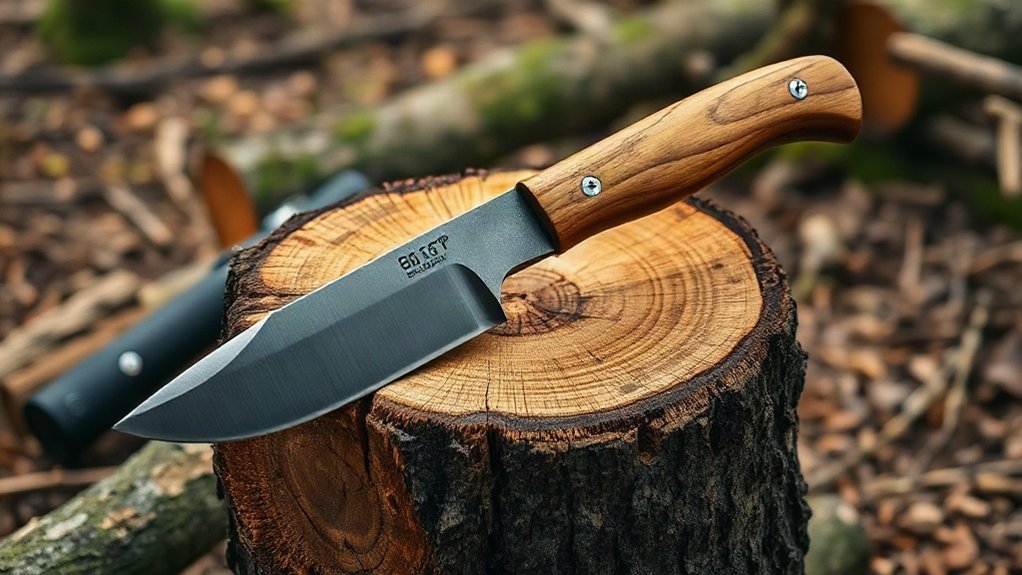
Yes—I recommend a full-tang bushcraft knife for repeated batoning and other heavy outdoor tasks because its continuous steel generally supports stress better than a partial tang. But full tang doesn’t make a knife indestructible; blade thickness, steel, heat treatment, handle fit, and technique matter too. For lighter chores, a partial-tang knife may save weight without sacrificing practical performance. I’d match the knife to your workload, and the details below can help you make that choice confidently.
Key Takeaways
- Full-tang knives generally support repeated batoning and other demanding tasks better because steel extends through the handle.
- Full tang improves support but does not make a knife indestructible; twisting, prying, or poor technique can still cause damage.
- Reliability also depends on blade thickness, steel, heat treatment, edge geometry, and handle construction.
- For light carving, food preparation, and routine camp chores, a partial-tang knife may be sufficient and lighter to carry.
- Choose a full tang for frequent heavy work, but use a saw or hatchet for large or knotty wood.
Are Full-Tang Bushcraft Knives More Reliable?
When I’m batoning firewood or building a shelter, I generally trust a full-tang bushcraft knife more than a partial-tang model. Its metal runs through the handle’s length and width, giving the blade solid support when hard work puts stress on the knife. That added confidence can help you stay capable and self-reliant outdoors.
Still, full tang doesn’t make a knife indestructible. Twisting or prying can damage even a sturdy blade, so I follow the maker’s guidance and use a saw or hatchet for large or knotty wood. I also look beyond tang design: blade thickness, heat treatment, edge geometry, and secure handle construction all affect reliability. Thoughtful durability testing can reveal weaknesses, but no test guarantees a tool will withstand every misuse or condition.
A full-tang knife often weighs more and costs more, and I don’t need that extra strength for every task. For light carving or food prep, a lighter option may serve me well. I choose based on the work ahead, not fear of tang failure.
How Do Full-Tang and Partial-Tang Knives Compare?
I compare full tangs, which run through the handle, with partial tangs that extend only partway. Full tangs generally handle heavy stress better, while partial tangs save weight and cost. I’ll help you match each design to the tasks you expect to tackle.
Construction And Strength
A knife’s tang—the metal that extends from the blade into the handle—plays a major role in its strength. A full tang runs through the handle’s length and width, often showing along both sides. That tang visibility lets me check its construction, while handle alignment helps me spot whether the scales sit evenly against the steel. With blade and handle section usually formed from one piece of metal, a full tang offers stronger support for demanding work like batoning.
A partial tang reaches only partway into the handle, leaving less material to resist heavy stress. Rat-tail tangs are especially narrow; I’d choose one for light carving or food preparation, not forceful tasks. Still, tang design alone doesn’t guarantee durability. Blade geometry, heat treatment, handle construction, and proper use matter too, so I assess the whole knife before trusting it outdoors.
Weight And Task Suitability
Beyond strength, tang design affects carry weight and the tasks a knife suits. I’d match your knife to the work you expect, so you can travel light without giving up the freedom to handle tougher jobs.
A full-tang knife carries more material through its handle, adding weight but supporting repeated batoning and shelter-building. For demanding outings, I’d accept that trade-off for durability. A partial-tang model is lighter and often cheaper, making it a practical choice when carving, food preparation, and other campsite chores matter more than splitting wood. Its lower weight can improve carry comfort on long hikes.
For comparison, the partial-tang Mora Companion Heavy Duty weighs about 4.1 ounces with its sheath; the full-tang Mora Garberg weighs about 6.9 ounces. I’d choose the Garberg for heavy use, or the Companion when lighter tasks and reduced pack weight take priority.
When Is a Partial-Tang Bushcraft Knife Enough?
For light carving, food prep, and cutting cordage, a partial-tang knife is often enough because these jobs don’t put much strain on the handle. I reach for one when I want a capable tool without carrying extra weight or paying for strength I don’t need. Light carving lets me shape tent pegs or smooth a walking stick, while Camp food prep and routine camp chores call for controlled cuts, not heavy force.
For weekend hikes, the 4.1-ounce Mora Companion Heavy Duty is a practical example. Its reinforced rat-tail tang keeps the knife light and less expensive than a full-tang design, leaving me freer to travel simply and spend my budget elsewhere.
I wouldn’t choose a partial tang for work that repeatedly stresses the handle; it’s generally weaker under pressure. For large or knotty wood, I use a saw or hatchet instead. Choose a partial tang when low weight and lower cost matter more than durability for demanding tasks.
What Does Batoning Demand From a Bushcraft Knife?
When I baton, I strike the knife’s spine with a baton to split wood for kindling or fire fuel. This batoning technique puts repeated impacts and splitting forces through the blade and handle, so I choose a knife built to take that stress. A full tang runs through the handle, making it generally better suited to repeated batoning than a weaker partial tang.
Blade thickness and geometry matter, too. A thicker blade can help split wood, but it adds weight and may slice less efficiently. I balance those trade-offs against the tasks I expect to tackle, rather than carrying more knife than I need.
Wood selection helps me work safely and efficiently: I baton manageable pieces, not large or knotty logs. For those, I reach for a saw or hatchet. I follow the maker’s guidance and keep the blade aligned; twisting or prying can damage it. With sensible limits, I can prepare firewood while preserving my knife for the next task.
How Do Steel and Heat Treatment Affect Reliability?
I look beyond a steel’s name to judge how its toughness and edge retention suit heavy outdoor work. Heat treatment also affects how well the blade holds an edge and withstands repeated impacts. I’ll compare these factors with sharpening ease and corrosion resistance, which matter in the field.
Steel Strength and Toughness
A full tang can’t make a knife reliable if its blade steel is poorly matched to the work. I choose steel for the jobs I expect and the care I’m willing to give it. Steel composition shapes practical trade-offs: 1095 sharpens and touch-ups easily in the field, but I dry and oil it to limit rust. CPM-S30V resists wear and holds an edge well, though sharpening takes more effort. For wet conditions, CPM-MagnaCut offers strong corrosion resistance; CPM-3V is another option for demanding use.
I also weigh blade thickness. A thicker blade can help me split wood, but it adds weight and may slice less cleanly. Steel grade alone won’t guarantee toughness or prevent damage, so I avoid twisting or prying. That leaves me free to work hard without asking a knife to do the wrong job.
Heat Treatment and Durability
Even with a full tang, a knife’s reliability depends on steel, heat treatment, and blade geometry working together. Heat treatment shapes how well a blade balances hardness and toughness; careful temper control helps it resist chipping without losing useful edge retention. Grain refinement also supports durability, though steel choice and blade geometry still matter.
I’d choose steel for the conditions and maintenance I can manage. 1095 sharpens easily, but I keep it dry and lightly oiled to prevent rust. Stainless 12C27 resists corrosion and remains reasonably quick to sharpen. D2, often hardened to 60–62 HRC, holds an edge longer than 1095, but field repairs may call for diamond abrasives. The Fällkniven F1’s laminated VG-10, about 60 HRC, combines edge retention with corrosion resistance; its convex grind affects sharpening and use. Follow maker guidance when batoning; saw or hatchet large, knotty wood.
How Do Blade Thickness and Grind Change Performance?
How thick should a bushcraft knife be, and which grind suits your work? I match blade thickness and grind geometry to the tasks I expect, rather than assuming heft guarantees reliability. A thicker blade handles batoning better, but it adds weight and can slice less cleanly. Heat treatment and edge geometry matter, too.
- For carving wood, I favor a Scandi grind: its broad bevel gives me control, and I can sharpen it by laying the bevel flat on a stone.
- For food and everyday camp chores, I choose a full-flat grind for efficient slicing. A convex grind offers toughness and good slicing, though sharpening it on a flat stone takes more care.
- I avoid hollow grinds for hard lateral stress because they’re more prone to chipping.
For most hiking, I find a 3.5–4.5-inch blade balances control and portability. I’d carry more length or thickness only when heavier work justifies the extra weight.
How Do Handles and Sheaths Improve Control?
During long carving sessions, a handle that fits my hand helps me keep control and make precise cuts. Handle ergonomics matter because comfort is personal: I choose a shape and material that feel secure before trusting a knife with demanding camp tasks. The TOPS BOB Fieldcraft’s contoured G10 handle and spine jimping support a steady grip. Textured rubber or polymer can help in wet or cold conditions; smoother Micarta or G10 may need contours or grip lines to feel secure.
Sheath retention matters just as much when I’m moving through the woods. A well-fitting sheath keeps the knife secure while hiking yet lets me reach it when needed. I check its fit, closure, and retention rather than assuming they’ll hold. The tested Ka-Bar sheath had inconsistent retention and weak snaps, a reminder to inspect details before heading out. I also consider moisture: Kydex dries quickly, while leather can hold moisture against carbon steel. A dependable setup helps me work confidently and move freely.
Which Bushcraft Knife Construction Suits Each Task?
When I choose a bushcraft knife, I match its construction to the work ahead. That keeps my kit practical and lets me work confidently, whether I’m shaping camp tools or preparing a fire.
- For batoning firewood or other demanding jobs, I choose a full tang: steel runs through the handle and supports strength under stress. I still follow proper technique and the maker’s guidance.
- For light carving, food prep, and routine chores, a partial tang can be lighter and more affordable. The 3.52-ounce Morakniv Kansbol is one example, but its tang isn’t meant for heavy work. A rat-tail tang also suits lighter carving techniques and camp use.
- For ultralight trips, a skeletonized tang trims carry weight, though cutouts and minimalist grips may reduce comfort or grip. A hidden tang suits traditional styling and lighter tasks, but it’s harder to repair and less suited to extreme stress.
I also factor knife maintenance into my choice, since reliable gear helps me stay self-reliant outdoors.
When Are Full-Tang Knives Worth the Extra Weight?
I find the extra weight worthwhile when a trip involves repeated batoning, shelter building, or sustained carving. A full tang extends through the handle, adding strength and balance for demanding work. If I’m splitting firewood or shaping a shelter, I value that durability more than a few extra ounces.
| Camp workload | Tang choice | Trade-off |
|---|---|---|
| Repeated batoning | Full tang | Strength, added weight |
| Light carving, food prep | Partial tang may suit | Less weight |
| Routine chores | Either | Extra durability may go unused |
For hiking, I weigh toughness against freedom of movement: the full-tang Mora Garberg weighs 6.9 ounces with its sheath, compared with 4.1 ounces for the Mora Companion Heavy Duty. That difference matters over long miles, especially when camp tasks stay light. I don’t treat full tang as permission to force a blade through every job; for large or knotty wood, I reach for a saw or hatchet, and I avoid twisting or prying.
How Do You Choose a Bushcraft Knife for Your Workload?
How should you choose a bushcraft knife? I’d start with the work you actually do, not the toughest task you can imagine. Match the knife to your needs, and you’ll carry less weight without giving up useful capability.
- Blade length: A 3.5–5-inch blade handles most carving and camp chores. Longer blades add reach and batoning capacity, but sacrifice fine-cut control.
- Tang and grind: For repeated batoning or demanding work, I’d choose full tang. A lighter partial or rat-tail tang can suit carving and food prep. Scandi grinds offer carving control and easy sharpening; flat grinds slice well and handle food prep.
- Steel and fit: Consider steel maintenance and weather. 1095 sharpens easily but needs drying and oiling; stainless 12C27 needs less care in wet conditions. Check that the grip feels secure and comfortable, and that the sheath carries safely.
For large or knotty wood, I’d reach for a saw or hatchet instead of twisting or prying with my knife.
Frequently Asked Questions
What Is the Best Full-Tang Knife for Bushcraft?
I’d choose the TOPS BOB Fieldcraft as the best full-tang bushcraft knife for most people. Its 4.75-inch 154CM blade handles carving, fire-starting, and wood splitting, while its 10.5-ounce weight stays manageable. I’d also check Blade thickness and handle ergonomics against your needs, since comfort and control shape every task. If you want a budget-friendly alternative, I’d consider the lighter Morakniv Garberg; for compact carry, I’d look at the Benchmade Mini Bushcrafter.
What Is the Holy Trinity of Knives?
The “holy trinity” of knives is a large fixed blade, a smaller fixed blade, and a folding knife—three tools that can tackle a mountain of outdoor tasks. I’d use the large knife for heavier camp work, the smaller one for controlled carving and food prep, and the folder for light cuts on the go. Choose knife steel and handle ergonomics that suit your needs, and match each knife to your trip, weight limits, and freedom to roam.
What Is the Holy Grail of Pocket Knives?
There’s no universal holy grail pocket knife; I’d choose one that fits your work, carry style, and upkeep preferences. For compact bushcraft, I’d consider the Benchmade Mini Bushcrafter, with its 3.38-inch CPM-S30V blade and manageable weight. Its premium pocket knife materials deliver strong edge retention, though sharpening takes more effort. Look for Ideal blade geometry, a secure lock, and comfortable handling. I’d reserve folding knives for lighter tasks, not heavy batoning or prolonged carving.
What Is the Best Bushcraft Knife in 2026?
I’d call the Morakniv Companion Heavy Duty the best bushcraft knife for most people in 2026: it’s affordable, light, and ready for camp chores. For tough splitting, choose the ESEE-4; for stainless full-tang strength, pick the Garberg; for carving versatility, consider the TOPS BOB Fieldcraft. These 2026 bushcraft picks reflect key knife selection factors: your tasks, carry weight, climate, and maintenance. I’d match your blade to the freedom you want outdoors.
Conclusion
A full tang isn’t automatically better, and its extra weight can feel unnecessary on a long hike. But when I’m chopping, batoning, or prying through demanding camp tasks, the continuous steel core gives me more confidence in the handle’s strength. I still judge the whole knife: steel, heat treatment, grip, and sheath matter too. For light cutting, a partial tang may be enough. I choose full tang when my workload—and the cost of failure—justifies it.