How Do Bushcraft Knives Help You Handle Essential Wilderness Tasks?
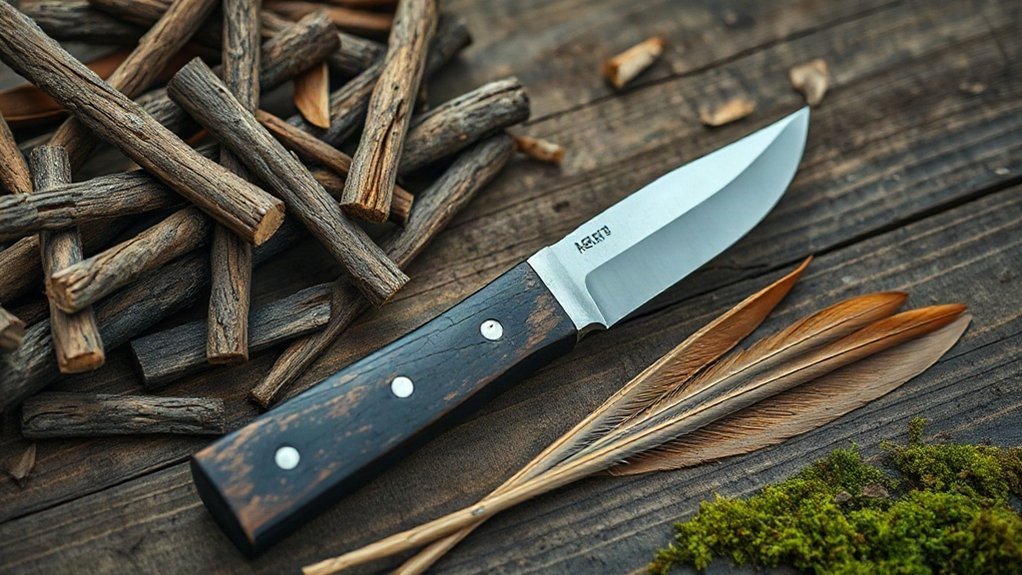
I use a bushcraft knife to handle everyday camp jobs, from trimming branches and cutting cord to carving stakes, tent pegs, and simple tools. Its sharp edge helps me prepare food, shave dry sticks into tinder, and make small gear repairs. With a sturdy fixed blade, I can also trim shelter poles or split small wood safely. I keep the blade clean and dry, use controlled cuts, and carry suitable backup gear. Below, I’ll explain how to choose and use one wisely.
Key Takeaways
- Trim branches, cut cord, notch poles, and clear brush when building or repairing a campsite shelter.
- Carve stakes, tent pegs, hooks, and simple tools from fallen wood.
- Prepare kindling by stripping dry bark and shaving tinder curls; use a suitable square-edged spine to scrape a ferro rod.
- Slice meat, fish, and vegetables, and cut fabric or cord for basic camp repairs and first-aid preparation.
- Split small logs by batoning a sturdy full-tang knife, and work safely by avoiding prying and cleaning and drying the blade after use.
Use Your Bushcraft Knife Around Camp
Around camp, I use my bushcraft knife to trim branches, cut cord, and notch wood for a shelter or tarp. These small tasks help me organize camp and adapt my setup to the ground and weather. I can also clear brush from a work area, opening space without relying on bulky gear.
With a sharp blade, I carve stakes, tent pegs, and simple tools from fallen wood. Careful control makes detailed cuts easier and helps me shape each piece to fit its purpose. When I need a meal, I slice meat, fish, or vegetables, then clean and dry the knife before storing it to guard against rust.
For campfire preparation, I shave dry sticks into thin curls and gather kindling. If my knife has a suitable square-edged spine, I scrape a ferrocerium rod with that spine, keeping the cutting edge clear. A dependable knife lets me handle everyday camp jobs with skill and independence.
Build Shelter and Prepare Fire With Your Knife
When I build shelter, I use a sturdy fixed-blade knife to trim branches and cut cord for framing and lashings. I can choose a site and shape a simple frame without depending on specialized tools. Trim shelter poles to fit, then carve notches where pieces meet so the structure holds together. I also carve tent pegs from sturdy wood to anchor the shelter and keep it secure.
For a fire, I look for dry material and prepare it with controlled cuts. I strip dry bark, then shave tinder curls from dry sticks. I keep the curls thin and loosely attached so sparks can catch; thicker shavings may not ignite as easily. If my knife has a square-edged, uncoated spine, I scrape it against a ferro rod to send sparks into the tinder. With a little preparation, I can build shelter and start a fire using materials around me, giving me greater freedom to manage camp in the wilderness.
Prepare Food and Handle Basic First Aid
A sharp bushcraft knife lets me prepare camp meals with clean, controlled cuts. For Food slicing, I use a thin, sharp edge to portion meat and vegetables without tearing flesh or crushing plants. The pointed tip helps me gut fish and score food, giving me more control over simple meals far from a kitchen. I keep cuts steady and work on a clean surface to reduce mishaps.
When the meal’s ready, I wash the blade with water and mild soap, then dry it fully. That simple habit helps limit rust and debris buildup, so my knife stays dependable on the trail.
For basic first aid, I can cut clothing or fabric into strips for bandage preparation, or shape material to help support a splint. I handle the blade cautiously around an injury and don’t treat it as a substitute for medical care. I rely on a proper first-aid kit and training when someone needs help.
Carve Tools, Repair Gear, and Split Small Wood
With a sharp, controllable knife, I carve stakes and hooks, notch branches, and cut grooves to help secure cord. These simple tools give me more freedom to shape a useful camp setup from materials at hand. For fine details, I reach for a small carving knife, such as one with a 50 mm blade, to whittle points and shape compact tools. I can also Carve wooden utensils for meals in the wild.
- I slice frayed paracord or straps cleanly, then trim bark, canvas, or plastic to patch torn equipment and make quick camp-gear repairs.
- I keep the edge sharp and use controlled cuts; cleaner carvings and neater patches take less effort and help supplies last.
- To split small logs into kindling, I baton a sturdy full-tang knife through the wood with a heavy stick. I avoid prying, which can damage the blade.
With these practical skills, I can adapt, repair, and build without carrying a crowded toolkit.
Choose and Use Your Bushcraft Knife Safely
For demanding bushcraft tasks, I choose a fixed-blade knife with a full tang and a blade about 4 inches long. Full tang construction handles batoning; a Scandi grind makes carving easier, while a thicker, heavier blade splits small logs. I match the tool to the job so I can travel light and stay capable.
| Need | My choice | Why |
|---|---|---|
| Carving | Scandi grind | Controlled cuts |
| Splitting | Heavier blade | Better leverage |
| Carrying | Secure sheath | Safe access |
I look for an ergonomic grip that stays secure and non-slip, plus a sheath that retains the knife as I move. I cut with control, never pry or cut metal, and practice in a safe setting with backup supplies and emergency gear. After use, I wash the blade with mild soap and dry it fully. I add a thin coat of oil to carbon steel to help prevent rust, then check its edge before heading out.
Frequently Asked Questions
What Blade Steel Is Easiest to Sharpen in the Field?
Carbon steel is usually the easiest blade steel to sharpen in the field. I can restore its edge quickly with a simple stone, even when I’m far from a workshop. For you, that means less time maintaining your knife and more freedom to keep moving. Choose a high-carbon steel that suits your needs, but remember it can rust. I keep mine clean and dry, so field sharpening stays simple and reliable.
How Should You Clean and Store a Bushcraft Knife After a Trip?
After a trip, I clean my bushcraft knife, dry it completely, and store it safely. For Cleaning Residue Safely, I rinse away dirt and sap with warm water and mild soap, then wipe the blade carefully from spine to edge. I dry every surface, including the handle and pivot, right away. For Preventing Rust During Storage, I apply a thin coat of food-safe oil, sheath the knife only when dry, and keep it somewhere cool and dry.
Are Fixed-Blade or Folding Knives Better for Bushcraft?
I prefer a fixed-blade knife for bushcraft: one outdoor survey found that 68% of respondents valued reliability most in wilderness gear. A fixed blade offers better Blade Stability for carving, batoning, and other demanding tasks, while a secure grip supports Handle Security when your hands are cold or wet. I’d choose a folding knife when pack space matters, but its hinge needs care. Pick the design that gives you confidence and freedom outdoors.
What Local Laws Should You Check Before Carrying a Bushcraft Knife?
Before carrying a bushcraft knife, I check local rules on blade length, folding versus fixed designs, concealed or open carry, and prohibited locations. I also verify permit requirements, age limits, transport rules, and restrictions on public land or parks. Knife carry laws can change across city, county, state, and national borders, so I confirm current regulations with official sources. That quick check helps me protect my freedom while avoiding fines or confiscation.
Can a Bushcraft Knife Be Taken on Commercial Flights?
I can’t carry a bushcraft knife in the cabin; airport security generally bans knives from carry-on bags. I picture its sharp edge catching cabin light, then pack it securely in checked airline baggage, where rules may allow it. Before international travel, I check the airline’s policy, departure and arrival laws, and any transit-country restrictions. Regulations vary, and some places prohibit particular blade lengths or designs. Careful planning keeps my journey smooth—and my freedom to explore intact.
Conclusion
A bushcraft knife earns its place by turning one sharp edge into shelter, flame, food, repairs, and small acts of care. I use it thoughtfully, keeping my hands clear and its edge keen; you should, too. In the wilderness, skill matters more than steel, and patience matters more than force. Treat your knife with respect, and it becomes more than a tool: a steady thread connecting you to the land, helping you meet hardship with confidence and resourcefulness.